
How Login.jp Bridges Japan’s Generational Gap Through Music
Inside The Shoten
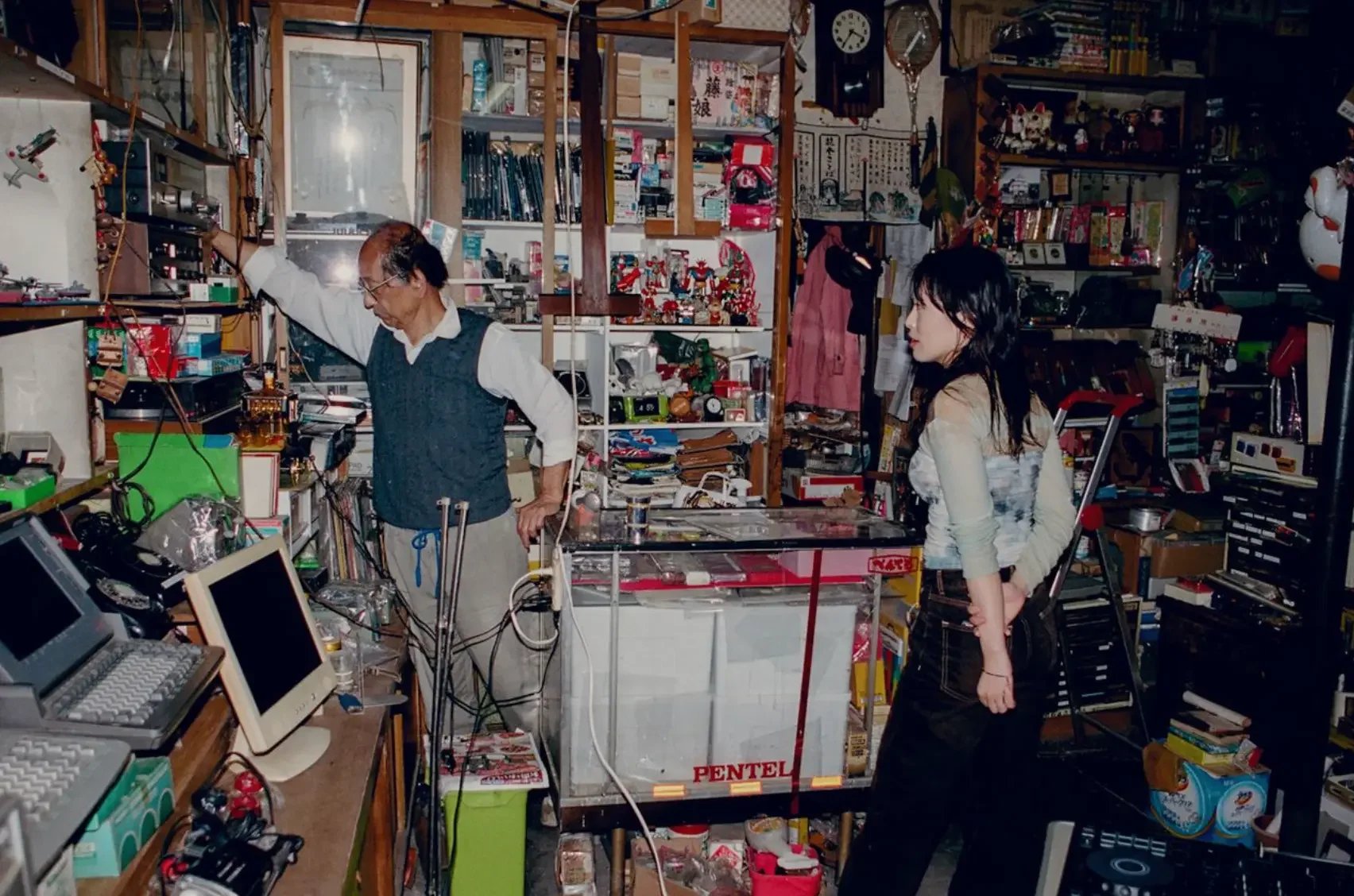
The Shoten 006│michika at stationary shop│© Login.jp
The first thing you notice when watching a Login.jp set is that it feels as if you’re in the room with them, as they manage to create a sense of community and connection you’d almost forget still exists on social media today.
Having followed their work for a while, I was surprised that on my first call with the Login team, I was speaking with a couple of university students. A group of youngsters who, in the midst of it all, have been building one of the most interesting music concepts to come out of Japan in recent years.
It’s not only the unpredictability of the locations the team drops into next, but also the curiosity around the spaces, the DJs or artists they pair with them, and the short chats with the business owners.
For those who don't know, Login.jp is a Tokyo-based audiovisual platform founded in 2025 by Jun Kim and Rihito Mizoguchi, curating DJ sets in authentic Japanese settings. While many contemporary DJ broadcast platforms focus on scale, production value, or curated nightlife environments, Login.jp takes a different approach.
Their work is rooted in proximity, both to place and to people, and in the belief that everyday Japanese spaces already contain enough narrative structure without needing reinterpretation. Their main series, The Shoten, positions DJs inside functioning local businesses across Japan: fish markets, small barbershops, rural stores, and long-standing neighbourhood spaces. Instead of transforming these locations into event spaces, Login.jp keeps them fully operational.
We sat down with the team as they reflected on how this approach emerged, how they navigate access to private community spaces, and why they continue to prioritise “location-first” curation in an increasingly saturated landscape of streamed performances.
Streamed DJ sets have practically become a genre of their own, yet login.jp feels like a breath of fresh air to the community. What is the origin story here?
The idea is really just a combination of interests that we’ve had well before Login was formed. Music and DJ culture has always been present in our lives and our shared tastes are what originally brought us together. The Japanese experience was something that had always been present in our life but was especially poignant for us having dual identities and existing between Japan and our international identities. Having spent time away from Japan really grew our appreciation for the small details of daily life here and we wanted that experience to shine through mainstream representations.
So in a way, the approach was quite simple: let’s put DJs and selectors that we love and appreciate in spaces that we love and appreciate. However, we did want to do it in a way that shows a genuine connection between the two aspects and connect the two cultures in a sensitive and understandable way.
You all grew up as digital natives, in a fast-paced world dominated by technology. Yet, as uni students, you’re focusing on rural farm stays, antique shop, disappearing neighbourhood stores, connecting young with old.
Do you feel like your generation is experiencing a shift, maybe even a desire to reconnect with a slower side of Japanese culture, or life in general?
In this digital age and the speed at which trends replace themselves, we really feel a desire for, and a difficulty in creating real community and a sense of belonging in our generation. If anything, our own struggles with that feeling was another motivation in forming login and in a way, our content is also a navigation of our own identities and a representation of our own process of rebuilding those connections.
Even if they are not from the exact communities we’re archiving, we have seen viewers from across the world able to relate to the simpler, everyday aspects they represent like the experience of buying new stationary for the school year or buying candy as a child with friends.
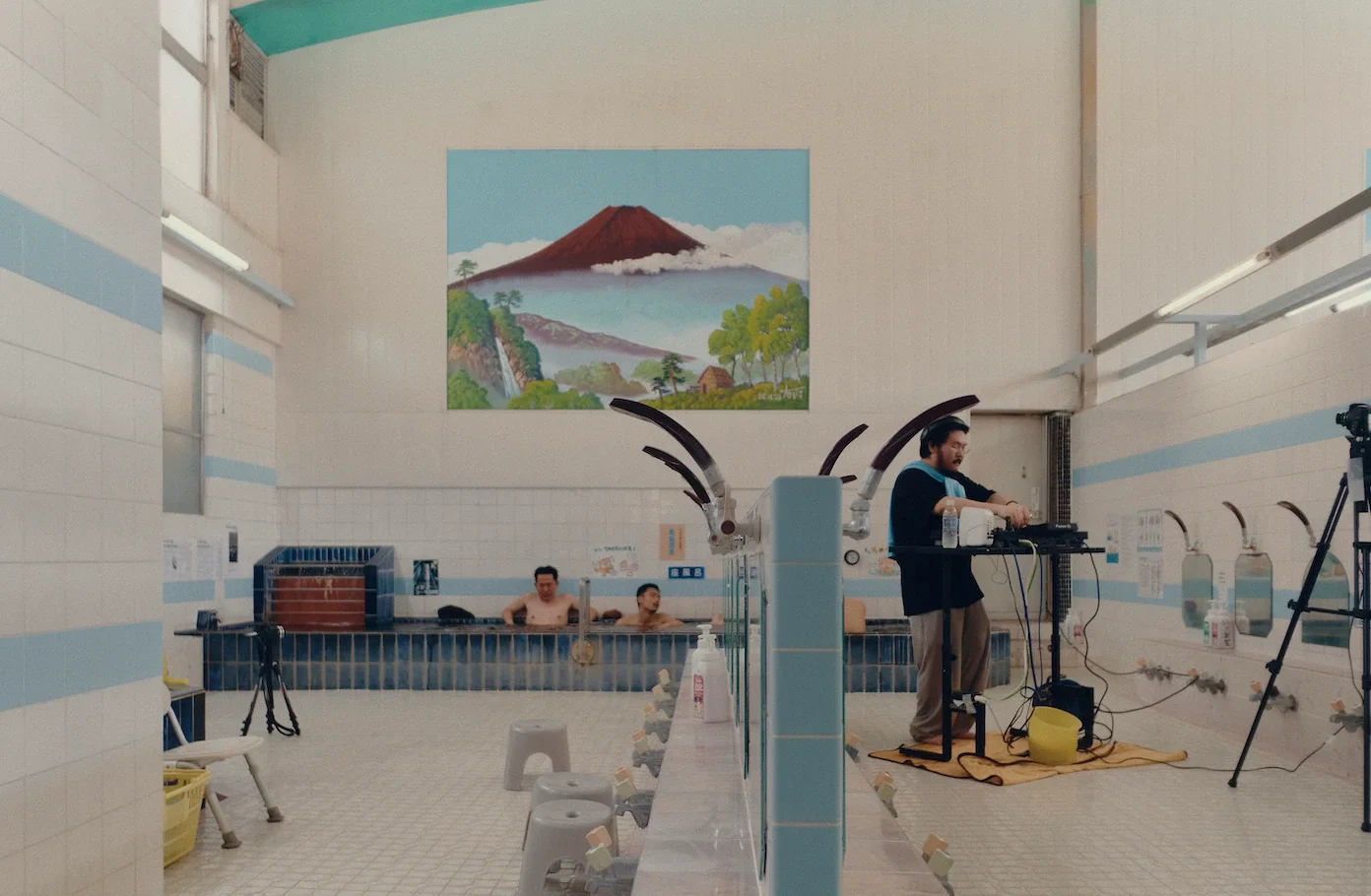
ZENDO at sento│© login.jp
The Shoten series focuses on generational mom-and-pop institutions. How have these business owners, families, and people at the core of these communities, reacted to having a DJ setup in their space?
DJing itself is often a new concept to the community, as well as social media content, so we always make sure to take the time to have open conversations with them to not only introduce ourselves and our concept but to understand their experiences and history. This allows us to maintain the location-first approach behind our curation and allows us to enter the space without disrupting the natural form of the environment.
Once the set itself starts, the community is usually very receptive and open to the new experience, and passersby and locals from the neighborhood often stop and show interest in what we’re doing and sometimes even end up dancing along with us.
You’ve pulled off some wild locations, from a moving train to a sake brewery. How do you convince traditional, old-school business owners to let an underground electronic music crew take over their shop for a day?
In the beginning, our process was old-school, visiting stores that we were cool with a paper proposal, and simply cold-approaching them. We spent hours being rejected, and the first location in a fish store came about after more than 30-40 tries. This was how we learned that oftentimes the best way to approach a location is to build real connections with the communities and owners.
It goes without saying that these locations are deeply personal to them, and as outsiders asking to be entrusted with that really means taking the time to listen and understand their stories and the history behind their spaces. I think the enthusiasm with which we approach these locations has fortunately resonated with a lot of the business owners that we have worked with.
When planning an episode, how do you match a specific DJ’s sound to the history and atmosphere of the venue?
We are always very intentional about our curation, and our core ethos has always been “location-first”. The process usually starts with actually seeing the space in person and feeling the ambiance for ourselves. Inspiration can come instantly or can be pulled from an aspect of the service they provide, like the record shop barbershop where we had our first vinyl DJ, but sometimes the owners themselves enjoy a certain genre, and so we will try to curate based on that.
Your team has built a massive online community that looks at everyday Japanese neighborhoods through a brand-new lens. What is the next step for Login.jp?
Our next steps are definitely to build a physical community around these spaces through events and bring the same enjoyment we get from being behind the camera during our sets to our viewers. We are also planning on going outside of Tokyo more often and archiving the unique microcultures that exist all throughout the rest of Japan.
By refusing to compromise on their "location-first" philosophy, Jun, Rihito and their team are keeping the fading, beautiful corners of everyday Japan firmly in the conversation. As Login.jp prepares to step out from behind the lens and into physical event spaces, one thing is certain: whether it's a moving train, a sake brewery, or a corner mom-and-pop shop, we’ll be waiting to see where they plug in next.
Follow the journey of Login.jp on
Trending articles


Exploring Yuri Sugiura’s creations from tiny foam cats to full & dragon masks.