
Inside The Pastel Apocalypse by Utanhole
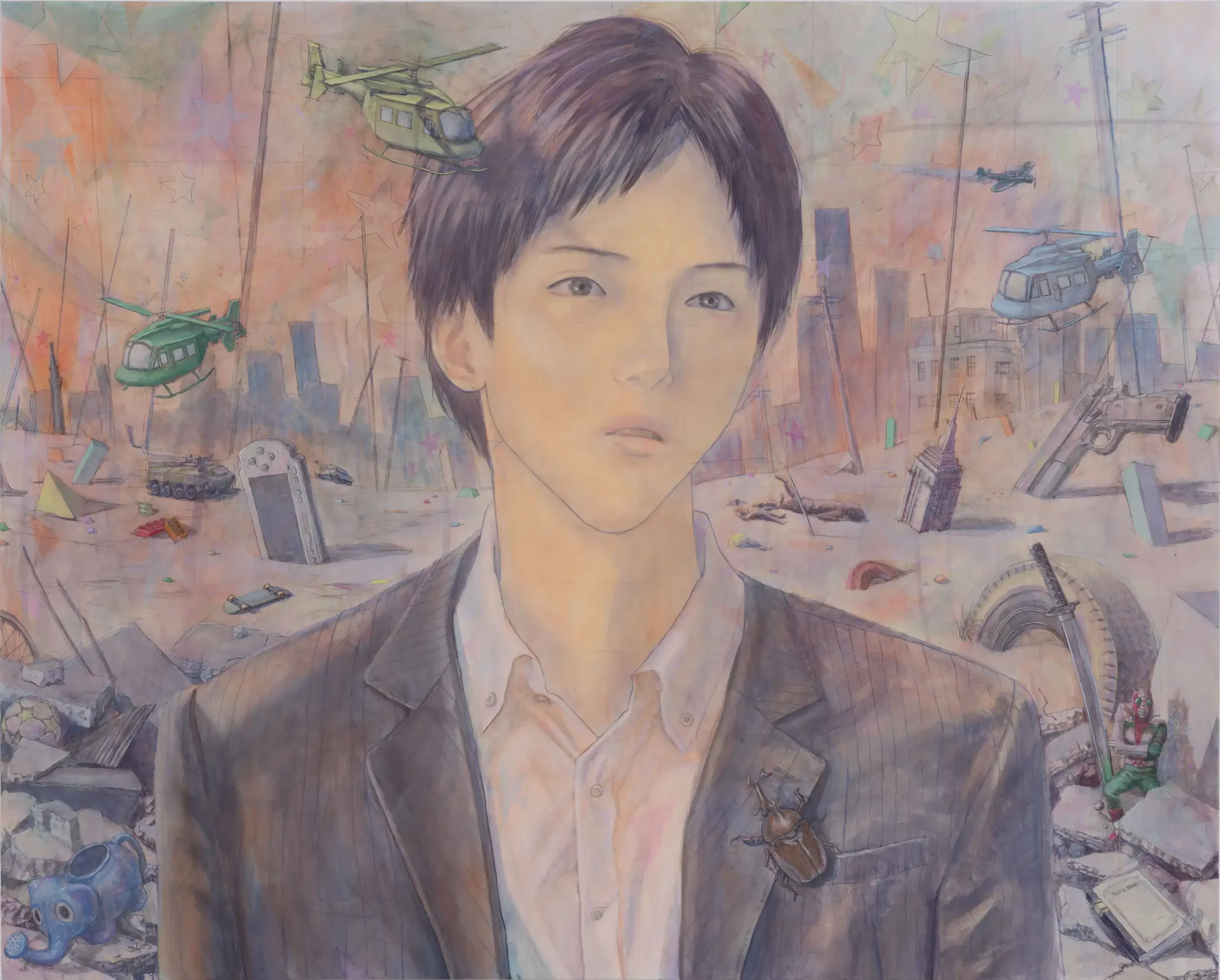
Burn-out Field │© Utanhole, Courtesy of Kaikai Kiki Gallery
Many of us belong to the generation that will scroll its way through the end of the world. It’s our modern kind of brain rot, watching geopolitics collapse on the same screen that dictates our dopamine control through algorithms. A friction inside our minds that prose usually fails to capture. We live in a world fundamentally beyond our control, yet we still obsess over trivial details. We may feel defeated by reality, yet find ourselves stubborn, foolish, and utterly unable to give up on our own internal ideals.
In a culture obsessed with making everyone pick a side, Tokyo painter Utanhole chooses to map the uncharted gray area.
To enter Utanhole’s pastel-hued daydream, is to look at a beautiful paradox. Her canvases are washed in soft, melancholic pastel gradients and bound by gentle, feather-light lines that feel tender, almost affectionate. Yet, this comforting aesthetic frames scenes of undeniable collapse, as rockets cut through the skies and structures fracture into dust. Dead-center in the chaos sit her figures, wearing expressions that look entirely unshaken.
But don't mistake this for a nihilistic pose. Utanhole is capturing the radical privacy of the human subconscious. They are characters acting out their own internal dramas, driven by a twisted, adolescent toughness. A chunibyo (中二病) mindset that fixates on personal ideals over literal life and death. She is painting the ultimate mystery: the fact that no matter how loud the apocalypse gets, the loudest thing in the universe will always be what is happening inside someone's head.
We sat down with the Tokyo artist to talk about Lars von Trier, the comfort found in moments of loss, and why reality can never quite touch a truly arrogant mind.
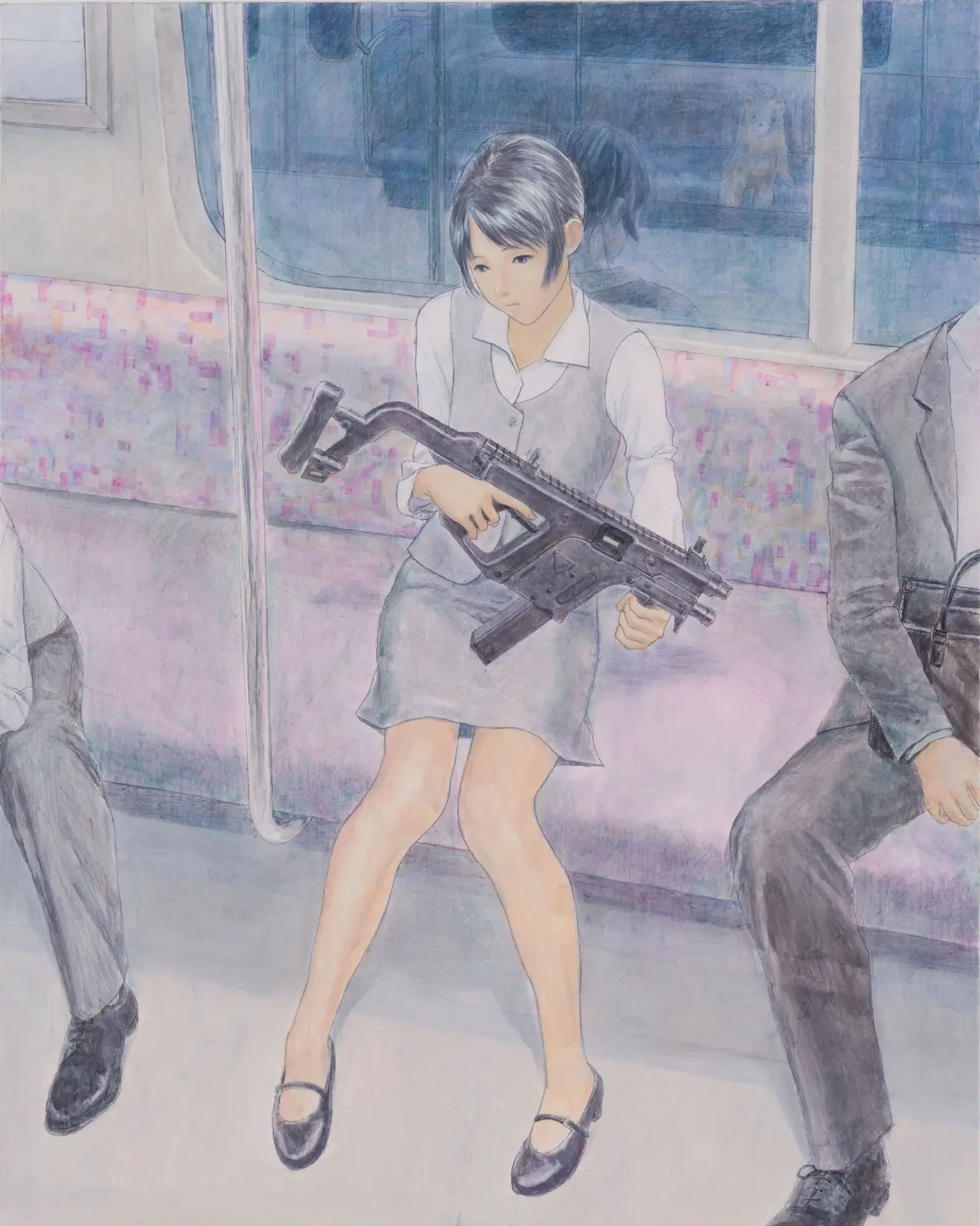
Office Lady │© Utanhole, Courtesy of Kaikai Kiki Gallery
How would you describe yourself as a creator?
Ever since I was a child, I wanted to become a manga artist, and I spent most of my time from elementary school through high school making manga in the countryside where I grew up. Then, by chance, I watched a film by Lars von Trier and was deeply moved. I thought, I want to create something this powerful. Without really knowing how to do that, I enrolled in an art university in Tokyo. I experimented with many different media, and eventually decided that painting was the path I wanted to pursue.
Your work pairs scenes of destruction with characters who look completely unfazed. Where does that calmness come from? Is it a reflection of your own everyday reality?
Perhaps the characters are not calm, detached, or enlightened figures at all. They may instead be people who have shut themselves off emotionally. People who have locked themselves away inside their own ideals.
In ‘The Catcher in the Rye’, there’s a line that goes something like: "The mark of the immature man is that he wants to die nobly for a cause, while the mark of the mature man is that he wants to live humbly for one." In that sense, the characters I paint may be immature. They’re a kind of idealized figure one might encounter in manga.
The foundation of my imagination comes from that adolescent mindset: immature, self-conscious, twisted, what in Japan might be called chūnibyō. Because of that, the characters I imagine often wear expressions that seem convinced they will never die.
No matter the situation, they remain unshaken. They fixate only on something more important than life or death itself, something ideal. I think they embody a kind of toughness that exists side-by-side with foolishness.
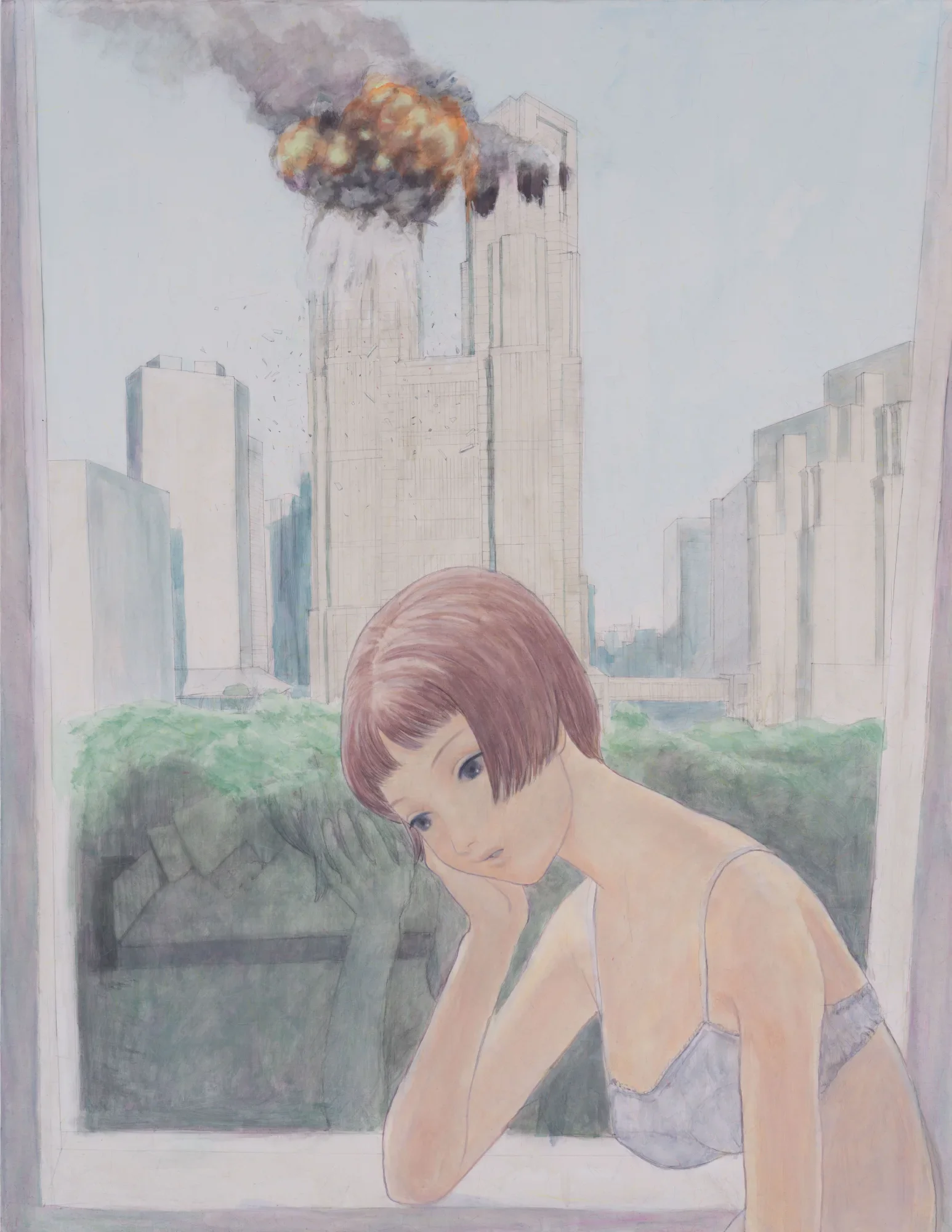
The City Burns, She Dreams │© Utanhole, Courtesy of Kaikai Kiki Gallery
Does the “life goes on” mentality in your paintings reflect today’s world, or is it a universal human condition?
I wouldn’t say I consciously set out to create work that reflects world affairs. That said, any artwork made by a living person inevitably contains traces of the world they live in, as well as universal human tendencies. Those things exist as the backdrop of the work. At the same time, if “life goes on” is interpreted as a positive social message, I don’t think that’s really what I’m aiming for either. What I’m interested in depicting is something much more personal and internal, things that exist within a single person despite their contradictions.
The world may be beyond our control, and we exist within it. Life may continue, or it may not. Yet people still become attached to trivial things, indulge in ridiculous fantasies, and believe there are things more important than life itself. Reality may never change, or it may change suddenly. We have no choice but to give up, yet we cannot give up.
There are feelings that seem contradictory when expressed in prose, but nevertheless undeniably exist within an individual. I think those subtle sensations only truly emerge when translated into painting. That’s what I’m trying to depict. So my work isn’t really trying to answer a question like, “Is it A or B?” There are certainly issues in the world where we can clearly say something is wrong. But what happens inside an individual’s mind, and the paintings born from that perspective, are different. They remain connected to reality while existing on a fundamentally different plane.
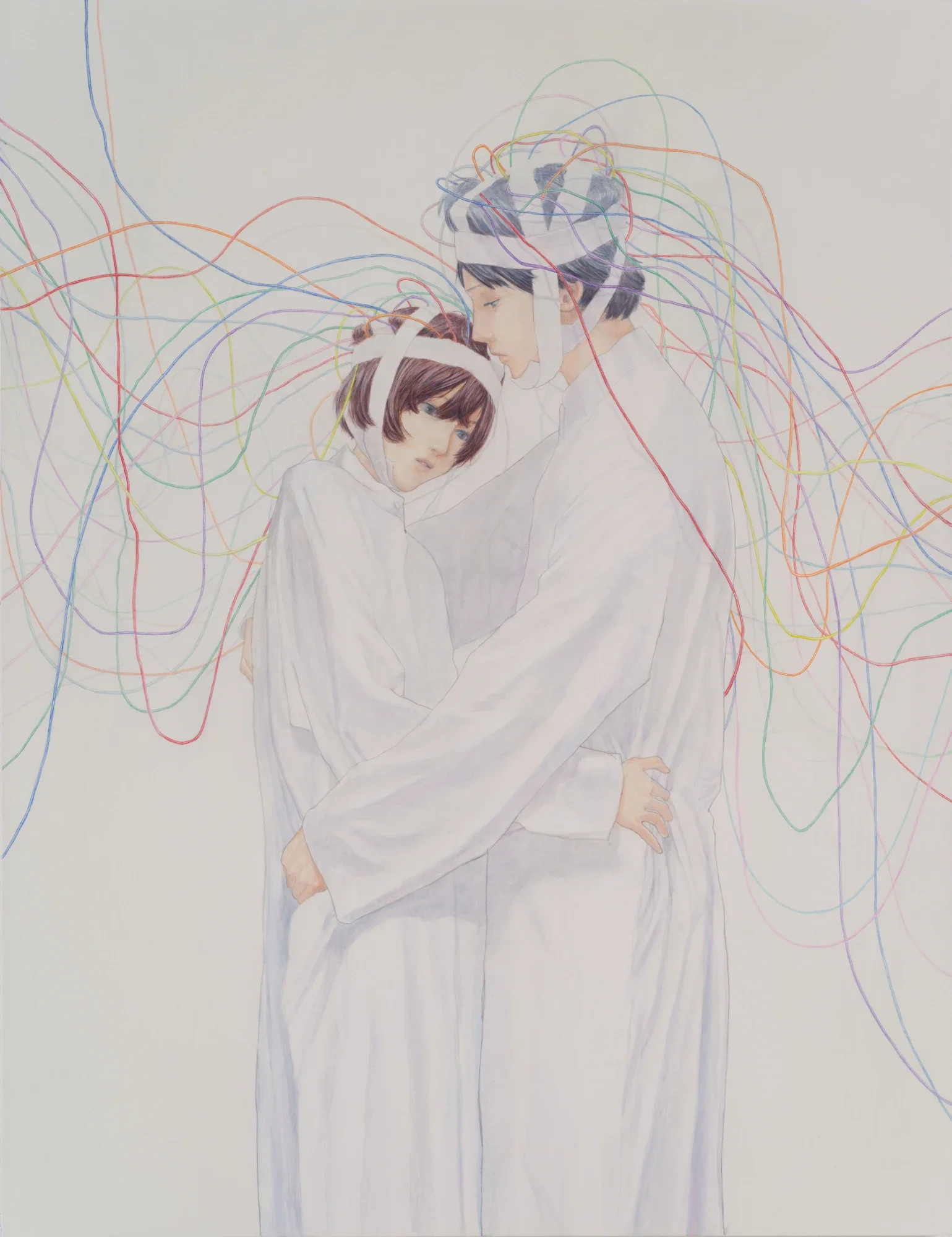
Perfect Salvation Initiation II │© Utanhole, Courtesy of Kaikai Kiki Gallery
What kind of environment do you usually work in? Do you listen to specific music, follow the news, or immerse yourself in particular subjects while creating?
I usually work in a section of my apartment that I’ve prepared as a studio space. To develop an image for a painting, I might jot down a sentence I remember from a book I read long ago, browse the internet, search Google Maps for places that resemble the image in my mind, and then visit them to take photographs. I also often build motifs myself by hand. Sometimes a fragment of someone’s words sparks my imagination. Other times, inspiration comes from the public mood surrounding a news event rather than the event itself.
Beyond the themes, your work is visually characterized by soft pastel colors and gentle linework. At first glance the scenes seem peaceful, but a closer look reveals a much darker reality. How did this signature style emerge?
Even when I paint figures who seem to be looking away from horrific situations, my intention is not to expose the grotesqueness of reality or criticize people’s indifference. When depicting something that is collapsing or being destroyed, I believe there must be a sense of attachment, or even affection, for that thing.
It’s in moments of loss, or when something is on the verge of disappearing, that we often feel most strongly how much we cared about it. We become aware of what it truly meant to us. I want to express a kind of dissociative sensation that exists before emotions can be clearly named or reduced to a linear message. Because of that, I think it’s better when there is a gap between the overall impression of the painting and the information being depicted within it.
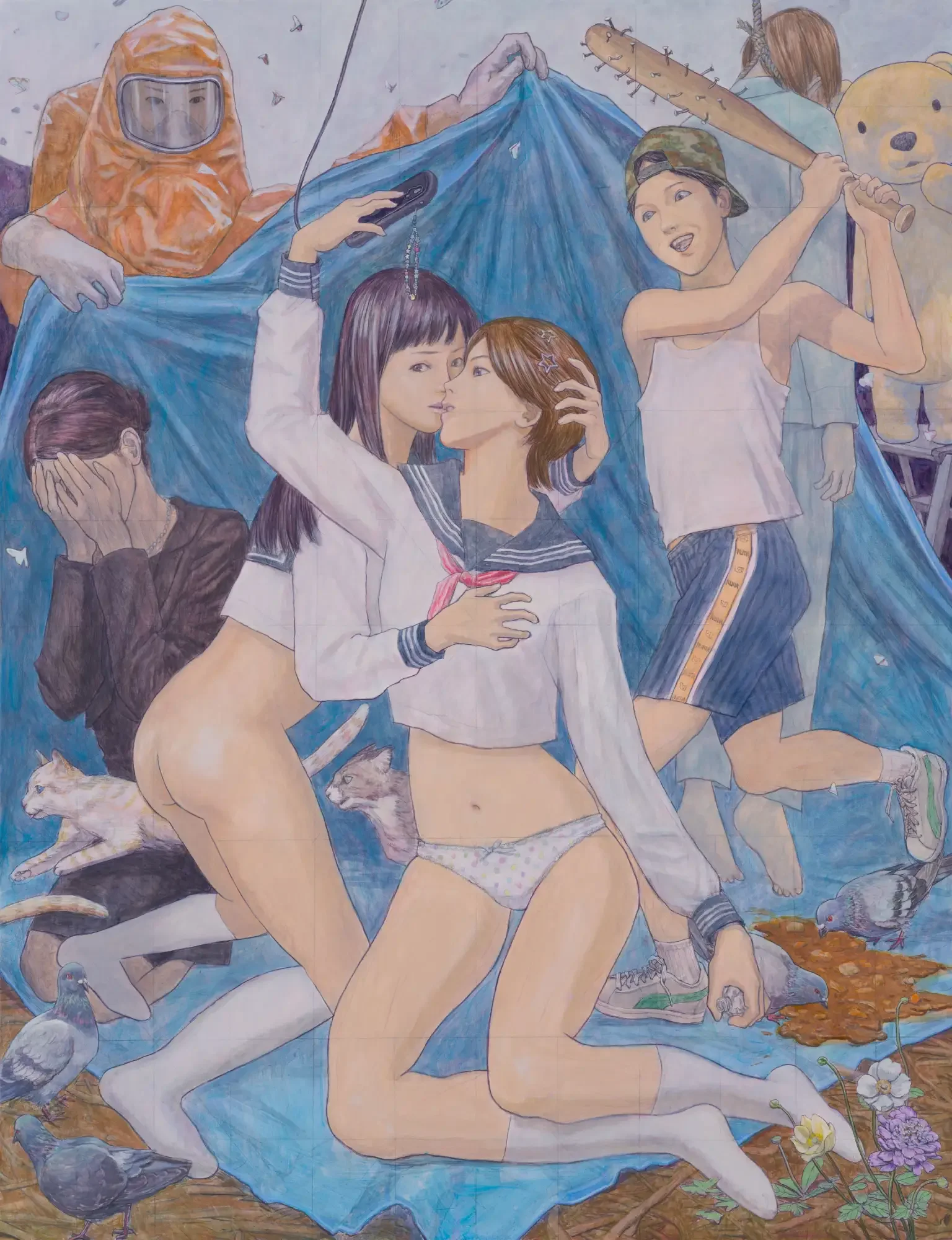
Requiem for the Damned │© Utanhole, Courtesy of Kaikai Kiki Gallery
Do you think the characters you paint feel happiness, or perhaps peace, within the absurd worlds they inhabit?
If I had to put it simply, I think the characters would say: “I’m happy. Or maybe I’m unhappy. But so what?” There’s a certain arrogance to them.
Finally, a more personal question: are you yourself happy within this absurd world we all inhabit?
Yes, I am.
Trending articles


The Weeknd taps into his love for Tokyo.