
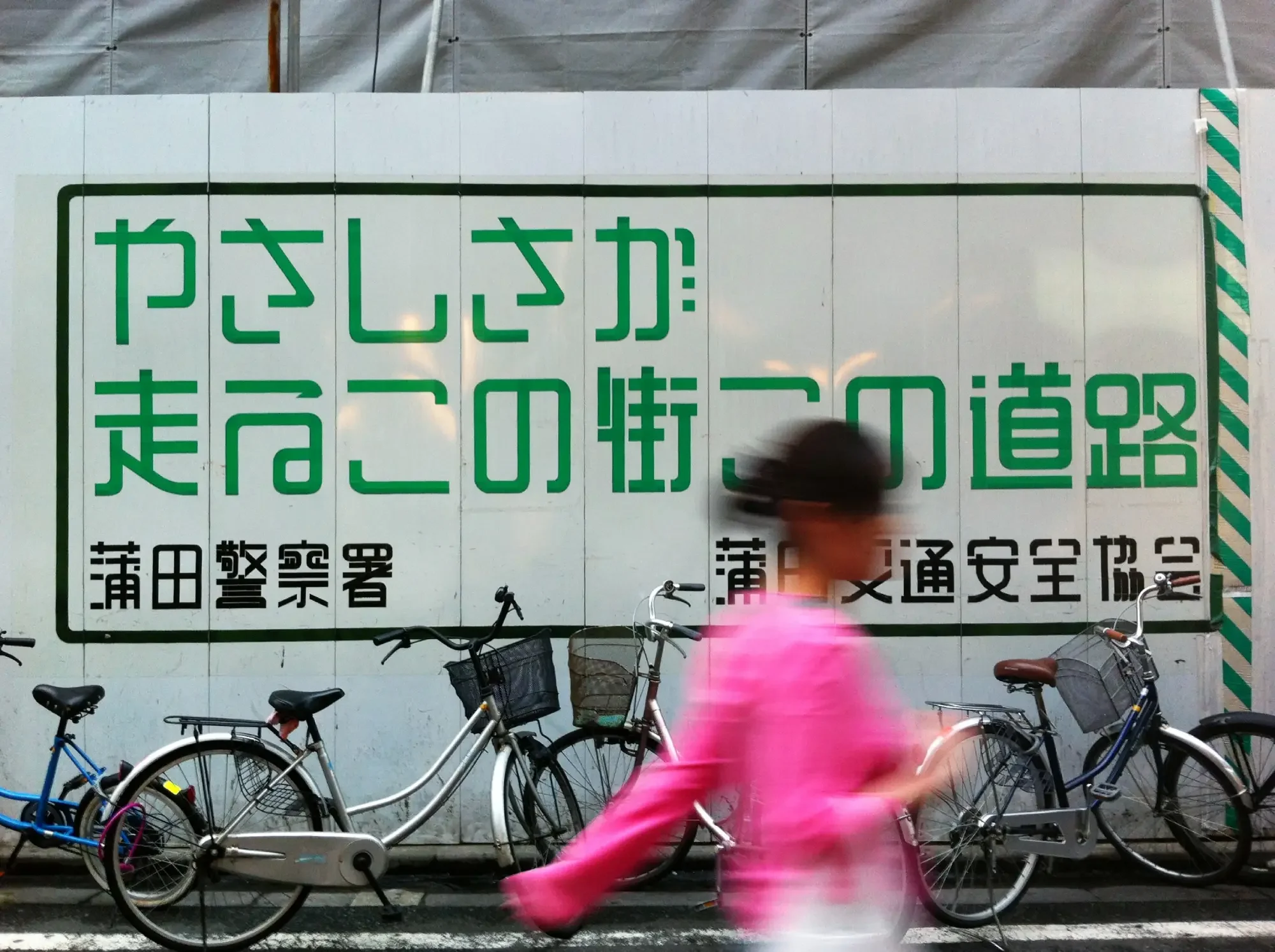
© Ken Ishikawa│via Wikimedia Commons
Millions of people surge through Shinjuku Station every day. If you’ve ever had the anxiety-inducing experience of navigating Shinjuku Station, you’ve probably found yourself scanning overhead signs in an attempt to make sense of each corridor, trusting that someone has already done the invisible labor of making one of the world’s most chaotic transit hubs feel navigable.
In the early 2000s, massive redevelopment projects began swallowing sections of the station. White construction panels appeared across platforms and passageways as JR East pushed forward large-scale renovations, including major work around the New South Exit and station concourses. Commuters found themselves trapped in a subterranean maze that made Tokyo’s most infamous station feel even more hostile than usual.
In the midst of the chaos was Shuetsu Sato (佐藤修悦), a security guard who, unlike the designers, architects or transit planners, had no formal authority over how people moved through the station. His job was to maintain order during construction work and direct crowds when necessary.
After repeatedly watching confused commuters miss trains, take wrong exits and stop staff members for directions, he noticed a major problem: the temporary signage wasn’t working. In multiple interviews, including a later feature with RocketNews24, Sato explained that many of the official signs were too small, visually weak, or installed in locations people simply didn’t notice. In a station where thousands of people are moving every minute, speed and clarity are everything.
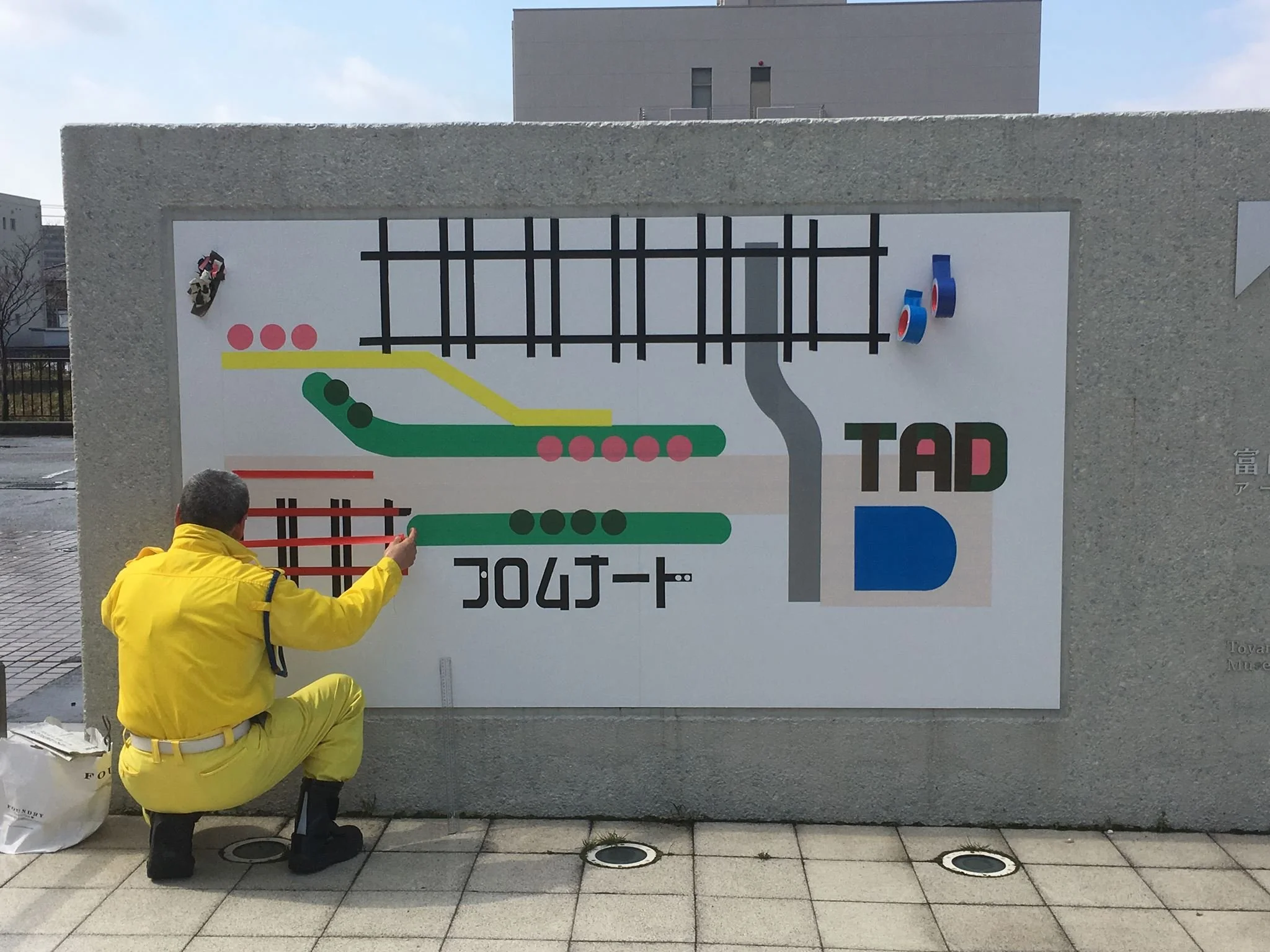
So Sato began making his own signs using materials he had access to on-site: duct tape, coloured tape, and cutter knives. Rather than constructing each kanji stroke individually, he often lays down large blocks of tape first before carving letters out of those surfaces.
His signs immediately stood out and made Shinjuku one step easier to manage for commuters. Thick strokes cut from colored tape, oversized directional arrows pointing thousands toward the right platform, and even handmade restroom pictograms began appearing across construction barriers. From afar, they almost resemble the disciplined visual clarity of postwar Japanese modernist graphic design, something akin to Yusaku Kamekura’s clean geometry. It’s only upon closer inspection that the handmade imperfections reveal themselves. What emerges looks like calligraphy filtered through industrial design.
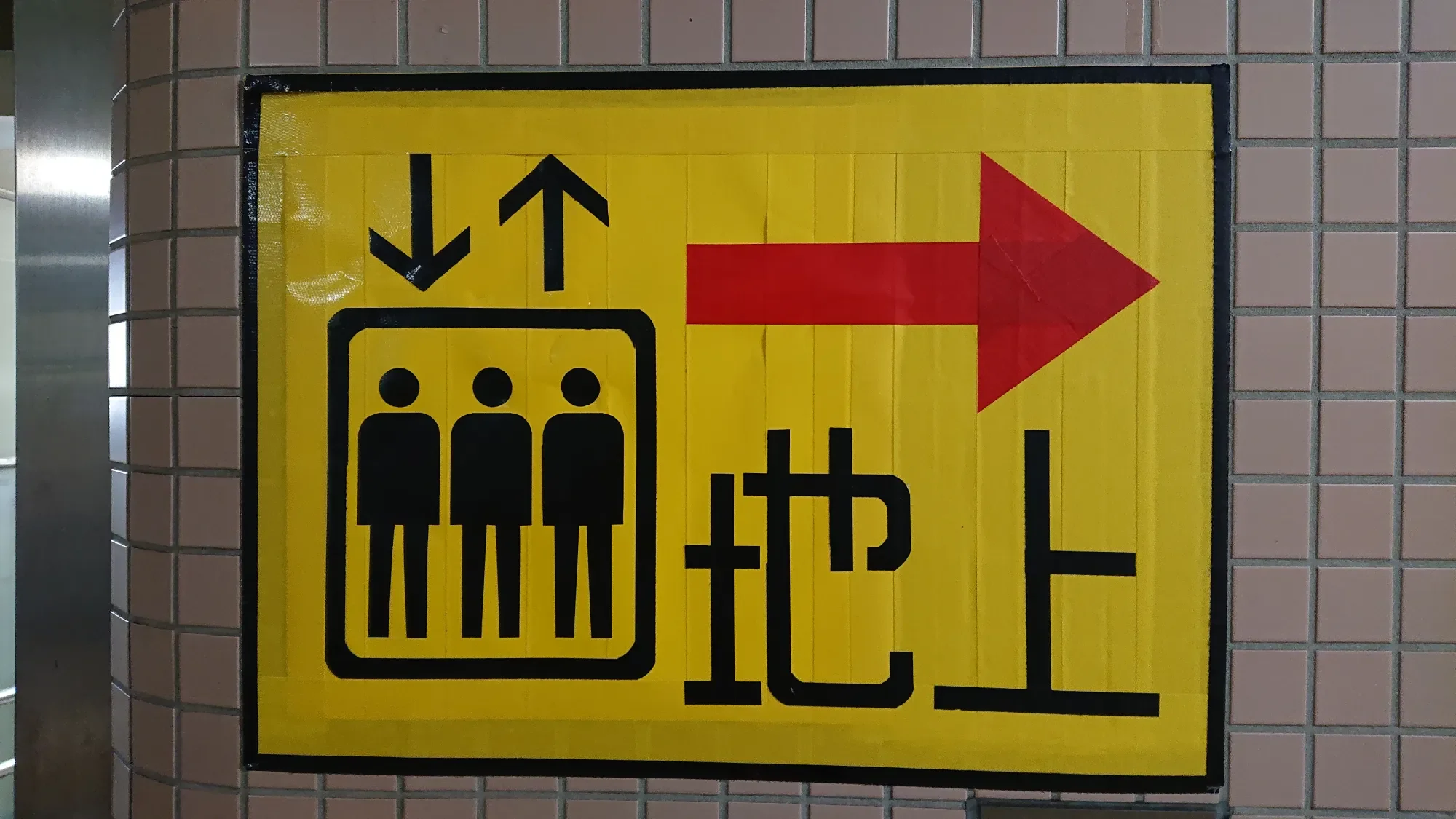
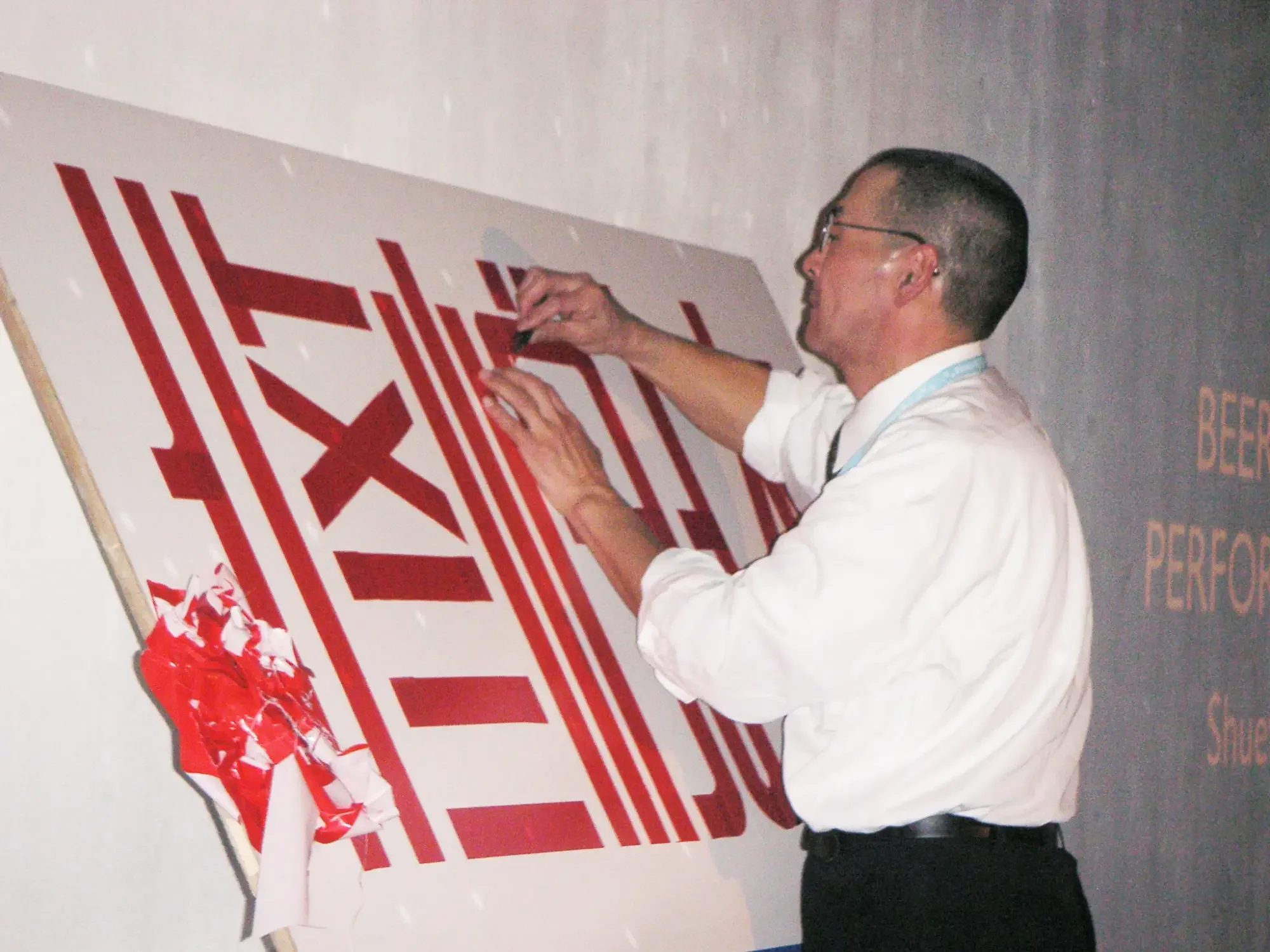
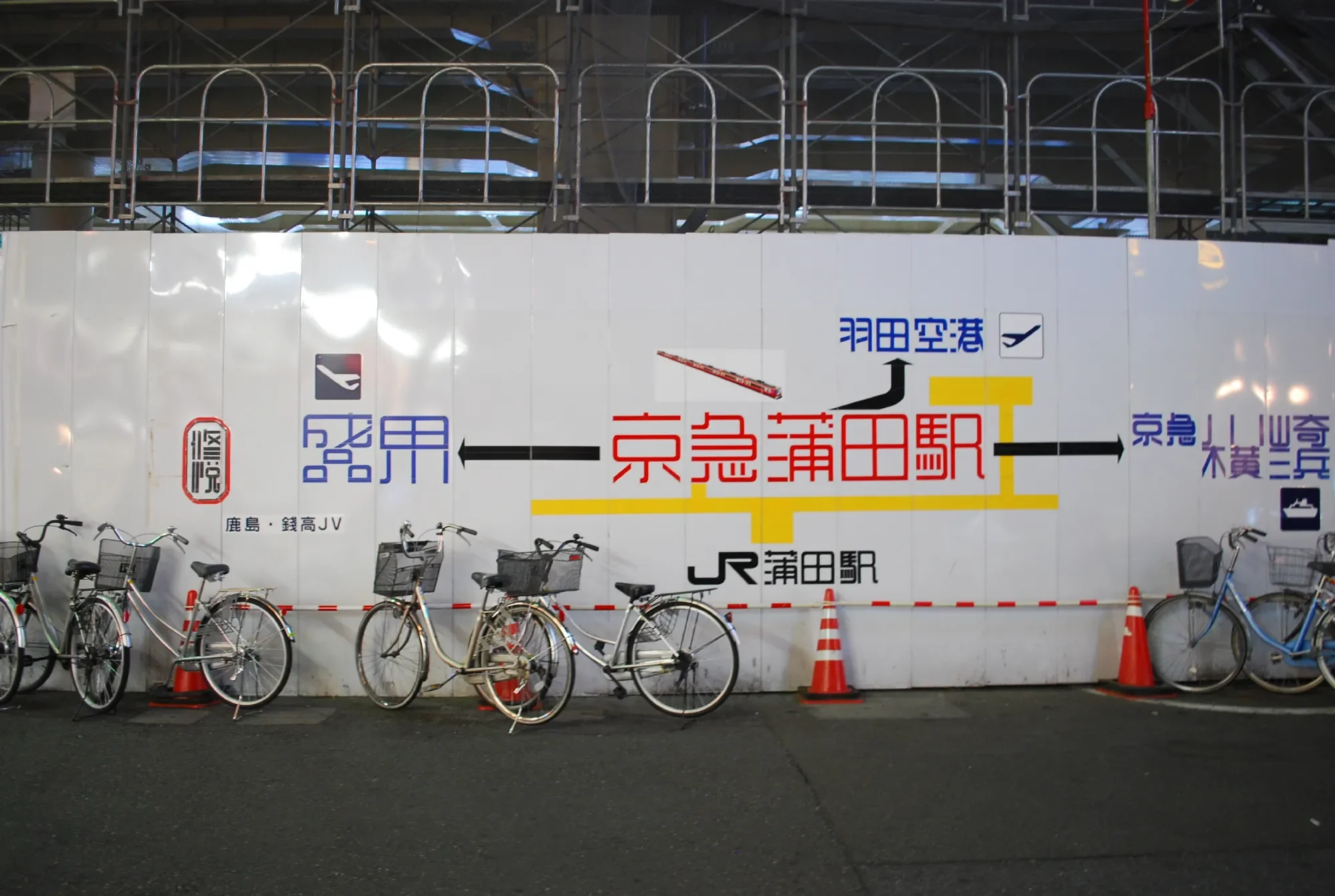
For years, commuters treated these signs as an oddly charming feature of station construction sites. That anonymity began to crack in 2007 when Daily Portal Z published one of the earliest major articles on Sato. The piece documented a public event in Koenji that drew nearly 100 people curious to watch him work in real time. Around the same period, creative collective Trio4, led by artist Yamashita Hikaru (山下陽光) began archiving his signage and amplifying it online. Their archives show Sato’s work spreading across niche platforms, and eventually mainstream outlets including NHK and Tokyo Shimbun. Long before the algorithm-driven virality we know today, Sato became an internet cult figure through Japan’s deeply niche mid-2000s blog ecosystem.
Sato’s rise from anonymous station worker to cult design figure says a lot about how Japan assigns cultural value. The country has long celebrated craftsmanship, but often through romanticized archetypes. Think the ceramic master in a remote village, the multi-generational knife maker, the obsessive ramen chef. Sato represented something far less romantic but arguably more contemporary: invisible urban labor. His work emerged from temporary walls and commuter frustration, spaces that are rarely granted cultural prestige despite shaping daily life for millions.
Museums eventually caught up. In 2019, the Toyama Prefectural Museum of Art and Design included Sato in its exhibition “Where Am I? Art and Design Around Signage”, positioning his work within broader conversations around wayfinding, design systems, and public communication. Visitors could watch footage of his two-hour live demonstration condensed into a three-minute video showing exactly how his characters emerge from strips of tape. The institutional validation felt significant, but also slightly ironic. Work originally created to help commuters survive temporary inconvenience was now being preserved inside museum walls.
Sato has since collaborated on projects far beyond train stations, including installations with mt masking tape’s MT Art Project, and created title lettering for the 2008 historical film Maboroshi no Yamataikoku. For years, millions of people encountered his lettering without knowing who made it. They followed his arrows to platforms, exits, bathrooms and transfer lines before disappearing back into the rhythm of Tokyo commuting.
Long after many of those original station walls disappeared, Sato’s lettering remains one of the most unlikely visual legacies to come out of Tokyo’s transit system.
Trending articles



Step into the visual world of Nagi Noda.