
Anime Goes Renaissance - How Ricardo Paredes Reworks the Canon
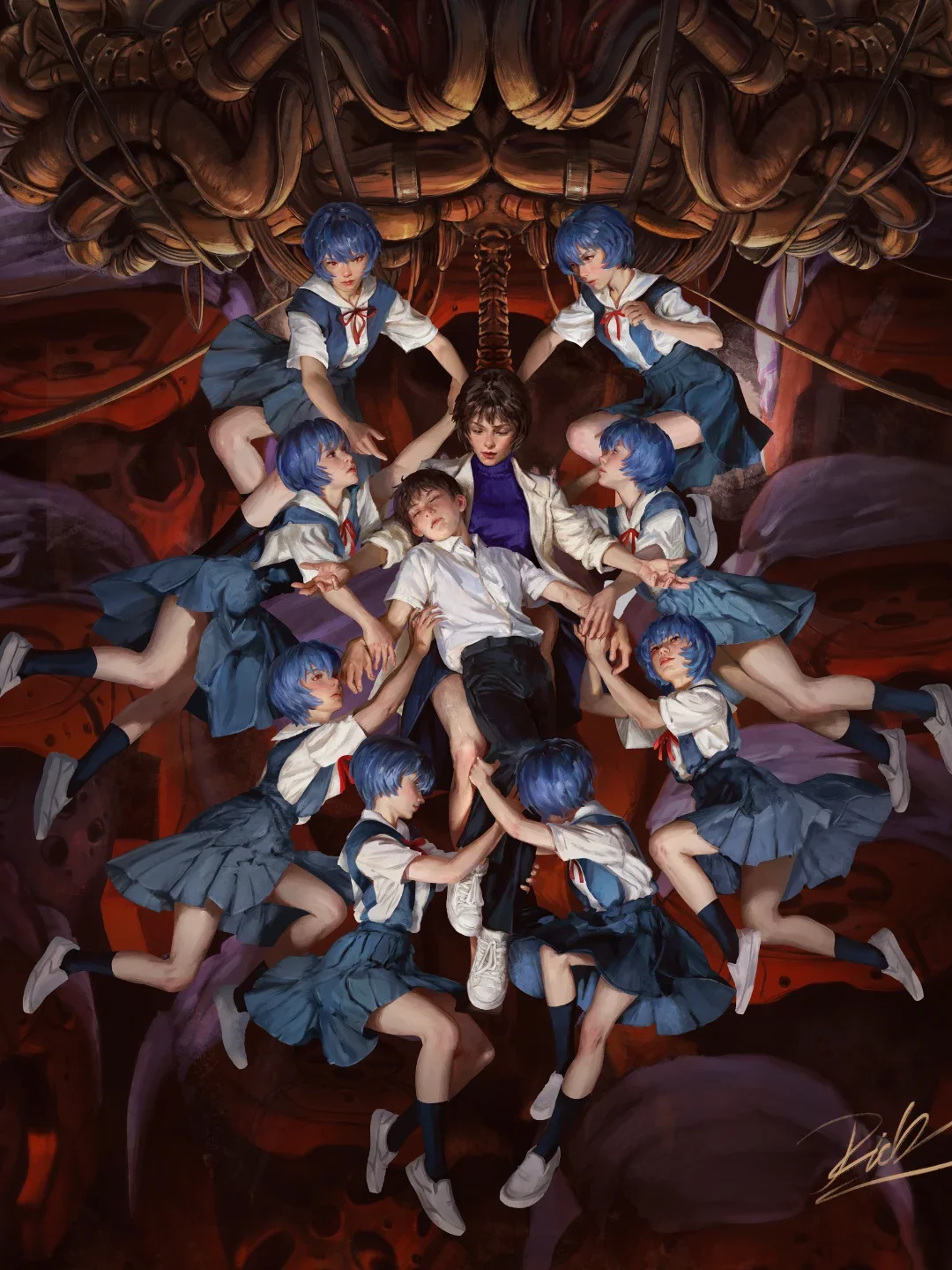
Mother Is the First Other│© Ricardo Paredes
It’s 2026. We’ve seen anime art in all its shapes and forms. That is, until we coincidentally stumbled upon the page of Ricardo Paredes. At first glance you’d get the impression you’re looking at a rework of Michelangelo’s The Last Judgment. But a closer look reveals why Ricardo’s works feel so familiar.
Shinji, Yui, and a multitude of Rei’s. This is Evangelion going Renaissance. And the Michelangelo reference? It turns out we weren’t far off, but more on that later.
Ricardo Parades operates at an unusual intersection: anime as subject, Renaissance as structure. His digital canvases borrow from tenebrism, cathedral reliefs, and sculptural gravity, yet remain rooted in the mythologies and fandom cultures that raised him.
We spoke with Ricardo about digital chaos, and why Renaissance composition might be the most effective way to tell anime stories today.
What role does anime play in your life?
Anime is basically the foundation on which my visual imagination grew.
It has been a very active presence since I was a child. I was part of the generation that experienced the absolute boom of classics such as Pokémon and Yu-Gi-Oh!. It was a cultural phenomenon that completely captivated me. That early exposure to such vast worlds, with their own rules and mythologies, ignited a spark in me.
But it didn’t stop at childhood nostalgia. That initial impact served as a gateway, and this is where the internet and fandoms were vital. When I asked myself, “What else does this medium have to offer me?”, it was thanks to online communities that I was able to research and discover a gigantic universe that I would never have reached through traditional television.
Immersing myself in those internet niches, seeing what other fans were sharing and discussing, was what really educated my taste and expanded my horizons. That constant search, driven by the community, is what has brought me here. Today, my work is not just a tribute to those series; it’s a way of giving back to the medium everything it gave me, but filtered through my current technical maturity.
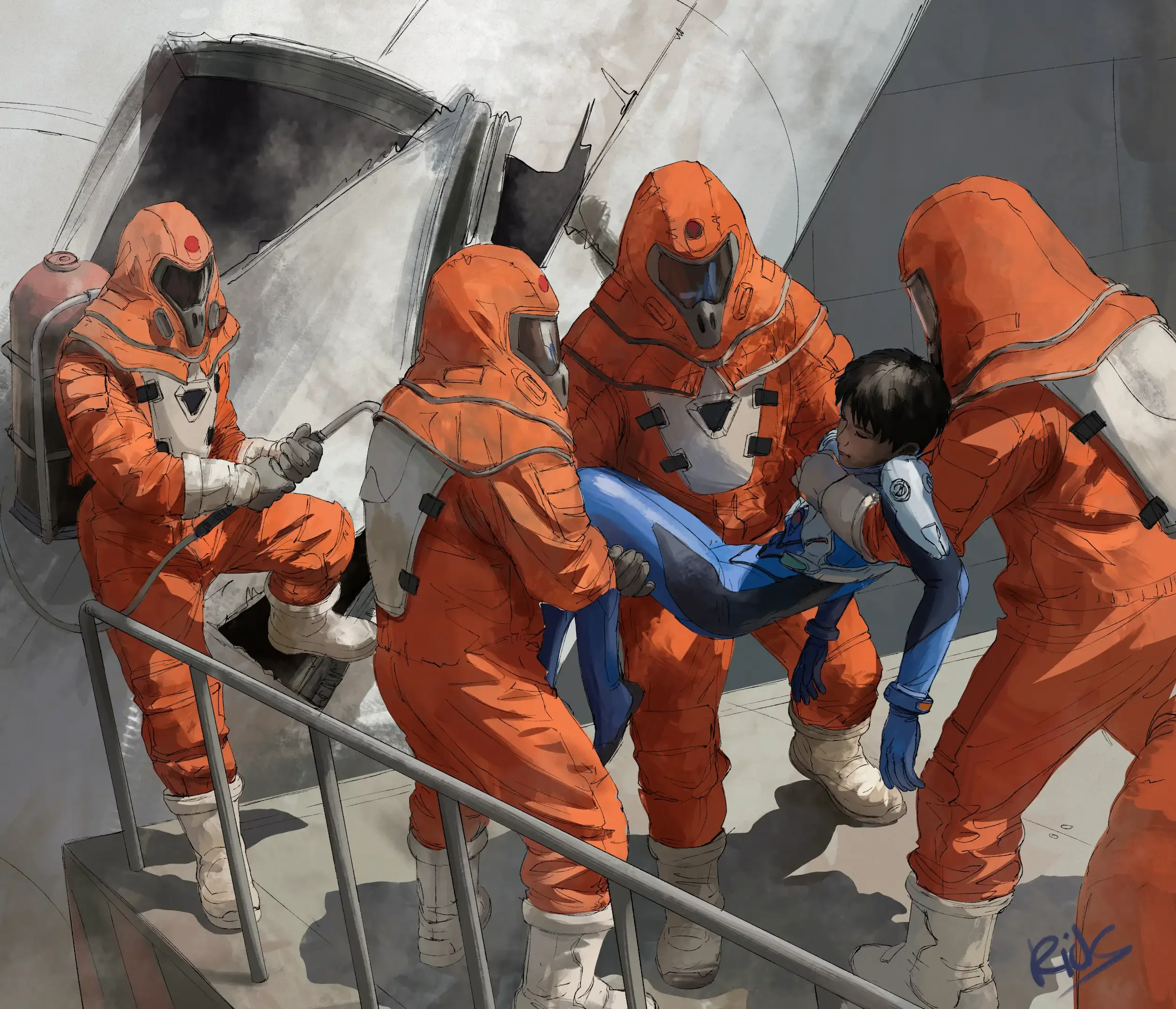
© Ricardo Paredes
Your work has a very distinctive painterly realism, despite being fully digital. What drew you toward realism as a way of telling your story?
It has been a fairly organic evolution. At first, my native language was undoubtedly anime and manga. I grew up consuming that aesthetic, so naturally that was how I drew. That was my foundation.
But I’ve always had a desire to experiment. I didn’t want to limit myself to replicating a style; I wanted to understand how it worked. That curiosity gradually pushed me towards realism. I realized that in order to break the rules or stylize them better, I first had to master them.
So I began a process of self-learning through “Master studies” and started studying reality: how light interacts with skin, how anatomy really works, how textures behave. It was a period of technical migration.
The interesting thing is that I never abandoned anime. Today, although my execution is pictorial and seeks that realistic and atmospheric finish, the DNA of my work remains anime. My compositions, character designs, and visual narrative continue to draw from that original source. I have simply changed the tool with which I tell those stories: now I use the vocabulary of classical realism to give physical weight to the narratives that have always fascinated me.
How does Renaissance influence your work?
That is precisely the core of my visual quest. For me, classical art (both the Renaissance and the Tenebrism that obsesses me) is a perfect language for theatricality and emotional narrative. I treat my works as “closed systems” where light and composition direct the story.
Let me explain how these influences specifically shape these two pieces:
Pluralitas Concentio
In this work, the influence is evident in the scenic depth and triangular hierarchy.
I structured the classroom like a theater stage. The two characters at the extremes (Ayato and Reika) act as repoussoir (a technique for framing the main action and drawing the gaze toward the center), inviting the viewer to be part of the audience.
The central figure of Haruka holding Ayato is a direct reference to the Pietà. I was looking for that emotional gravity and the physical and spiritual weight of loss, lit in a way that highlights the drama under the divine gaze of the RahXephon in the background.
Mother Is the First Other
Here, the direct influence is a section of the main door of Milan Cathedral. It is not a Renaissance work, but it draws heavily from that school, so I did the same and reinterpreted it with Evangelion imagery but with a historical and solemn weight to illustrate Shinji’s fractured psyche and the omnipresence of Rei/Yui. The arrangements of Rei’s multiple clones, with their intertwined and floating limbs, seek that dynamic but frozen movement, where gravity seems not to exist, creating an ethereal atmosphere.
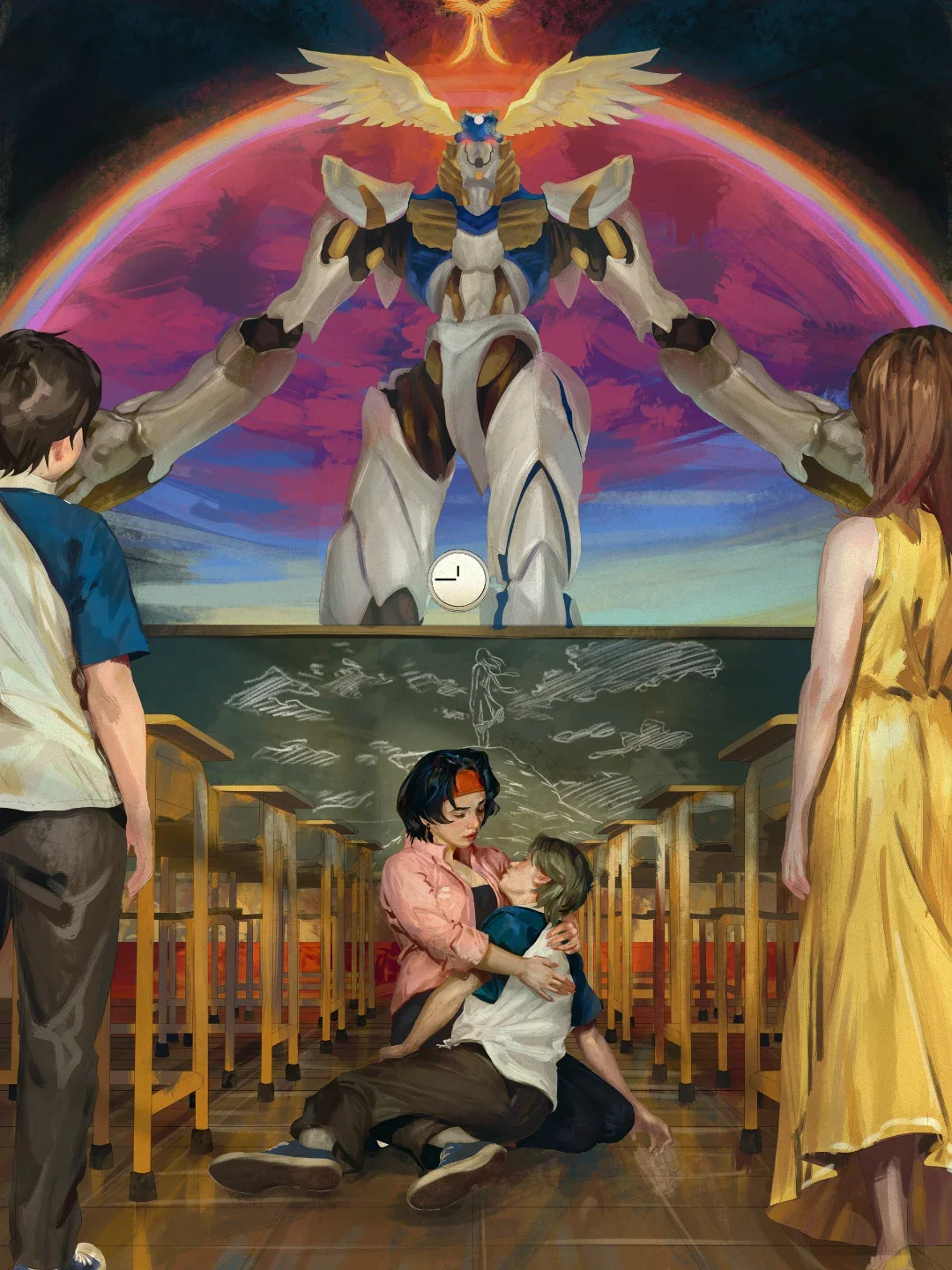
Pluralitas Concentio│© Ricardo Paredes
Thanks Ricardo, what message do you have for the world?
I would like to address other creators. If there is one thing I have learned along the way that I can share with you, it is this: do your master studies.
No matter what style you use or what your niche is, studying reality and other artists is essential. It is what truly nourishes your visual library and refines your painting and drawing techniques. Understanding the fundamentals is what gives you the creative freedom to break the rules later.
Looking back, it’s incredible to think how anime and manga defined my life from such an early age. That passion, cultivated over the years and through the internet, is what allows me to make a living doing what I love as a freelance artist today. It’s a privilege to have turned that obsession into my professional career.
Thank you so much for the opportunity to do this interview and for letting me share a little bit of my process and my story. It’s been a pleasure.
Follow Ricardo’s journey on Instagram
Trending articles



Saku and Sorao Sakimura bring Hatsune Miku to life in new MV.