
STREET In London - When Harajuku’s Icon Turned His Lens Overseas
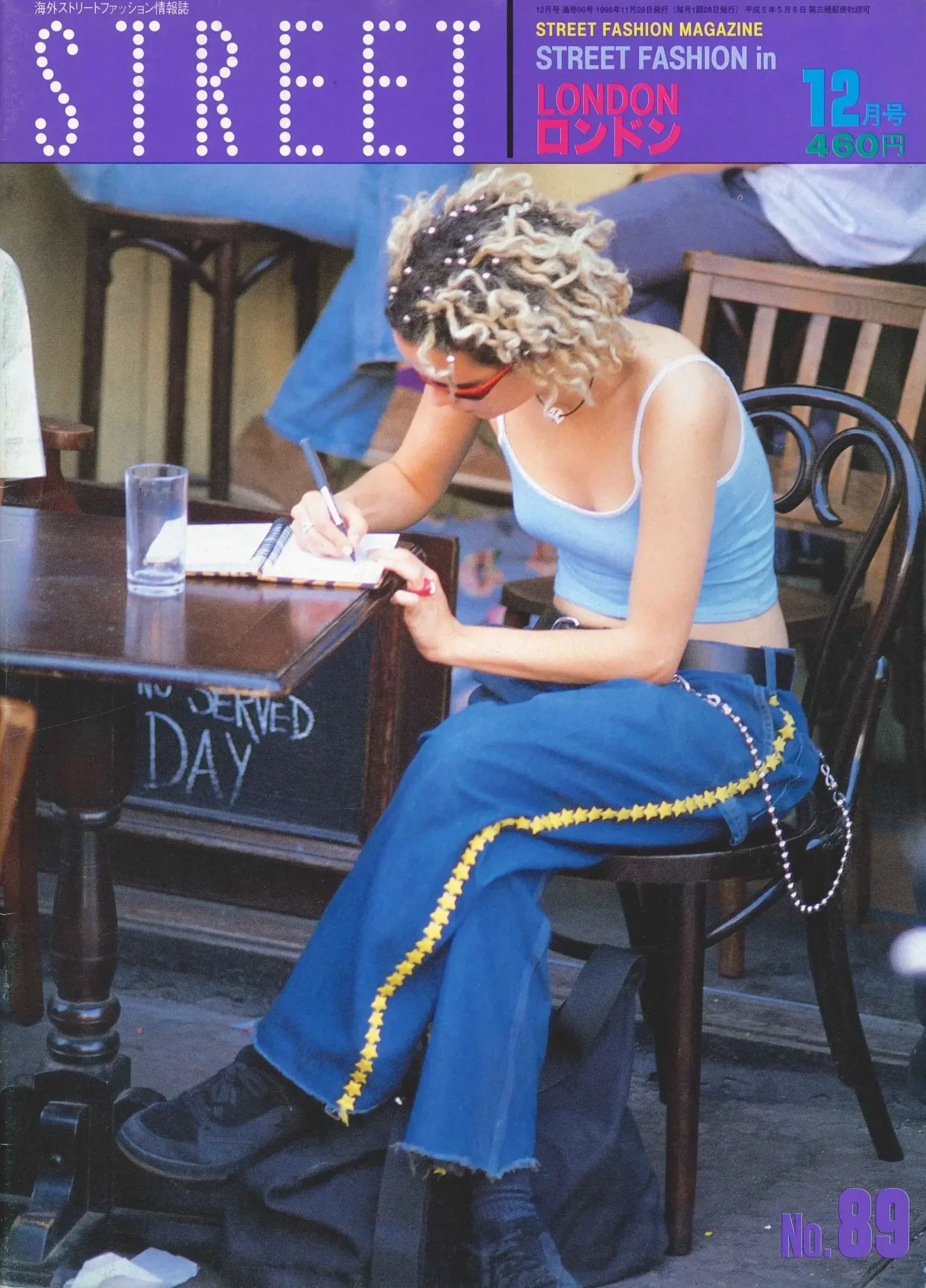
STREET Magazine│scan by Filter Store
In 1985, a new era of street fashion documentation began. When Shoichi Aoki launched STREET Magazine, the idea of “streetwear” barely existed as a shared language. The word circulated in parts of the United States through surf and skate scenes, but for the rest of the world the term “streetwear” didn’t really carry any cultural weight at all, including in Tokyo.
STREET became one of the first publications anywhere to document how people dressed on the street as part of their daily routine. Aoki photographed the people that dressed differently, whether through subculture, attitude, or his personal interpretation. Its earliest issues were based in Tokyo, which captured punks, rockabilly dancers, minimalists, anyone who looked unique through their outfit.
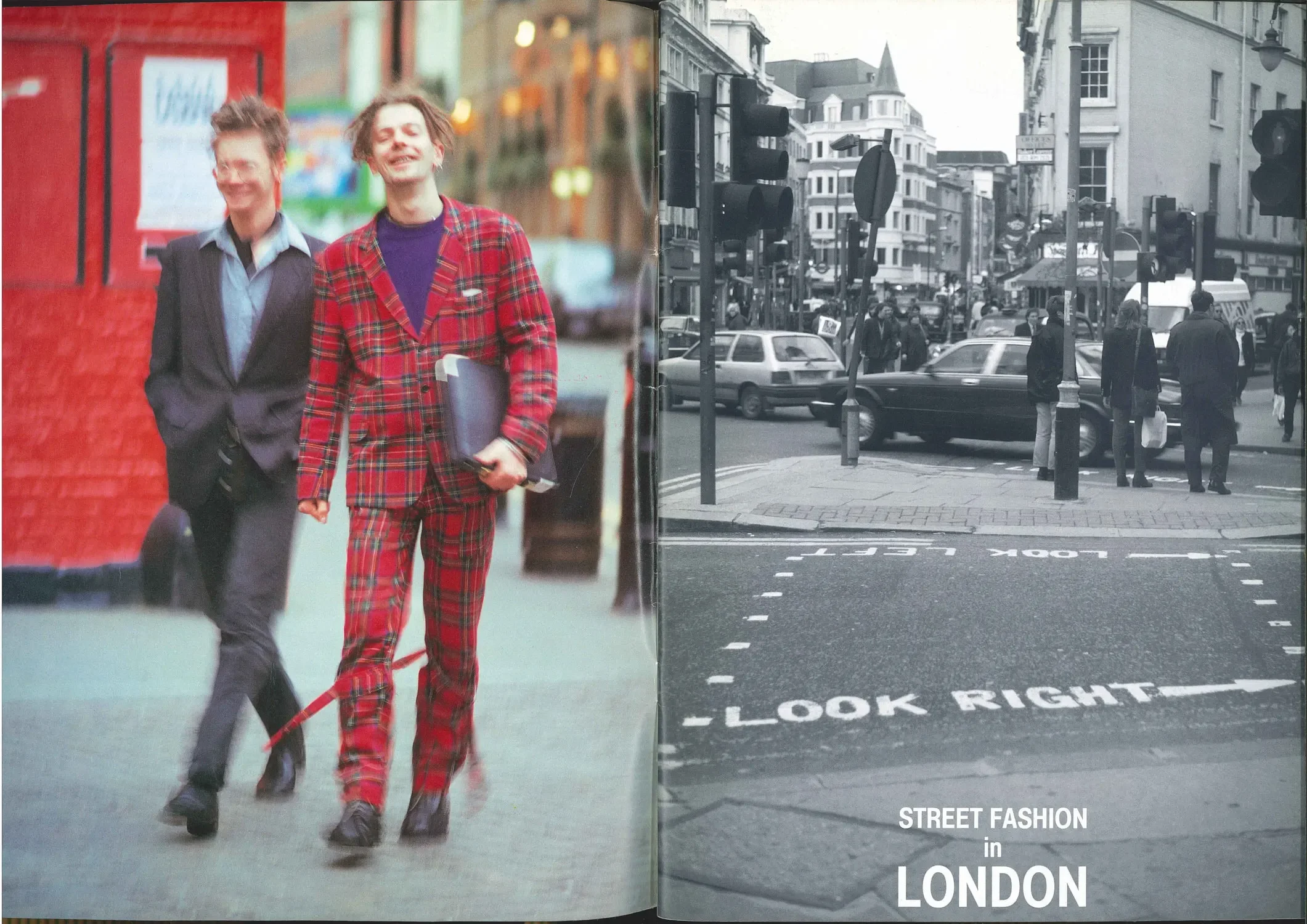
Within the first 10 issues, STREET expanded its lens outside of Tokyo, and even Japan. Aoki began traveling regularly to Europe and the United States, photographing cities such as New York, Paris, and London. In no-time, his collections created a blueprint of the fashion cultures that drove these different cities.
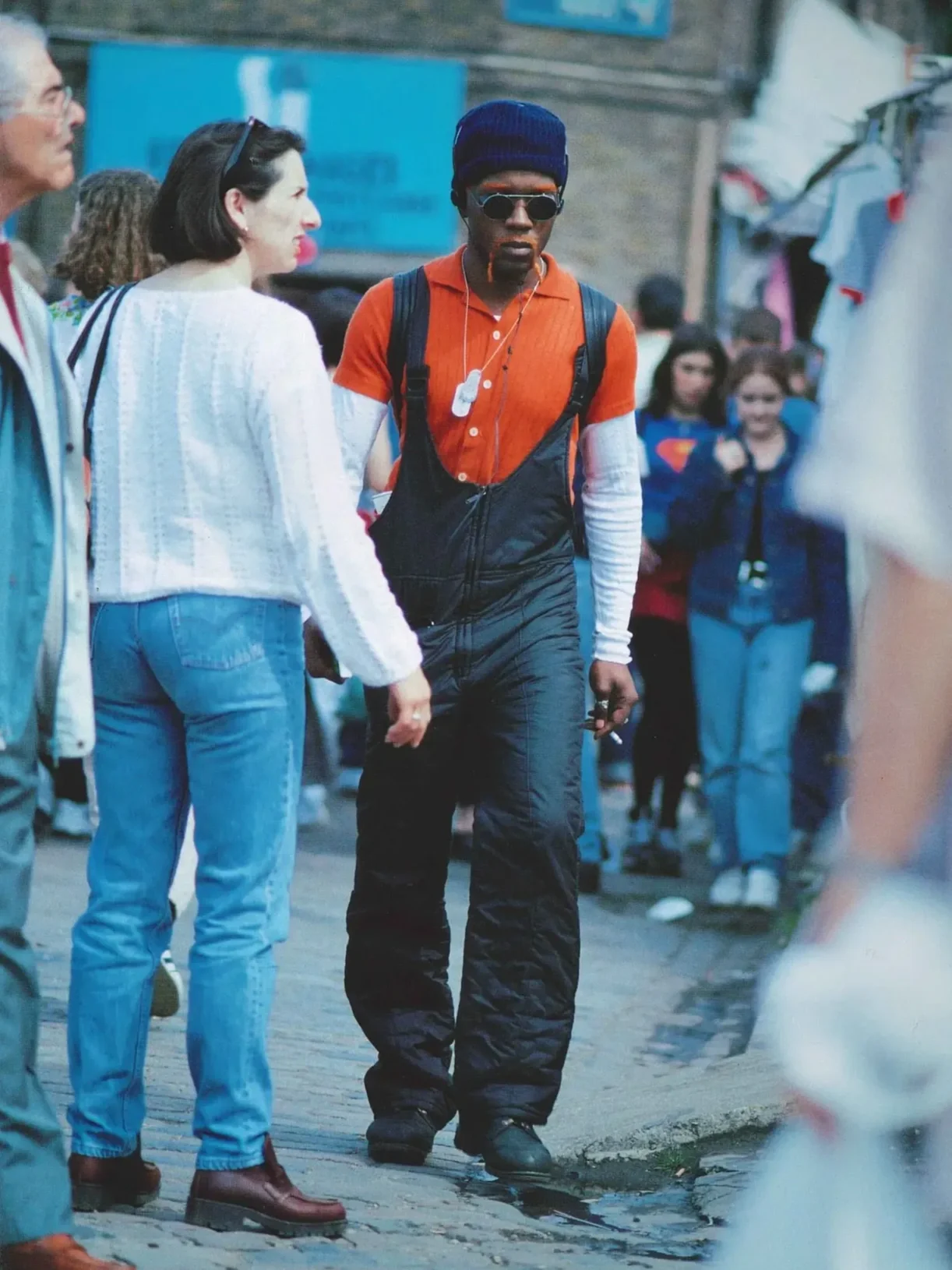
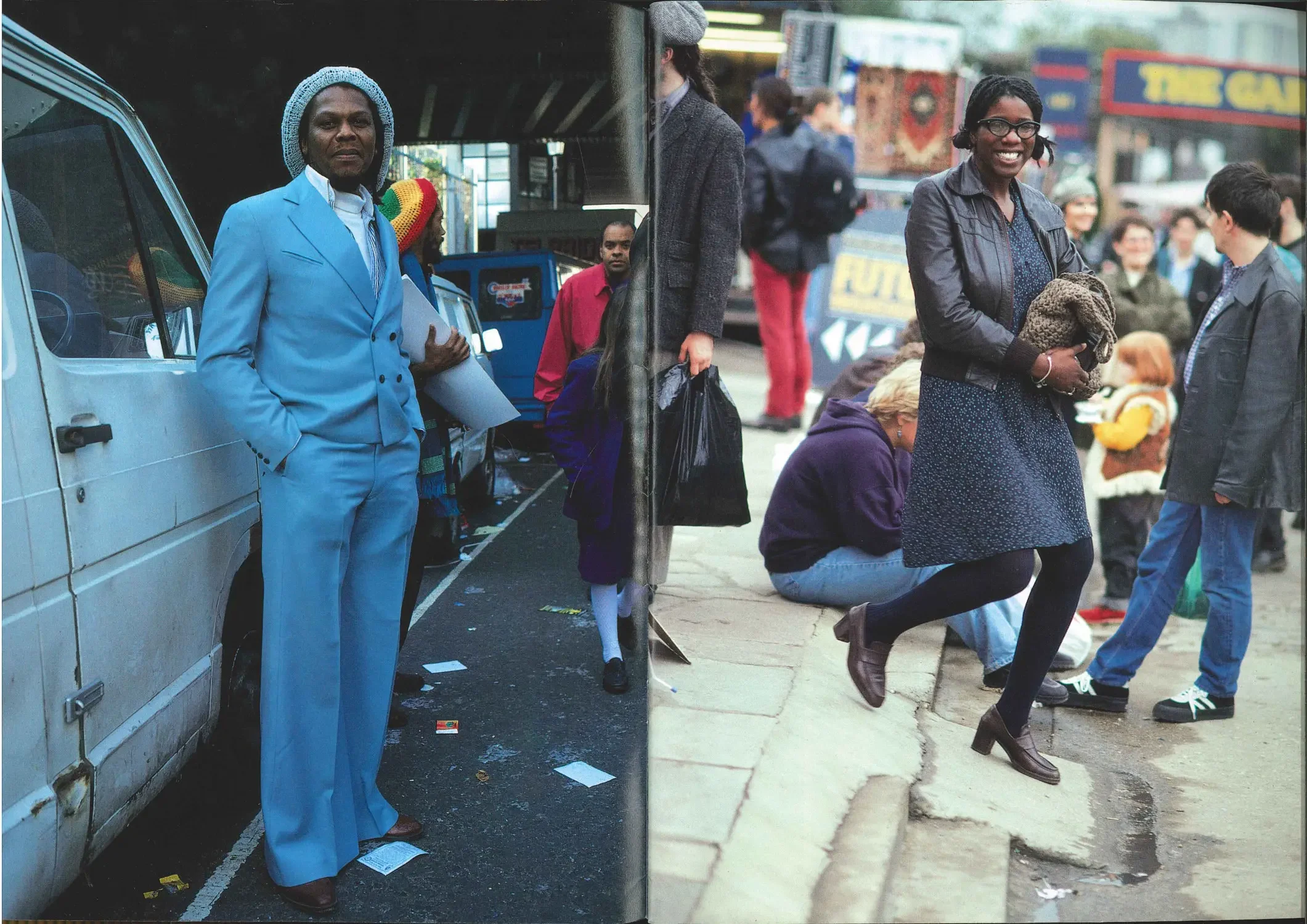
By the time Aoki arrived, London street fashion carried visible history. Punk had undergone some cultural cycles, to the point where military surplus, tailoring, and designer pieces appeared side by side. What Aoki found in London was a city where fashion circulated, with Vivienne Westwood and Christopher Nemeth leading the charge.
Besides the outfit itself, Aoki’s signature photography style highlights how people actually occupy public space: couples walking hand-in-hand, shoppers strolling past 2nd hand markets, kids appearing in the same shot as punks and salarymen. That’s exactly why the pages of STREET feel like a street-level census, a visual rhythm that differs sharply from Aoki’s later Tokyo coverage, where people are often asked to pose in front and face the camera directly.
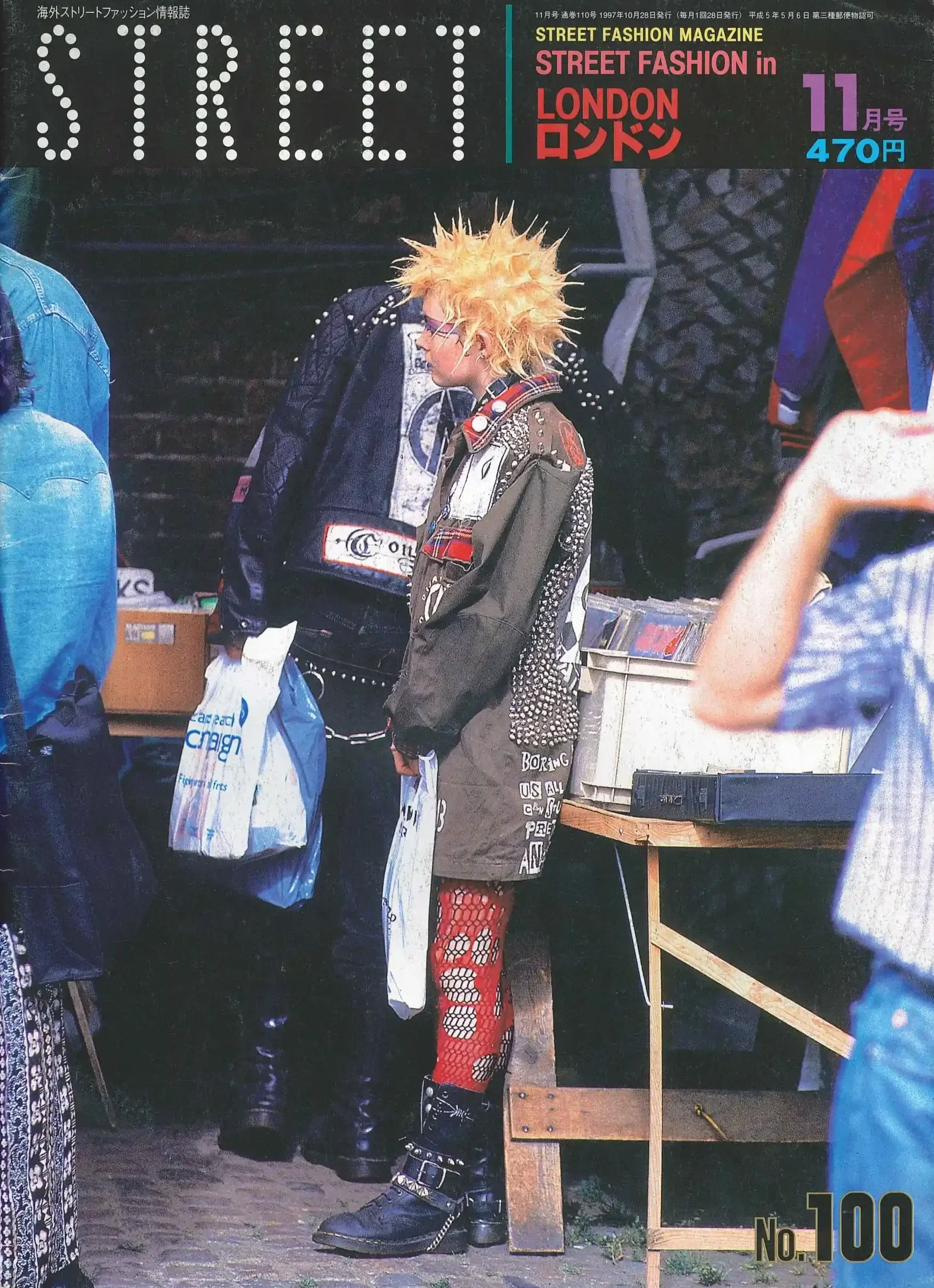
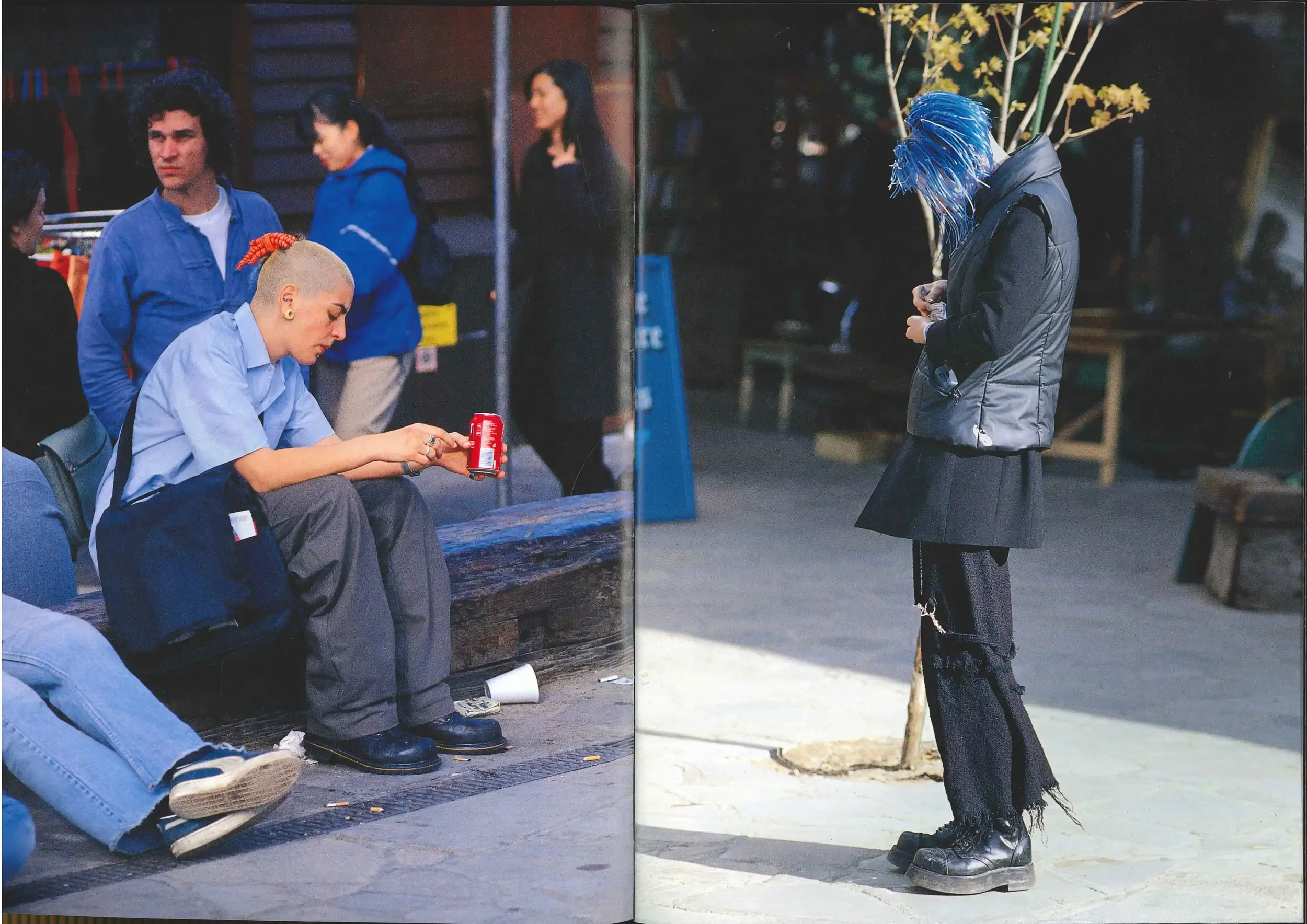
As Aoki was traveling, the street fashion in his hometown was accelerating. By the early 1990s, areas like Harajuku had become dense with emerging subcultures. Figures such as NIGO and Jun Takahashi were preparing their debut collections, while NOWHERE became Harajuku’s clubhouse. STREET documented this shift, but the street itself began to produce its own internal logic.
In 1997, Aoki responded by launching FRUiTS Magazine, narrowing his focus entirely to Harajuku. FRUiTS fixed the people of Tokyo in place. That move cemented Aoki’s reputation internationally, as his magazines became the first and most important source to know what was going on in the streets of the soon-to-be capital of streetwear.
Looking back, Aoki’s turn toward London feels like a parallel investigation. In Tokyo, he documented emergence, while in London, he documented continuity. Both cities offered street fashion, but under different definitions. By the time “streetwear” became a recognized global category in the late 1990s and early 2000s, Aoki had already completed the foundational work. His work outside Tokyo may well be the reason two of the world’s most influential fashion archives came into existence.
All scans provided by Filter Store, which has STREET Magazine issues available on its website
The full STREET Magazine archive is available to purchase as an e-book on tokyofruits.com
Trending articles





Exploring Yuri Sugiura’s creations from tiny foam cats to full & dragon masks.