
The Monochrome Tokyo Meltdown of Idan Barazani
© Idan Barazani
Somewhere around the late 2010s, a particular kind of Tokyo image fatigue set in. Countless Famimas and 7-Elevens appearing as sacred temples, while photographers arrived in Shibuya to rediscover Blade Runner through CineStill 800t and a Strong Zero.
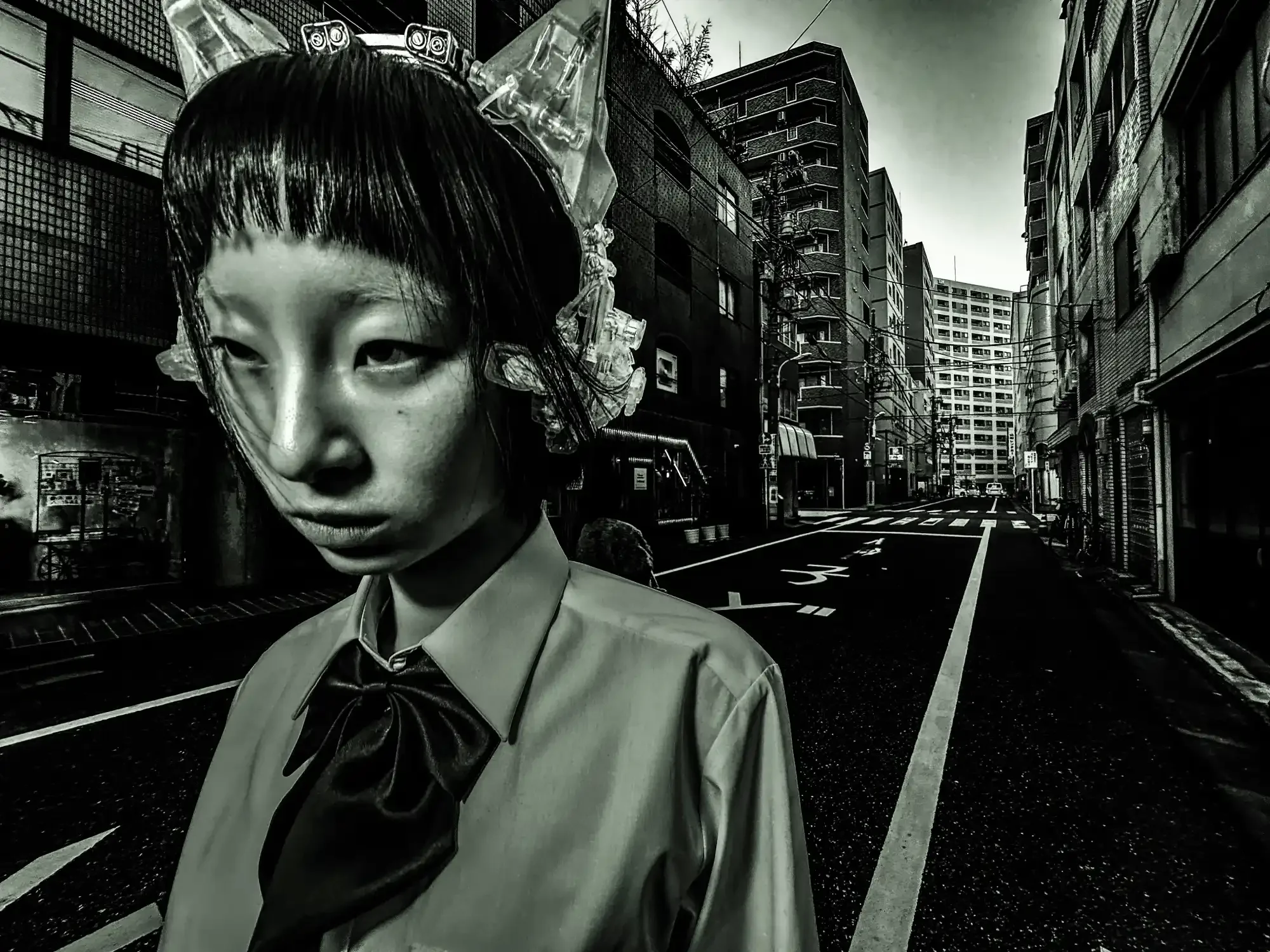
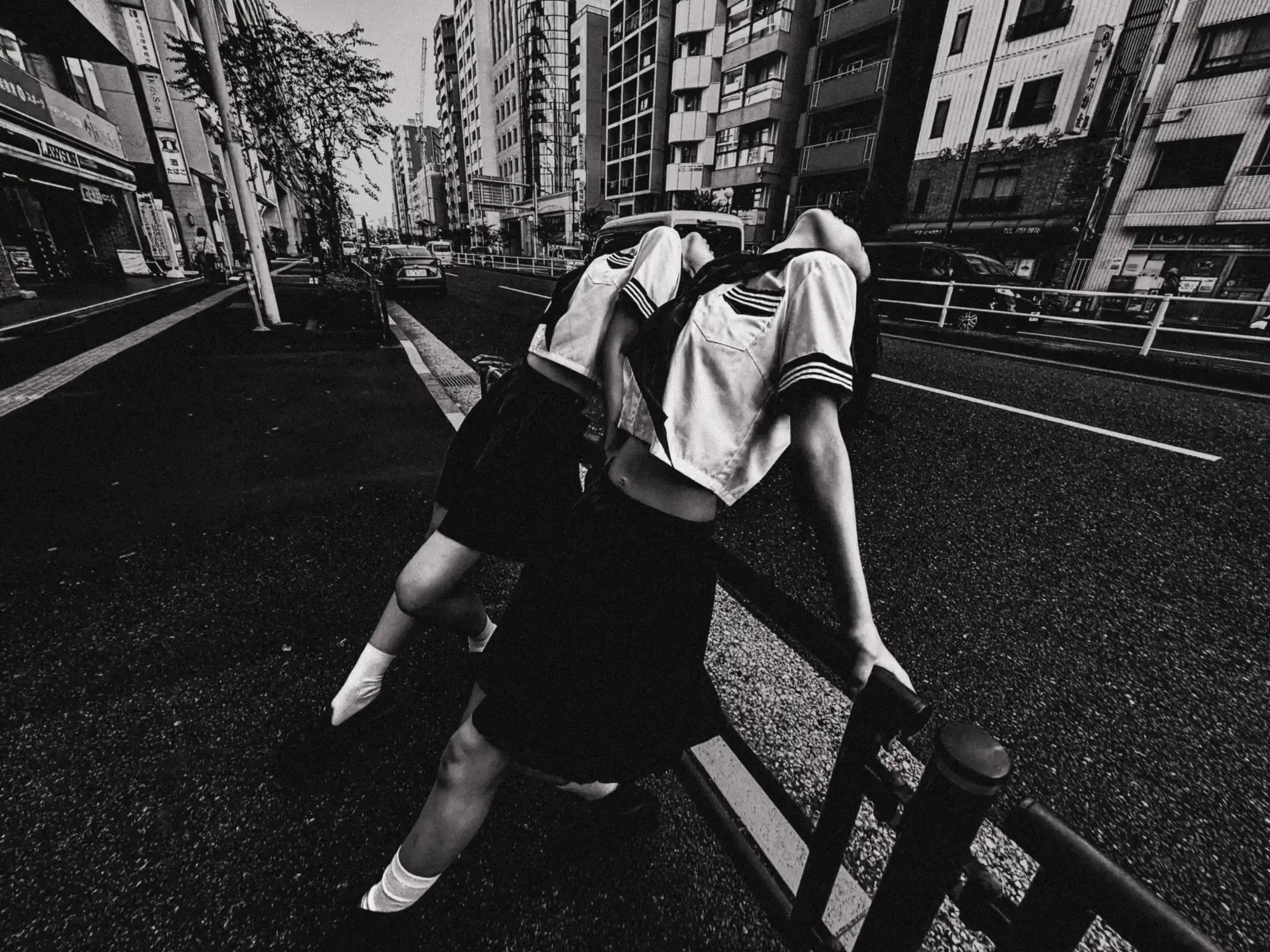
Idan Barazani’s work cuts straight through that. In the work of photographer and director, Tokyo mutates into something feral, claustrophobic, seductive, and occasionally grotesque. His signature close-up fisheye shots bend faces while alleys and hotel rooms begin to feel chemically unstable. Everything inside Idan’s frame is hijacked by a hidden tension driven by the person in front of the lens.
Barazani belongs to a lineage of creatives obsessed not with Tokyo’s architecture, but with its ability to destabilize identity. The contrast of Tokyo actively presses against the individuals inside the shot. Idan’s people rarely dissolve into urban anonymity; if anything, the opposite happens. Amid the sensory overload, their individuality becomes hyper-visible as everything rises closer to the surface. His visuals turn Tokyo emotionally radioactive.
Today, Barazani is widely associated with a heavily contrasted monochrome aesthetic, a visual language that emerged from deeply personal work never originally intended for release.
© Idan Barazani
About 1 to 1.5 years ago, you really locked into that grunge monochrome aesthetic. Do you remember how that shift happened?
It's a part of a larger body of work I’ve been shooting for myself without any intention of putting it out, I wanted to create something for me that felt honest and real. I just decided to put it out one day and when I saw people were connecting to it, It made me want to put more of it out.
What does Tokyo actually give you that you couldn’t get elsewhere?
I think I needed the few years I spent in Tokyo to fully grasp how complex it is, the emptiness but beauty I experience when I’m there. Even in a massive city like Tokyo, I really see the people that walk across the streets or the people that I shoot, their energy is everything. It’s important for me to show their individuality within all of that.
There’s one person I keep going back to and love to shoot him - Masato. Every time we meet and shoot, it makes me emotional and excited. He knows that. Something very quiet and transparent. We have these moments when we shoot, and they’re really special to me. I love connecting to the people behind the lens on a deeper level.
People have been suggesting a full-length Barazani film. Is this something you’d ever consider?
I’m currently working on things that are longer than the short pieces I’ve been putting out on socials. It’s going to carry the same atmosphere. Cinema was always the thing I wanted to do. I felt like I needed to move between mediums and to experiment, and to figure out my own language.
Now it feels more natural to step into longer formats, maybe starting with a short film, and eventually a full-length project. A lot of people have reached out saying they want to stay longer in these worlds, and even companies have shown interest in being part of that, so it’s something I’m really excited about.
And lastly, has your aesthetic ever felt restrictive, or is it something that keeps evolving naturally?
I don’t feel restricted by aesthetics at all. It’s just what I’m drawn to right now, it’s how I create intuitively.
When I look at my work, I can see there’s a clear stamp of me in it, the people that I shoot are a reflection of me, and no matter what the photo or video looks like - they feel a part of the same world. At the same time it’s always evolving and changing. I don’t know exactly what I’ll do next or how it’ll look, and I like that.
In a visual landscape increasingly flattened by algorithmic polish, Barazani’s work continues to feel unstable in the best possible way. His Tokyo is intimate yet alienating, beautiful yet emotionally corrosive. Less interested in documenting the city itself than the psychological residue it leaves behind, he’s building a visual language that feels uniquely locked into this moment, somewhere between underground fashion editorial and unfinished cinema.
Follow the work of Idan Barazani on Instagram
Trending articles


The Weeknd taps into his love for Tokyo.