
ORIMI - From the Inside, for the Outsiders
© ORIMI
During the final moments of our last day at Rakuten Tokyo Fashion Week we were sure we had already seen everything. After almost a whole week of shows, presentations and nonstop discoveries of what Japanese fashion has to offer, we couldn’t ask for more, yet we got it. In our diaries we told you how ORIMI’s show was our favourite of this season. This brought us great joy, given the fact that the day right after we had an appointment with the mind behind it, Kenta Orimi, for an interview at his curated and very well-known vintage shop, The Elephant in Harajuku, where we had the chance to discuss everything, from the start of his fashion journey to the looks now resting in his showroom, fresh off the runway, with the energy and cheers still attached to the fabrics.
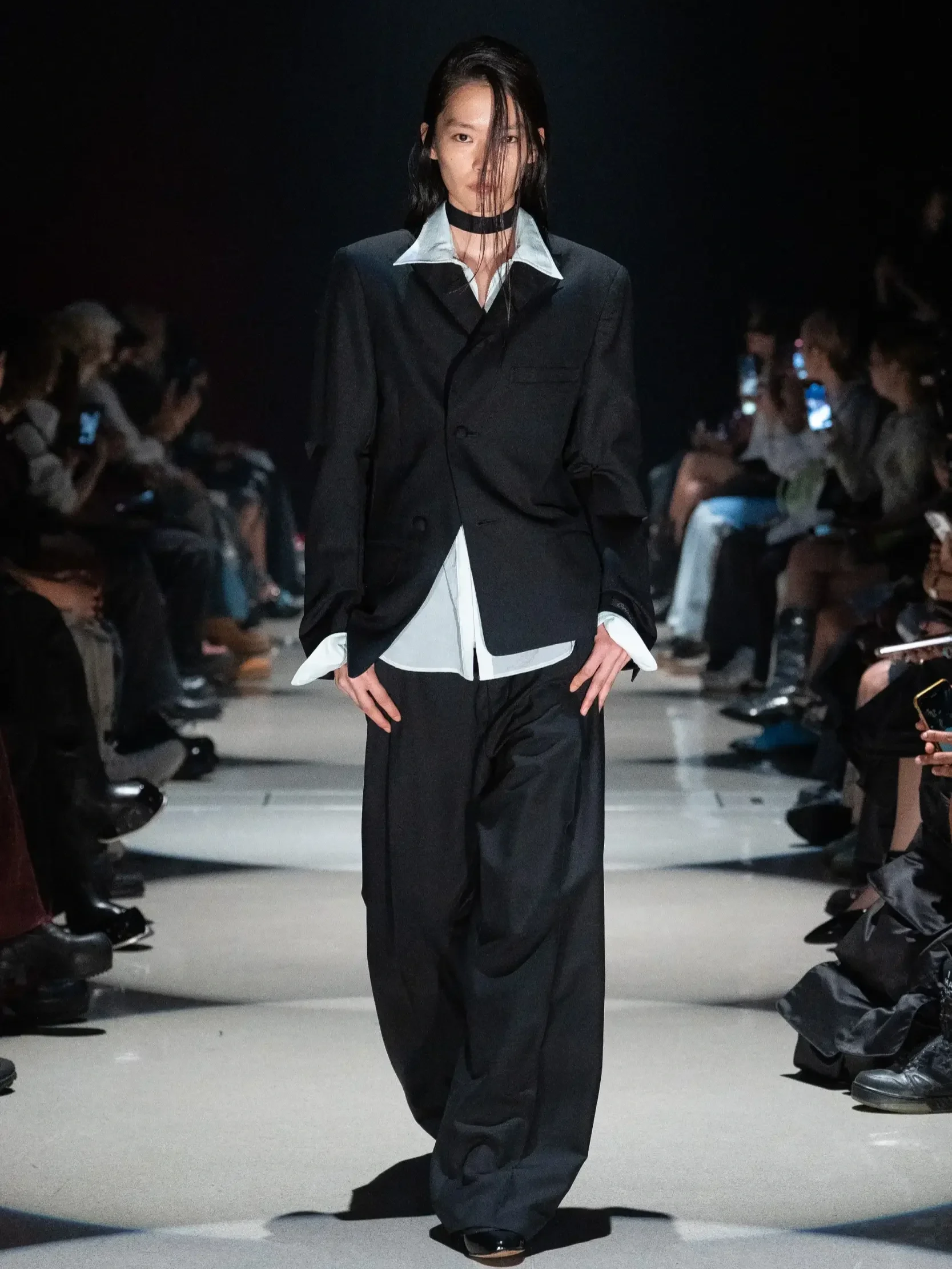
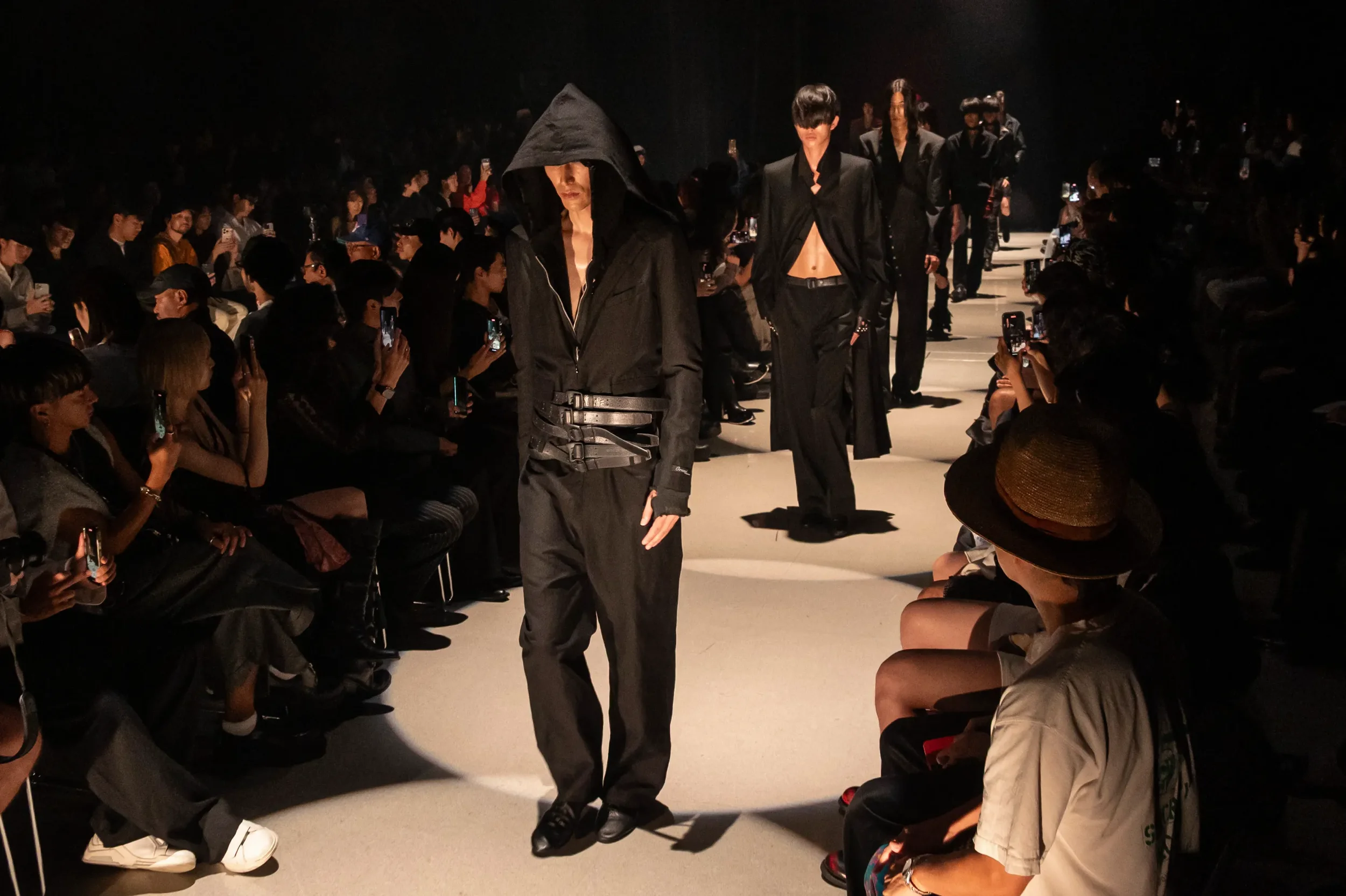
There was something hypnotic in ORIMI’s show. From the very entrance, where the coolest people in Tokyo waited in line to get into the venue, setting the vibe by not only wearing the brand but also embodying the spirit of what stands behind it, to the atmosphere itself, dark, gloomy, and mysterious, just how we like it. Seeing look after look, noticing the deconstruction of classics, the harshness in the models’ walk, and the overall styling that felt violent yet full of emotion, I thought, “This is it; this is what this is about.” But still, there was something underneath, an energy I couldn’t grasp well but that felt strangely familiar, something that made me like it more.
In our conversation with Kenta, right at the end, he mentions how the film Aoi Haru was a big inspiration behind the collection. You will be able to read what he says about it right after this, but just so you know, that “Blue Spring?!?!” question coming from my end was literally asked screaming, hence the “?!?!”. That moment everything clicked. The strong aura that I couldn’t pinpoint was suddenly as clear as water. A movie that, when it ends, leaves you feeling all sorts of emotions but at a loss for words was in Orimi’s mind when creating what we saw at the runway. A violent, beautiful piece, similar to this collection. No wonder I felt what I felt.
Read the interview and discover what lies behind his collection, Elsewhere, in his own words, add Blue Spring to your watchlist if you haven’t seen it and play Thee Michelle Gun Elephant songs while you read if you want. It will all make sense.
© ORIMI
First of all, thank you so much for being with us today just a day after your show, and congratulations on it!
Thank you so much for having me and for coming to the show.
Yesterday’s show was called Elsewhere. When you imagine that word, what does it mean to you personally beyond the collection? Where is your own “elsewhere”?
This time, I wanted to do something a little different, but it’s still very much around my vision. I collaborated in the styling with Leung Pak Ting, who’s a close friend and understands what I want to do. He has his own taste, so it gave the collection a fresh perspective while staying in my universe. I always want to challenge myself and bring new energy into the brand, and working with him offered that. I haven’t decided yet if I’ll continue collaborating in future collections, but I’m satisfied with the result, and the process was really fun. It’s interesting to see my brand through someone else’s eyes, and I’d love to keep working with Park Taehyung or explore other possibilities.
What did you learn from collaborating with someone else?
Pak and I have been friends for seven or eight years, back when we were in London. We share hobbies, music, and philosophies. That makes it easy to understand each other, but we also have different perspectives. Collaborating showed me new ways of thinking and doing things that I hadn’t realised when working alone. It was exciting, and I hope to continue this kind of relationship.
In the press release you spoke of a clash between your inner cynicism and the city of Tokyo. Can you tell me how this cynicism was formed? Is it tied to Tokyo itself, or something deeper in your own history?
I grew up in Harajuku, Tokyo, and this place shaped me a lot. The fashion culture here in the ‘80s and ‘90s was very formative for me. Of course, times change, society changes, and politics change. As I experienced those changes, I developed different feelings and perspectives. I bring those memories and experiences into my collections, always within the context of Tokyo. That connection between my personal memories and the city is very important to my work.
This evolution you mention, times changing and the city changing with times, has it been an evolution for the better or for the worse? Or maybe not better, not worse, but just different?
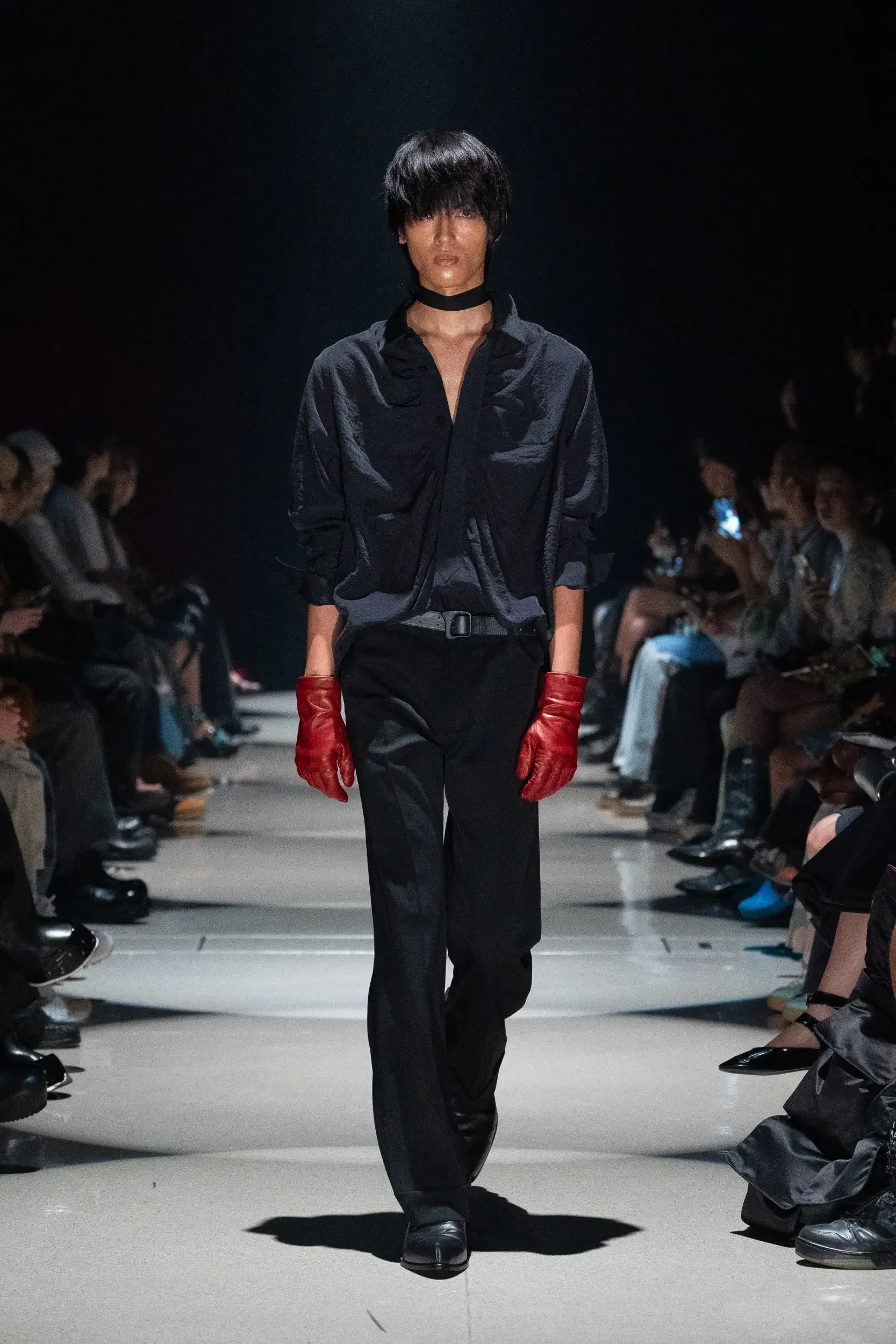
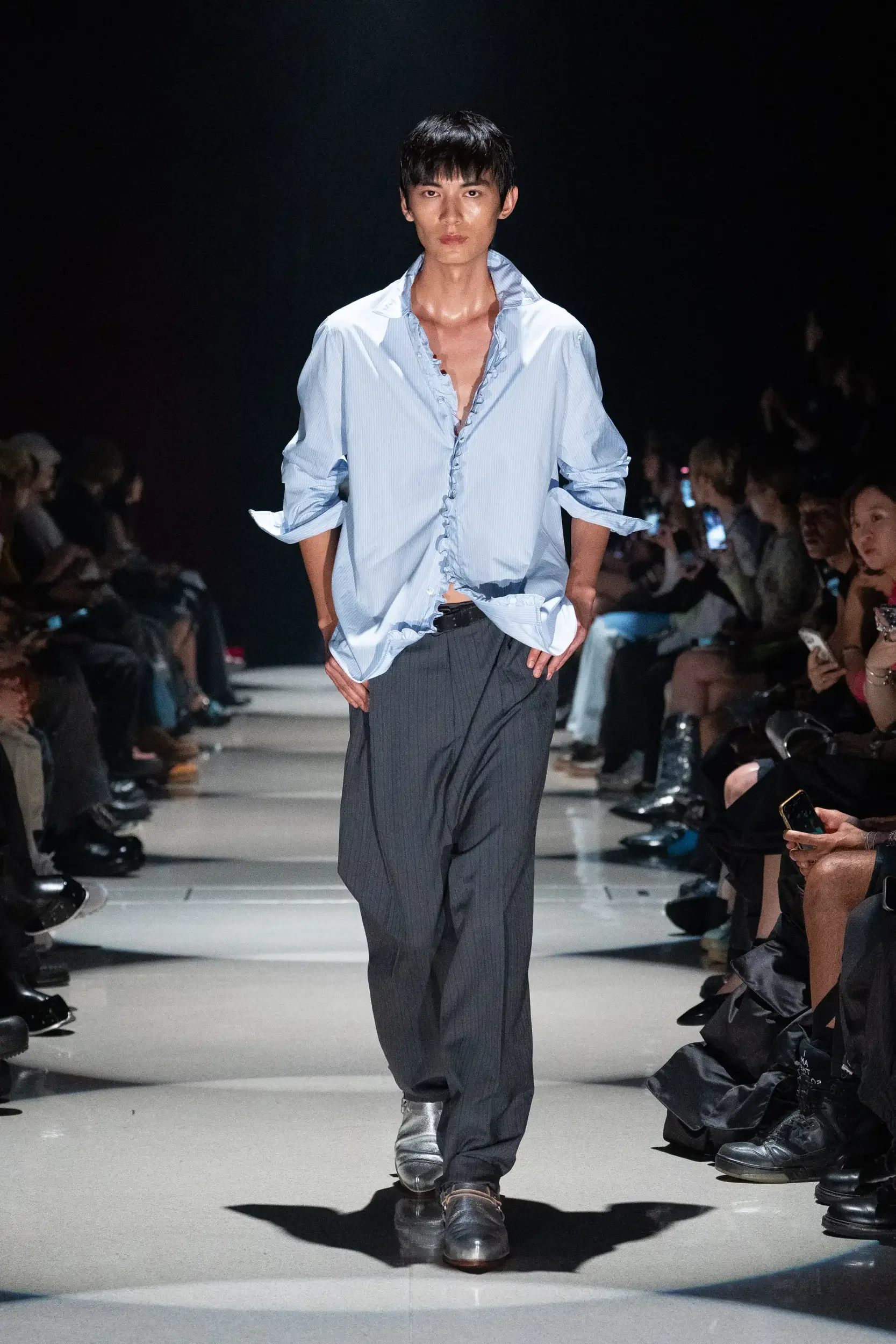
I don’t really think in terms of better or worse. For me, it’s about observing changes over time. Between the two collections I make each year, I notice how things get tidied up, more organised, and more “by the rules”. Everything looks cleaner and more uniform. That’s part of the mood in fashion right now-the striped shirts, the checked shirts, the basics everyone wears. I keep that, but I also like to include pieces that punch, that twist the ordinary. It’s a balance - I want to feel the city’s mood, but I also want to disrupt it from the inside, to keep it interesting.
© ORIMI
This city often gets described abroad as “chaotic” or “hyper-energetic”, but your work talks about ennui and voids within the order. How do you see this contrast between the image we have of Tokyo from the outside and the Tokyo you actually live in?
You’re staying in Shinjuku, right?
Yes!
Even more chaotic (laughs) I like this chaos; I often go to Shinjuku to drink. Even though I live in Japan, I also go to Europe, to Paris a lot. The more I go to different countries, the more I understand Japan’s chaos and its unique places; it’s special for me. I want to preserve it and show others about this. It’s a very different culture from overseas, from all over the world.
The tagline of the brand is “superfine garment for all the outsiders”. But I think in Japan, “outsider” can mean something very different from how it’s used in Europe or the U.S. - more subtle, quieter. What does outsiderhood mean to you in a Japanese context?
In Harajuku, the fashion kids don’t follow trends; they just try to be different. They experiment, express themselves, and stand out. That’s what I mean by “outsiders”. It’s a positive word for me - it’s about individuality and style. (Shows me some vintage Tune magazines) I’m a fashion kid from this era. We read this when we grew up; these pictures were taken in Harajuku. When I was a teenager I wore stuff like this; we were all outsiders, so different. We always tried to be different.
That’s what I love about Tokyo; you can’t see this type of style anywhere else but here. I think only in Tokyo and London can you see this kind of chaos. I remember I was shocked the first time I came to Harajuku. After that I kept doing fashion-related things. I started my shop; I started my brand. I’m still enjoying fashion like this guy (points at his picture in one of the magazines). Even when I turned 36 or when I turn 37, I’m still one of the kids. The show felt very communal. It was the show where I could perceive the most how a brand with a strong circle around them feels like. The audience were all dressed in the brand’s pieces and expressed the same vibe, almost like an extension of the runway.
How important is that community for you?
The community is essential. Because I’ve had my store for years, I’ve been building this community for a while, so it’s not that surprising to me. People come to see my brand, my store, and the show, and they dress in my pieces to show respect towards that. In Japan, fans show their respect this way. It’s a reciprocal relationship: I respect the customer, and the customer respects the brand. That connection is very special.
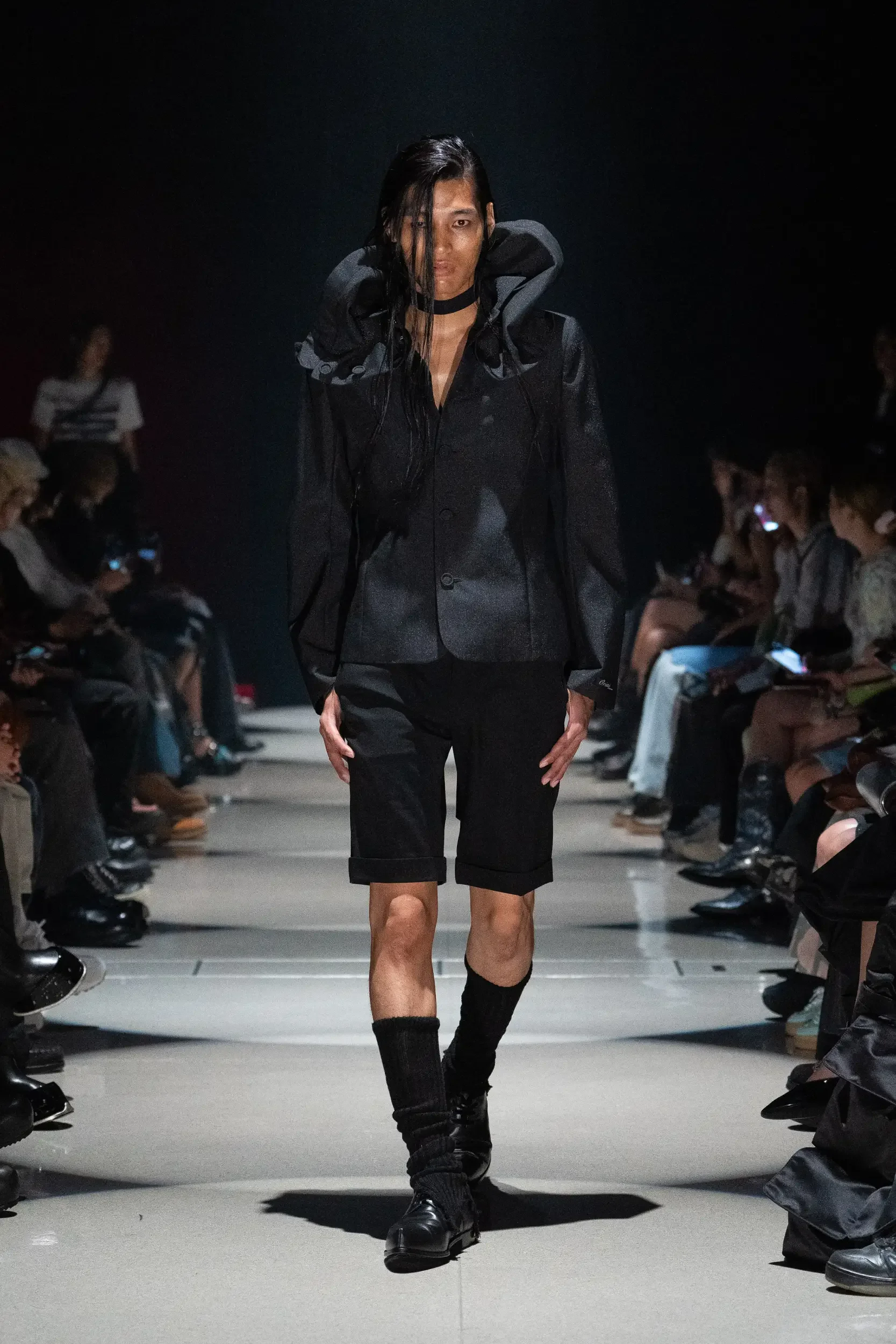
I wanted to ask something more technical about the collection. Can you tell me about the process of pattern making and constructing the pieces, like the pants, for example? They have shifted centres - the central seam is found on the side, and the side is at the centre. Was this idea of twisting intentional, or did it develop from trying and manipulating the fabric?
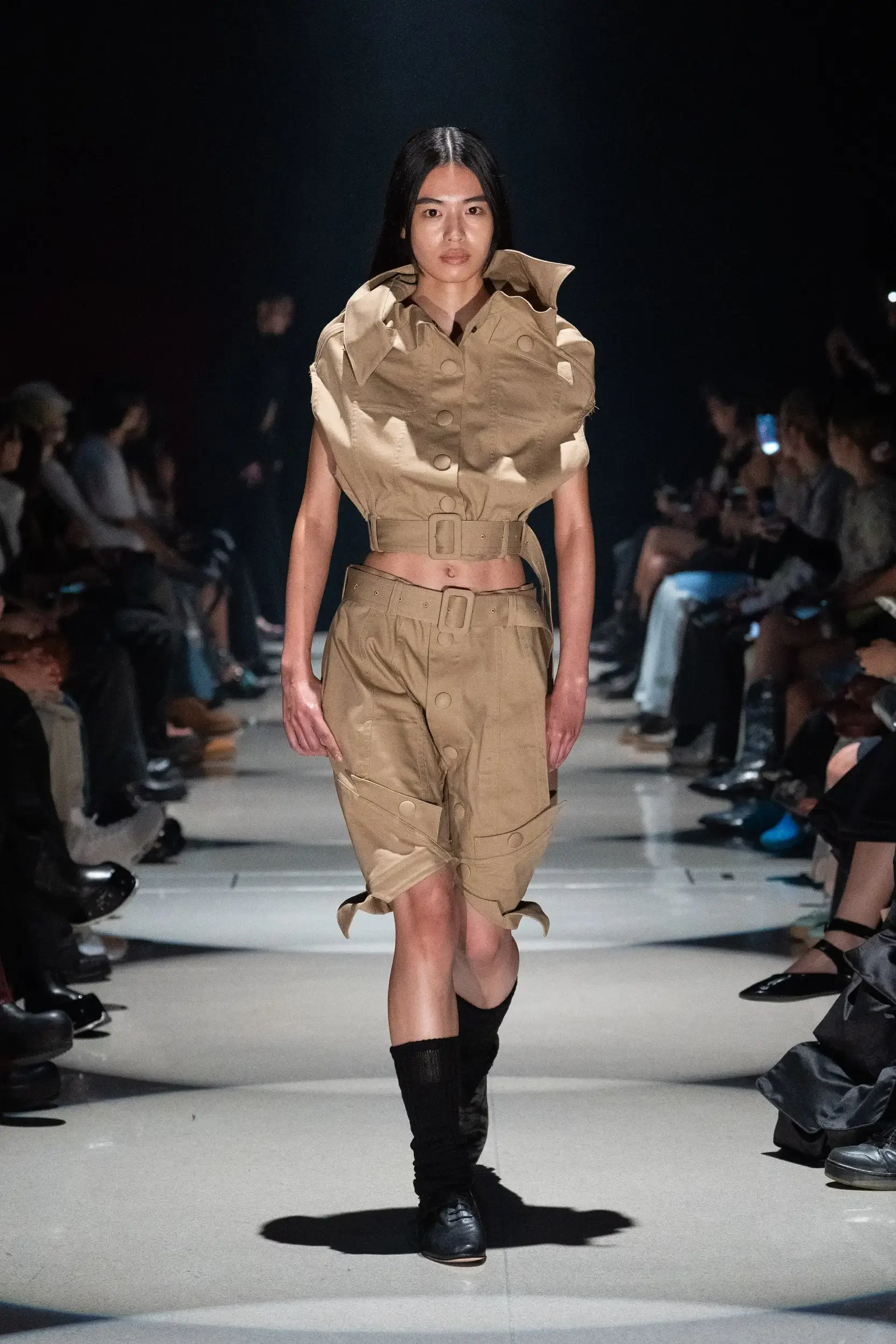
It’s all inspired by vintage clothes. Actually, these are just big-sized denim. These are inspired by big denim pants I found in a vintage store in the US, originally made for larger people. You can’t find this kind of large size in Tokyo, so I brought them from the US. I take these simple vintage pieces and replicate the pattern; the excess of fabric can be wrapped around the body and be adjusted with buttons, and let people wear them in different ways. It’s very easy and comfortable, almost like a skirt. I didn’t start from a drawn pattern - I work with what I see, with my hands, and adapt it directly on the body.
So the vintage pieces inspire the remakes?
Yes, exactly. I started as a vintage buyer, so I have a lot of knowledge in that sense. When I see something interesting, I imagine how to remake it. Some pieces, like collars or denim jackets, I twist and reshape into something new - short jackets, pants, or other variations. I cut, twist, and play with them by hand. It’s very DIY. I noticed that some pieces appear unfinished, with threads visible.
What’s the appeal in leaving them raw?
It’s about freedom. Japanese society is very strict and rule-orientated, but I want my clothes to reject those rules. Leaving things unfinished lets people play, experiment, and make it their own. It’s outside the concept of perfection. Do whatever you want to do and free your mind. That’s why it’s unfinished.
© ORIMI
You started out as a buyer, and you still run The Elephant. How does your eye as a buyer - searching, curating, editing - shape your approach as a designer?
As a buyer, I wanted to have this brand where I could find pieces I love and that I would like to buy and wear myself.
Oh, so it was like, “I can’t find exactly what I want, so I’ll make it myself”?
Yes, I wanted to sell my own clothes rather than buying them. When I went to Paris to buy for fashion week, I had the thought that maybe I could make my own brand. Maybe that way I can tell my customers exactly what I’ve been wanting to tell them. It’s nice to buy other designers’ brands and sell them, but gradually I feel like it becomes a boring process. Doing this myself is more challenging and more fun for me.
Wow! So I understand you obviously had previous knowledge about fashion, but what about the more technical part? How do you work in this sense of actually making the clothes?
I had no previous knowledge about this. There are many basic clothes in the world, such as tailored jackets, military wear, and denim. Based on those basic clothes, I can twist them or break them. So I don’t draw at all. I alter vintage clothes myself. I make them into a pattern. I cut old clothes with scissors and twist them, stretch them; that way I can modify them. I found all that out by myself.
You’re designing now, but you’re still a buyer. You always have your store very well curated. When selecting items for your The Elephant, what draws you to a piece? What is something that makes you attracted to them?
Details are important, but mostly it’s about the feeling I get. If I feel excited and inspired, I know others will too. It has to speak to the outsiders - the people who really enjoy fashion and want to experiment. It’s not for everyone, but for specific people who love this.
Your clothes are stocked outside Japan, like, for example, in 10 Corso Como in Seoul. When your work leaves Tokyo and lands in another culture, do you hope people see the Japanese context, or do you want them to find their own “elsewhere” in it?
I hope to be a representative. I want to show Tokyo, Harajuku, and my roots. I don’t aim to adapt to each country. The core of ORIMI is the Tokyo world behind the garments. That’s what I want to share with the world.
Japanese fashion is very highly regarded and appreciated internationally, with designers like Yohji, Rei, or Jun being symbols of a sensibility in fashion that is not that common to find nowadays. Do you feel a sense of responsibility as part of the next generation of Japanese designers?
Of course, I want to contribute to the next generation, but I’ve just started. I only have my second collection, so I’m focusing on strengthening my place in the Japanese fashion industry first. Once I feel confident and established, I hope to support the next generation - but right now, my priority is making my own work better.
© ORIMI
Outside of fashion and work, what rituals or atmospheres feed your creativity? Where do you go when you need distance from everything?
I like going to places far from Tokyo, like Miyakojima or Okinawa. The air is clean, the environment is calm, and it helps me empty my head. Living in the city is very stimulating, and sometimes I need that space to reset and find new inspiration.
While conceiving this collection, what were you listening to, watching, or reading? Were there specific external elements - a song, a film, an atmosphere - that left a trace on the clothes?
Yes, movies were very important. I watched Aoi Haru…
Blue Spring?!?!
Yes! Do you know it?
Of course! I love this movie! It’s one of my favourite movies ever!
It’s also one of my favourites. This collection is very connected to this movie. And also Battle Royale.
Now that I’m thinking about it, even the hairstyles in your show resemble the ones of the characters in these movies! No wonder why I liked the collection so much!
Yes, even the hairstyles in the show were inspired by this era and aesthetic. The uniforms. These early-2000s Japanese movies were very aggressive and artistic, and that energy really connects to my vision for the collection.
Wait, this song (I play Akage No Kelly by Thee Michelle Gun Elephant) I’ve always been obsessed with; you must love it too, right?
Pak and I love this group; it’s one of our favourites, so during the process of working on this collection, we kept playing them.
Wow, this is amazing; it all makes so much sense! Your brand is very new, but it already feels purposeful. What is your main motivation for ORIMI and for future collections?
My main goal is to fight in the world with my roots, showing where I come from. When I was buying in Paris, I wanted to do something and compete with my own name. ORIMI allows me to express my originality, my background, and my perspective. That’s why I keep doing it, to share my world and keep building this brand.
Finally, if you could be “elsewhere” right now - a city, a landscape, or even a different moment of life - where would you choose?
Yamanashi. It’s not far. I would go with my friends. The air is nice and clean. It’s fun.
© ORIMI
Trending articles

Step into the visual world of Nagi Noda.