
Satoshi Kon’s Final Gift - How Paprika Rewrote Dreams
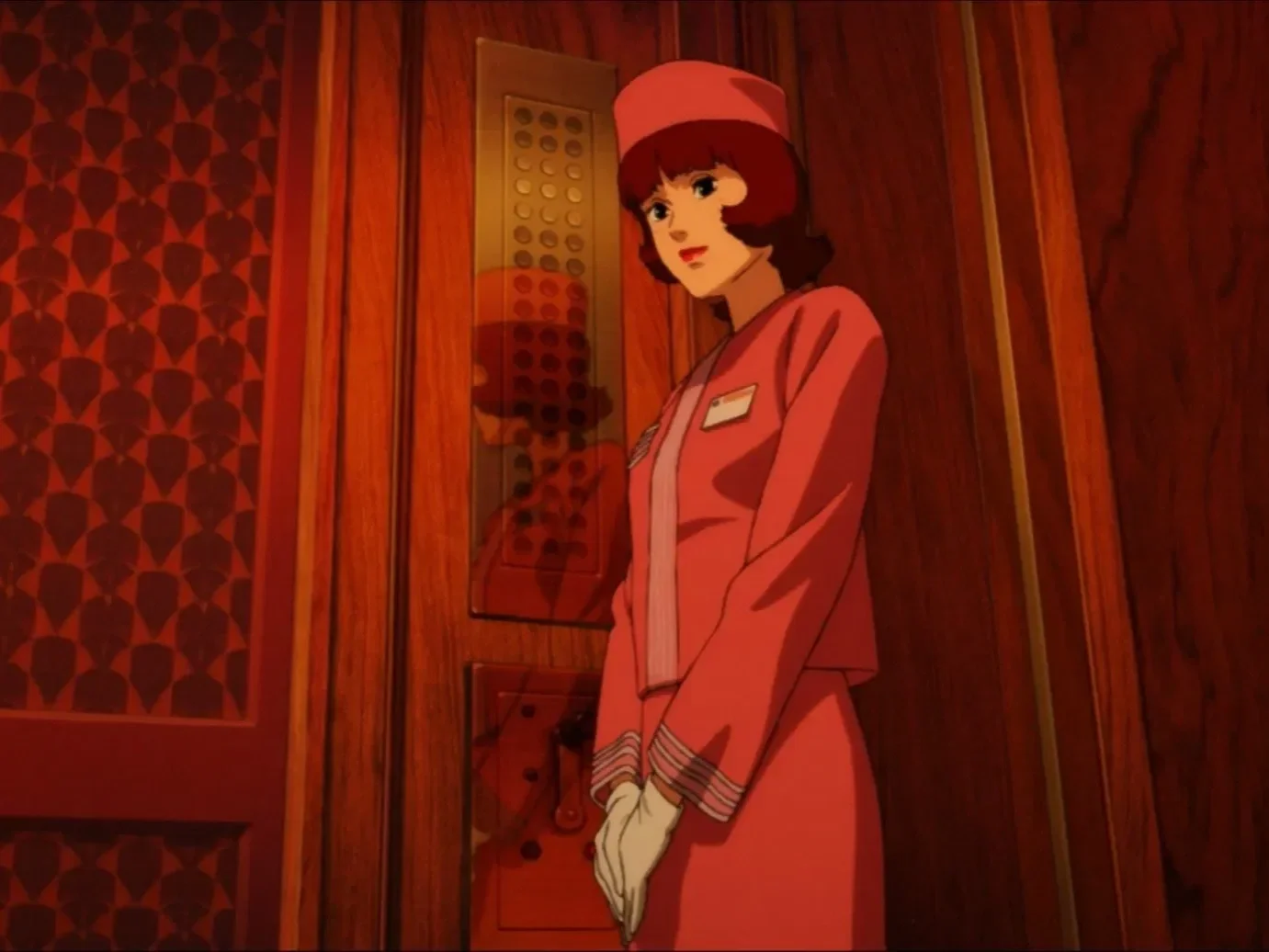
still from Paprika│© Madhouse
Paprika occupies an unusual place in anime history. It was never a mainstream commercial hit, and yet its influence was profound enough to rewire how people talk about dreams and cinema in animation. It was also Satoshi Kon’s final completed feature, the film where all of his recurring ideas, from blurred realities to media-shaped identity, reached their most fully realised form.
The project began long before the film itself. Kon first wanted to adapt Yasutaka Tsutsui’s 1993 novel in the late 1990s, right after finishing Perfect Blue. But the production company behind the early negotiations, Rex Entertainment, went bankrupt, and the idea was shelved. Kon shifted his attention to other projects. In the years that followed, he made Millennium Actress and Tokyo Godfathers. In interviews, he later explained that his earlier efforts to blur illusion, memory, and reality in Perfect Blue and Millennium Actress were partly driven by his long-standing wish to visualise something like the novel Paprika.
Paprika resurfaced when Kon met Tsutsui years later, and received his permission to adapt the novel. He mentioned that meeting the author and getting the go-ahead felt like finally realising something he had imagined for years. By then, Kon had a more stable position within the industry. With Madhouse as the main production studio, Sony as international distributor, and a trusted creative team, in 2003 Paprika finally moved into active development. Much of its conceptual groundwork overlaps with Kon’s earlier TV series Paranoia Agent, where he had already been experimenting with the kind of visual transitions and dream-logic shifts that later became central to Paprika.
Kon preferred to write through images instead of text. He built the structure through precise storyboards rather than traditional scripts, designing long sequences that transitioned without clear boundaries. He relied on the same core collaborators he had used for years: character designer and animation director Masashi Ando, known for his work on Princess Mononoke and later on Your Name; art director Nobutaka Ike; writer Seishi Minakami; and composer Susumu Hirasawa, whose sound defined Kon’s films as much as the visual style.
With a relatively modest budget of around 300 million yen, the team used hybrid animation and compositing techniques to create the film’s most defining sequence: the parade. This was born not only from visual concepts, but in direct collaboration with Hirasawa’s music. Kon used repetition, layering, and managed chaos to create overwhelming movement without exhausting the animation team. The result is one of the most recognisable dream sequences ever animated.

still from Paprika’s parade scene│© Madhouse
What Paprika did differently was to make cinema itself behave like a dream. Most films treat dream sequences as separate, distinguishable spaces, marked by visual cues and narrative transitions. Kon rejected that approach. He visualised dreams not as alternate realities, but as extensions of the mind, where logic and time constantly fold into each other. Scenes flowed into each other without cuts as characters and spaces morphed together. In place of clear separation, there was permeability.
This shift carried deeper implications. Paprika suggested that dreaming is not simply an unconscious escape, but an act of creative construction. The dreams visualised in the film are filled with media fragments like billboards, toys, jingles, masks, advertisements, which reflect how collective imagination is shaped by culture and technology. It was not only about personal emotion, but also about how societies remember and project identity. In that sense, Paprika did not present dreams as a doorway into the self as much as a shared cultural archive. This idea, more than any visual trick, is what redefined how animation could approach the subconscious.
Its world debut took place at the Venice International Film Festival in 2006, followed by screenings in New York and Tokyo, where it quickly gained attention as an “arthouse anime”. When Paprika entered Japanese cinemas, it did so in just three theatres. Despite this limited release, it remained in circulation for eight weeks and gradually expanded through word of mouth. It was not marketed primarily to anime fans, but to viewers with an interest in experimental cinema, psychological storytelling, and animation as a film medium. This approach helped the film reach audiences outside typical genre boundaries.
Critics responded strongly. In Japan, Yomiuri Shimbun called Paprika “the most mesmerizing animation long-player since Miyazaki’s Spirited Away,” while the San Francisco Chronicle described it as a “sophisticated work of the imagination” and “a unique and superior achievement.” In the U.S., Village Voice critic Rob Nelson admired the film’s imagery but remarked that it was “not a movie that’s meant to be understood so much as simply experienced, or maybe dreamed,” and The New York Times highlighted its unease about the changing relationship between bodies and machines.
Online forums went hard, as Paprika developed a long afterlife. It became a recurring title in forum discussions about “the trippiest anime ever made,” and was often mentioned alongside films like Spirited Away or Ghost in the Shell as an example of animation not focused on children or genre archetypes. After the release of Christopher Nolan’s Inception in 2010, many viewers pointed out visual and conceptual similarities, bringing Paprika further into the mainstream film conversation.
Rather than fading away, the film began appearing in new contexts. It became part of cinema retrospectives, academic discussions on surrealism, media psychology, and the nature of dreams. Restoration campaigns followed, with new 4K restorations and UHD releases in North America and international markets, including Germany and Italy, and 4K screenings reintroducing the film to cinemas.
Paprika’s ideas, dream technology, shared consciousness, psychological intrusion, now feel even more relevant than when it was released. The DC Mini is both a fictional therapy device and a metaphor for how technology invades psychological space. The film connects more closely than ever to contemporary conversations about data and targeted memory. It also unexpectedly aligns with ideas found in Takashi Murakami’s Superflat theory: the parade of objects marching through the city is a single-layered landscape of cultural fragments, religious icons, children’s toys, ads, food wrappers, commercial symbols, all flattened into a shared dreamscape.
Paprika’s cultural impact grew even more after Satoshi Kon’s passing. He passed away from pancreatic cancer in 2010 at just 46. His final message, published online shortly before his death, reflected on his career and on the unfinished state of Dreaming Machine, the project he hoped would follow Paprika. He had planned it as a follow-up exploring similar dream logic, but production halted when the team realized Kon’s direction could not be replaced.
Since his passing, Paprika has become central to how Kon’s career is remembered. It is often seen not as his most accessible work, but as the culmination of his visual and conceptual thinking. The film shows how far animation, even within commercial production constraints, can stretch the depiction of inner worlds without losing narrative coherence.
Today, Paprika occupies a space between worlds. It is studied in film schools, screened in museum theatres, and treasured by anime fans worldwide. It stands strong as Kon’s final milestone: an animated masterpiece that became one of the most widely recognised visual explorations of the subconscious ever put to screen.
Trending articles


Inside the culture and friendship behind Matthew Ballard’s HIGH RECEIPTS.