
“It comes from outside the system and shakes our world to its foundations.”
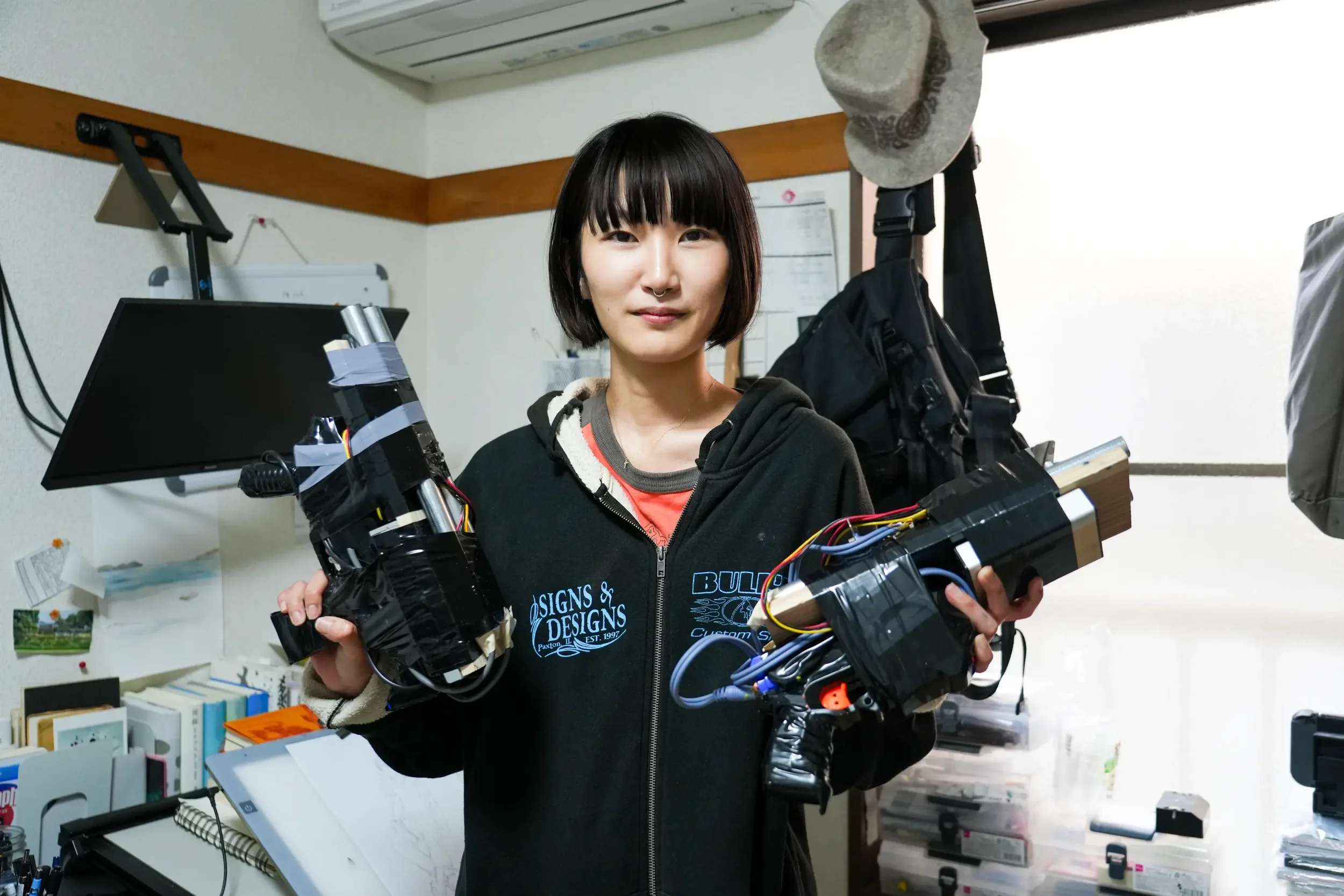
We’ve covered Tokyo-based illustrator Utanhole before, but this time we had the opportunity to join her in the studio as she was preparing for her Tokyo Art Week exhibition. What exactly is Utanhole painting? We see young people casually playing with homemade guns. A girl with a bomb around her waste, one of her controversial works that already made big waves online.
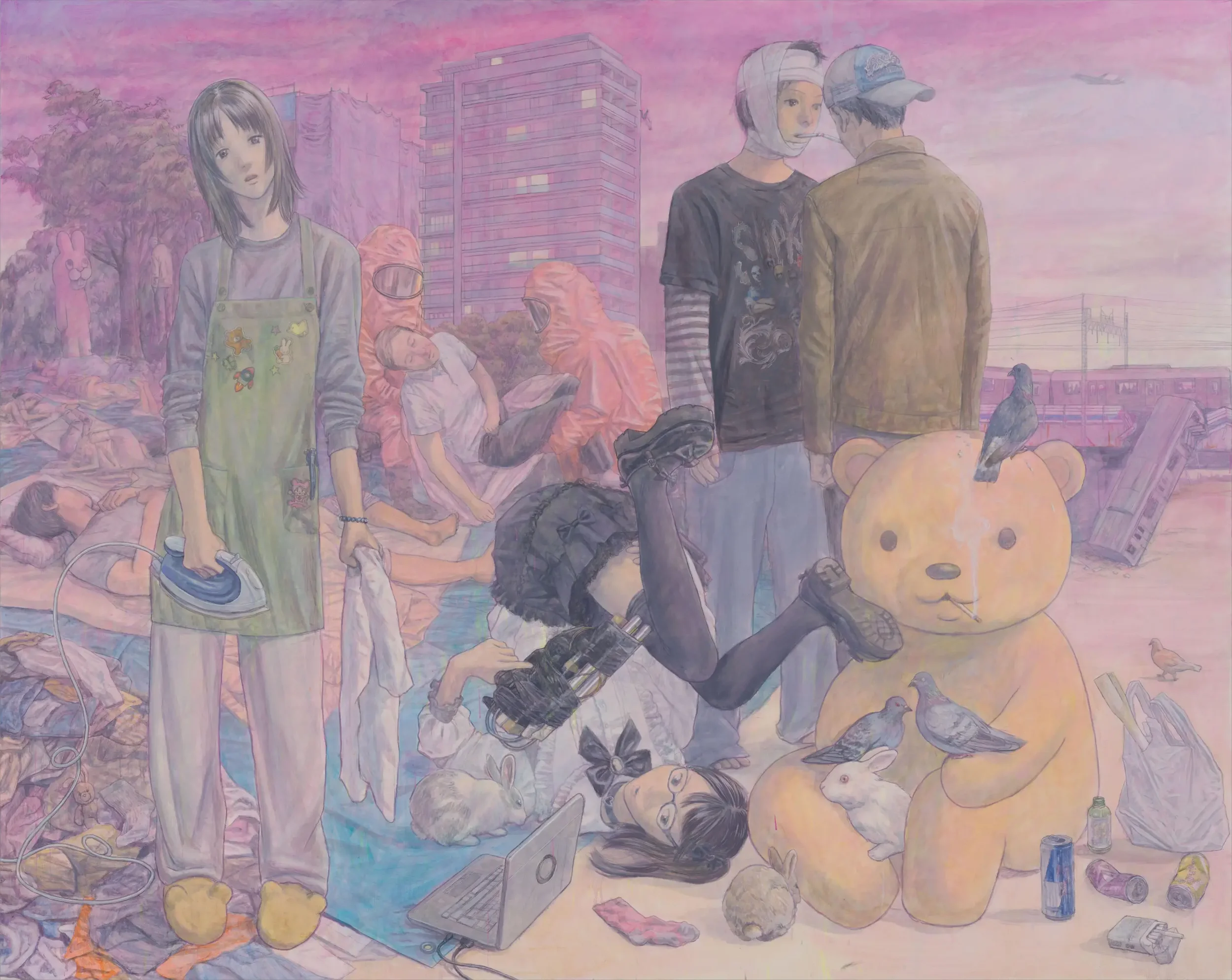
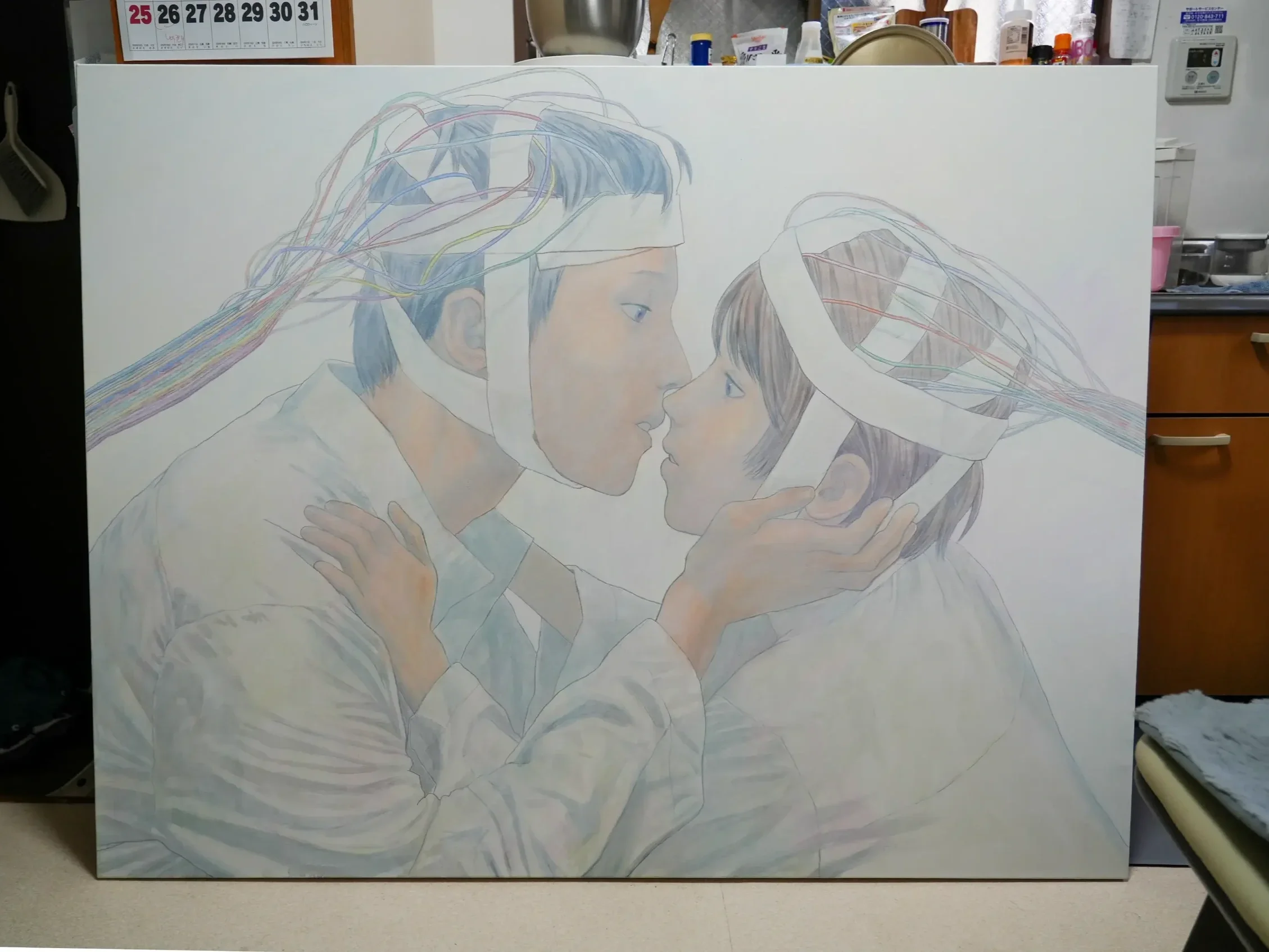
The faces of her figures don’t communicate all that much, they might give a touch of troubledness, or come across as if they’re going through a very nihilistic phase of their lives. Her grounded illustration style brings together elements that could never coexist in reality.
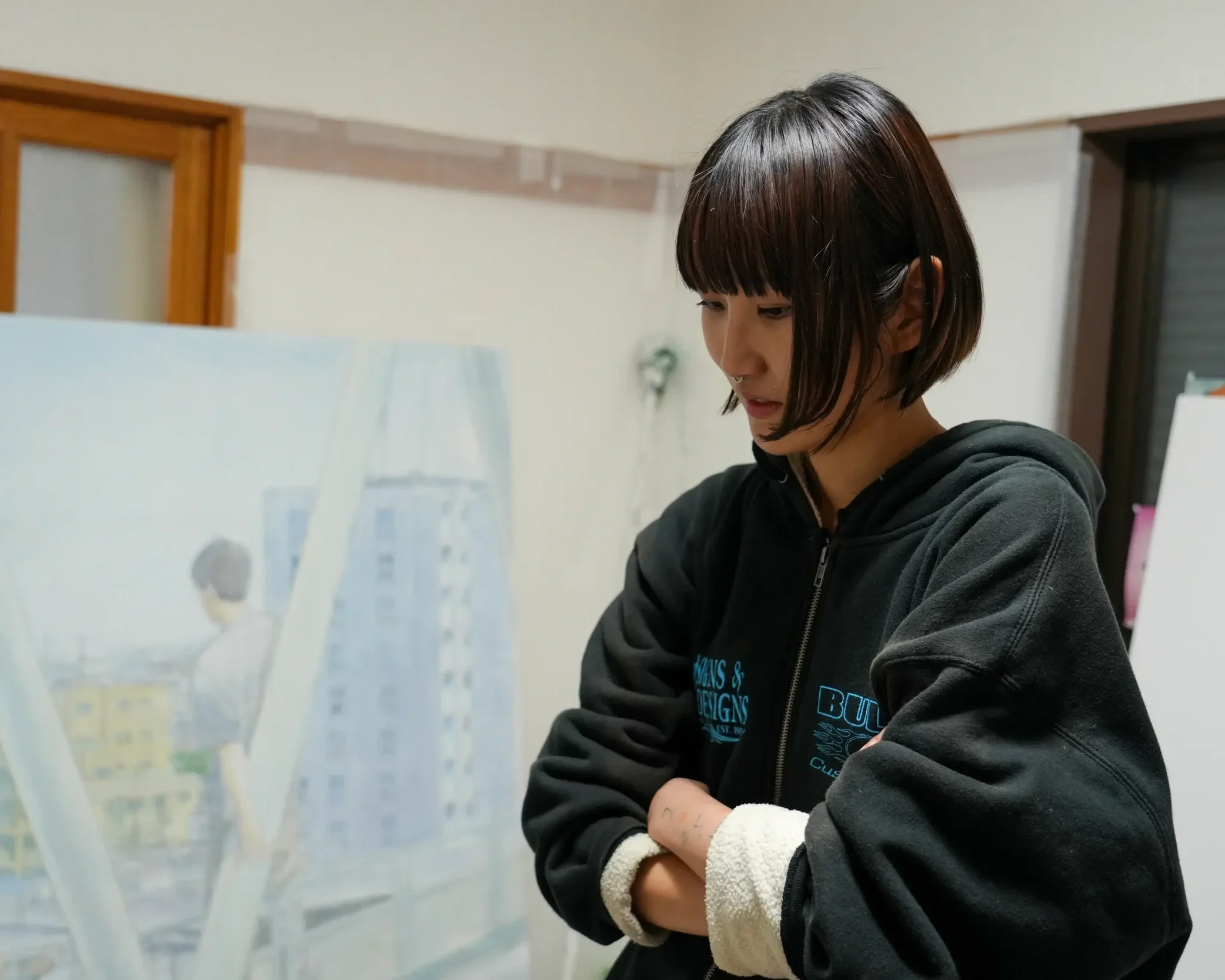
Utanhole, who is represented by Kaikai Kiki Gallery, founded by artist Takashi Murakami, is currently showing a solo exhibition, Zipgunslingers, at the gallery in Tokyo. We visited Utanhole’s studio to talk about the curious background of the work she’s exhibiting.
What kind of exhibition is this? How is it different from previous solo shows you’ve done?
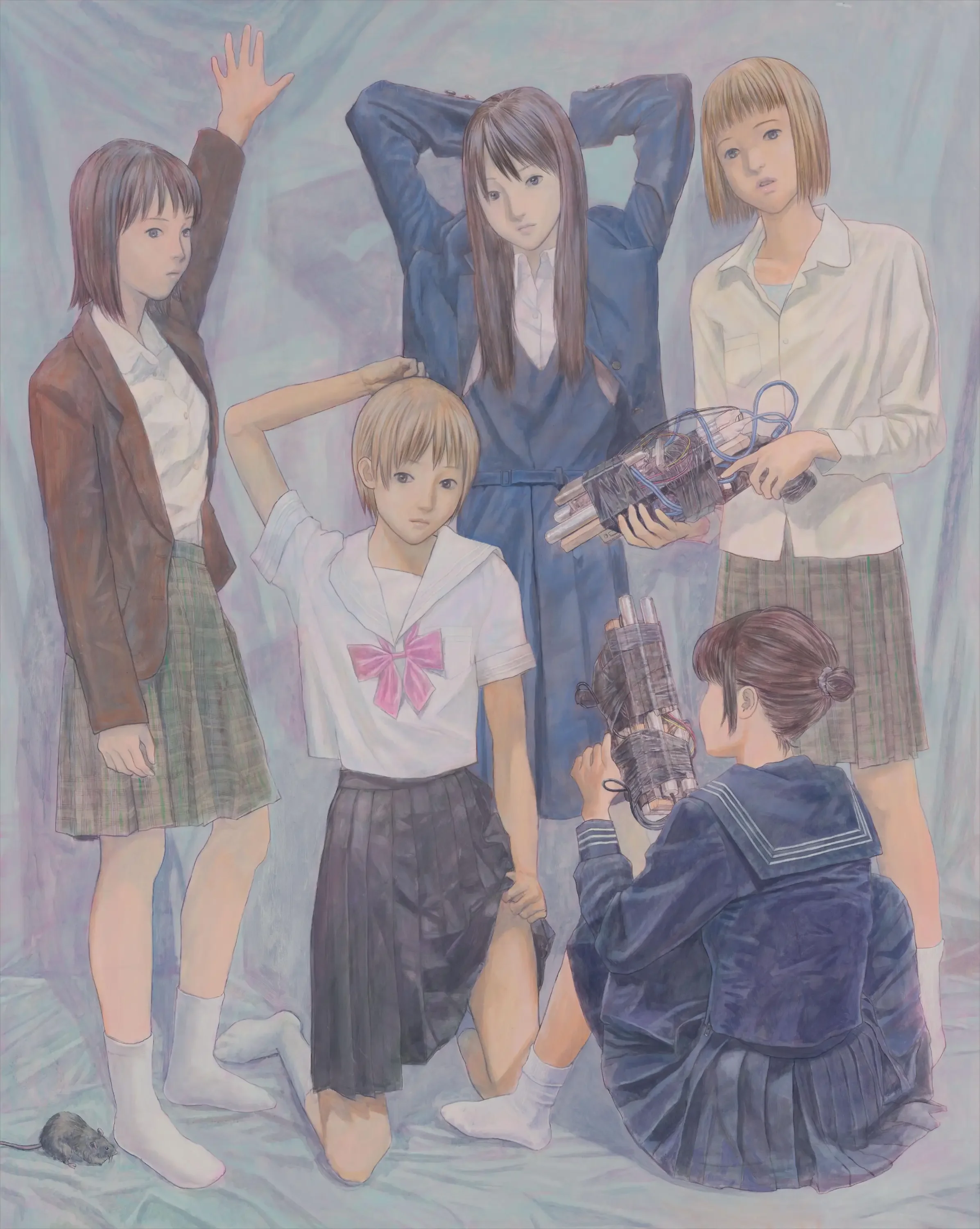
This is a solo exhibition at Kaikai Kiki Gallery in Tokyo. I’ve held independent solo shows before, but this is my first solo exhibition at a large commercial gallery. The space is much bigger, so the number of works needed is completely different. There are around seven or eight pieces, including two that are two meters wide. The others are about 130 or 160 cm.
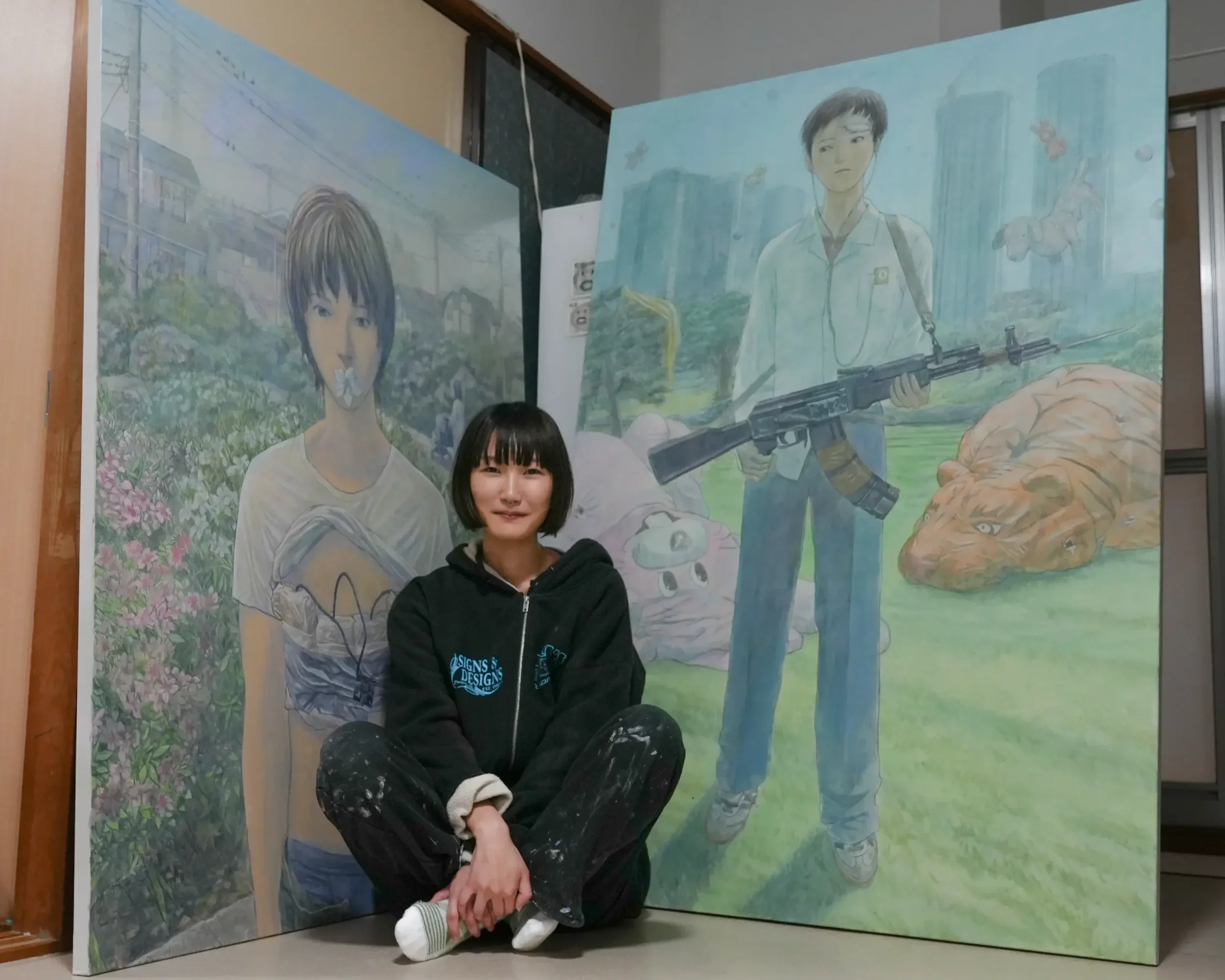
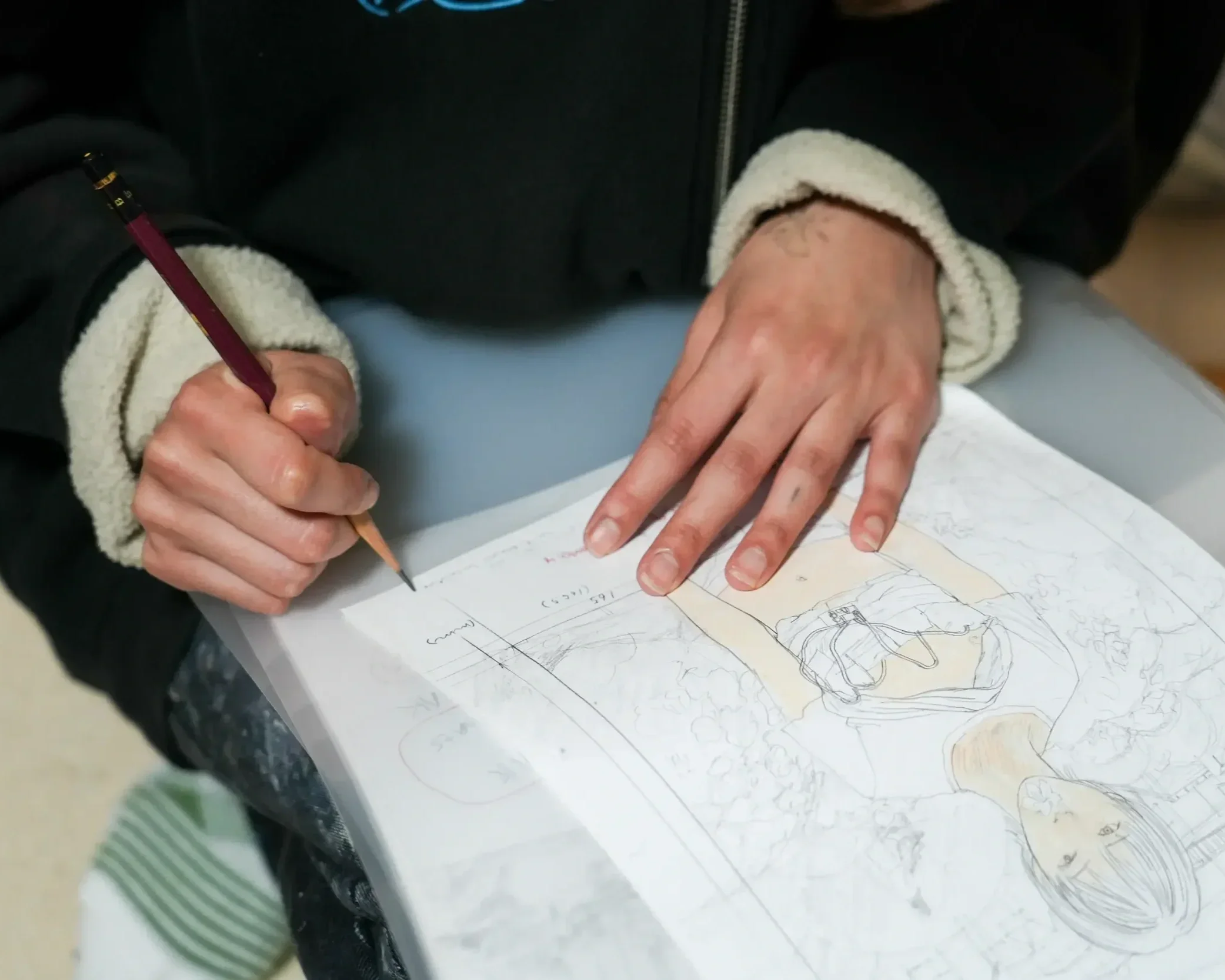
I’m painting a range of things that feel like an evolved version of what I’ve done so far. The main motif is homemade guns. I actually made guns myself out of iron pipes and wood, the kind of materials you can get at a hardware store, and used them as subjects. Homemade guns are the key motif in this exhibition.
I thought of the incident involving former Prime Minister Shinzo Abe.
Yes. I saw that incident and used it as a reference. I also made a replica of the homemade gun.
I’ve heard you’re also referencing Picasso’s Les Demoiselles d’Avignon.
There are five women in Les Demoiselles d’Avignon, and the faces of the two on the right look like masks from African art. I’m painting a work that replaces those references to African art with homemade guns. I’m not depicting Tetsuya Yamagami or Shinzo Abe themselves. There’s a kind of analogy in the idea of an alien presence arriving from outside the system, as African art did.
The image of a homemade gun suddenly appearing in everyday life, and the assassination of a former prime minister driven by a personal grievance, are in a sense like African art in the period when Les Demoiselles d’Avignon was painted. In other words, it comes from outside the system and shakes our world to its foundations.
How did you feel when you saw the news? Was it closer to fascination, a sense of danger, anger, or something else?
I was deeply shocked. That’s all I remember. Of course, I never thought I would turn it into a work of art.
Were you trying to bring its existence back to the surface and shine a light on it again?
Yes.
Why do you want to translate incidents and social topics into paintings? What would you like people to take away from that?
My paintings reflect my interests and biases, but I’m not trying to communicate any particular message. I want to make paintings that might lead people to see themselves in an unexpected way when they look at them.
Are guns the main subject of this exhibition?
I paint guns, as well as weapons flying through the sky. But more than the weapons themselves, what matters is the way the characters respond to them. Even when they’re holding a gun, they aren’t necessarily aiming it; they might just be playing with it or not know what to do with it. I’m depicting that attitude. I think there are ways of holding a gun that don’t involve actively taking aim.
Why do you think that people are drawn to dark worlds?
Honestly, I don’t really know why people are drawn to dark things. It’s not that I like something just because it’s dark. But when I’m feeling low, there are times when I can’t watch anything cheerful. When your mood is dark, something with a dark atmosphere might feel more attuned to you
I used to write tanka. One I spoke aloud went: “On depressed days, let’s go to Denmark. On manic days, let’s go to Hawaii. When things become unbearable, let’s go to Switzerland.” At first, I thought I’d put Hawaii on depressed days and Denmark on manic days. I thought that would balance things out. But when I showed it to one of my professors at university, he said, “I’d want to go to Denmark precisely on a depressed day.” I thought, “That’s true,” and rewrote it.
Lars von Trier’s films, and Tarkovsky’s, too, are the kinds of films you want to watch when you feel like you’re at rock bottom. That’s what “On depressed days, let’s go to Denmark” means. It’s simply a tanka about finding something that fits your mood.
Are you influenced by the mood of the news or the internet?
I often read comments on Yahoo! and YouTube. Some of them are almost like tanka, with a 5-7-5-7-7 rhythm. When I was a university student, I made a work in which I exhibited those comments as tanka, just as they were. It took the form of a drawing.
For example: “Bad people should just be executed one after another. Serves them right. I feel so much better.”
Anonymous comments can contain unrestrained language that people might not say face to face. Presenting it as tanka could change how it’s received.
Have you seen anything interesting recently?
It’s a film from a little while ago, but ‘100 Yen Love’ was interesting. Sakura Ando was really good. A Blue Spring is also a wonderful film. It’s based on a manga by Taiyo Matsumoto. There are some pretty awful scenes, and people die easily. Since it’s about high school students, it also has that teenage sensibility, with a bit of what you might call “chuunibyou”, that self-consciously dark, adolescent outlook.
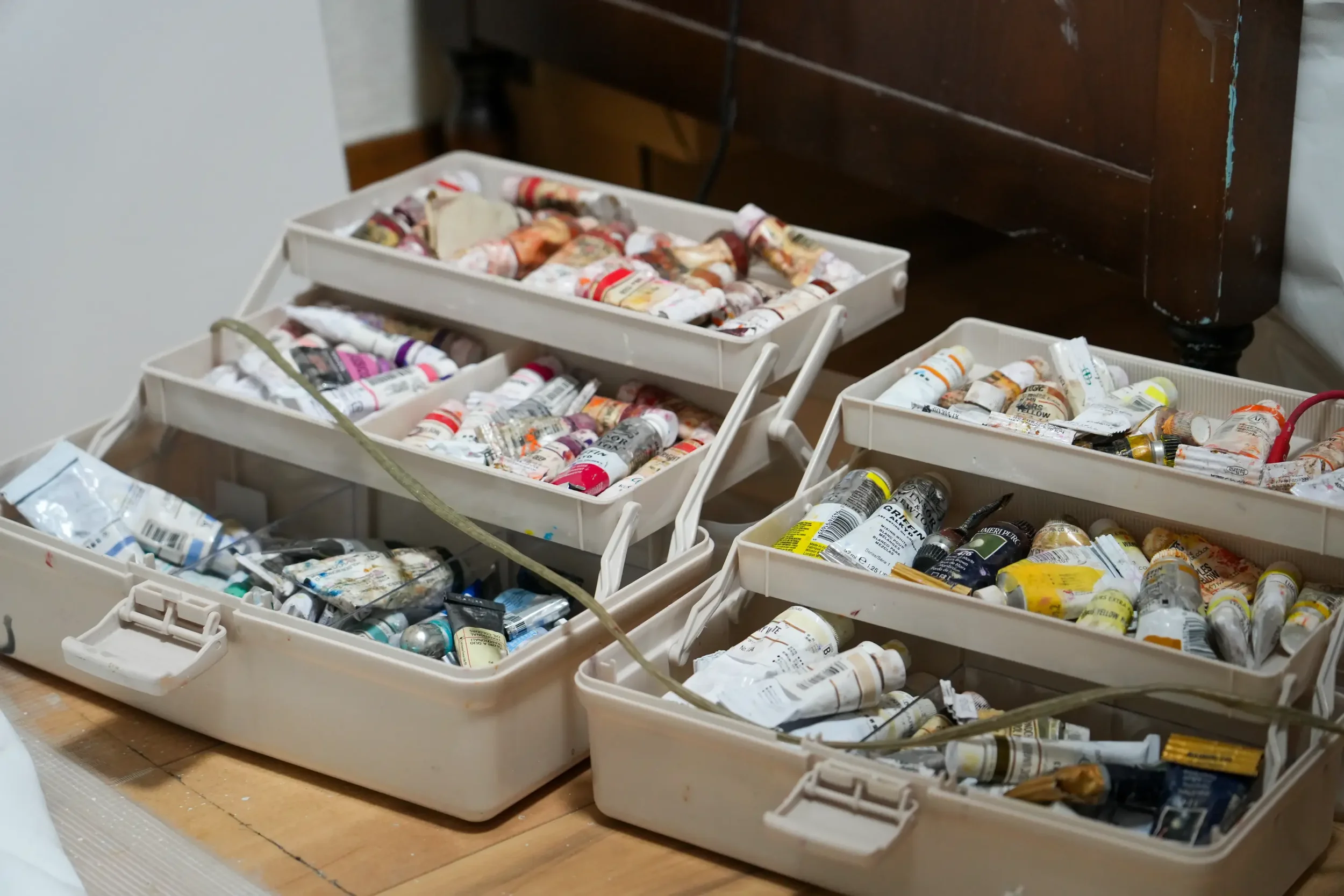
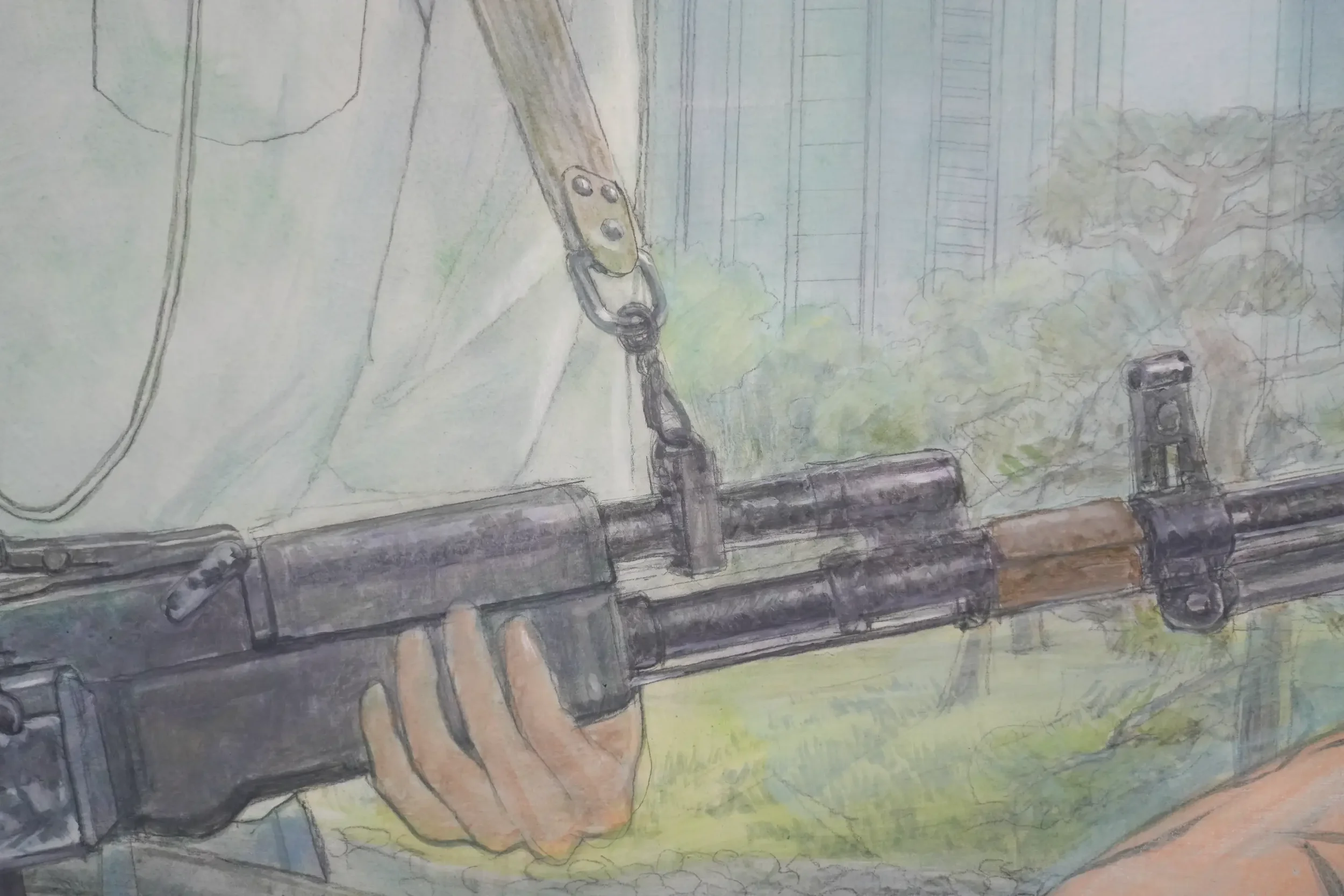
Are the settings for your works in Japan?
This work is set along the Tama River in Futako-Tamagawa. I’d never been to Futako-Tamagawa, so I decided to visit, and found about two good locations. I often choose places that way.
I went to see whether I could find a stretch of riverbank with a good view of the sunset. But around that time, there weren’t many good sunsets, so in the end I gathered reference material myself.
Do you need a real place for the background?
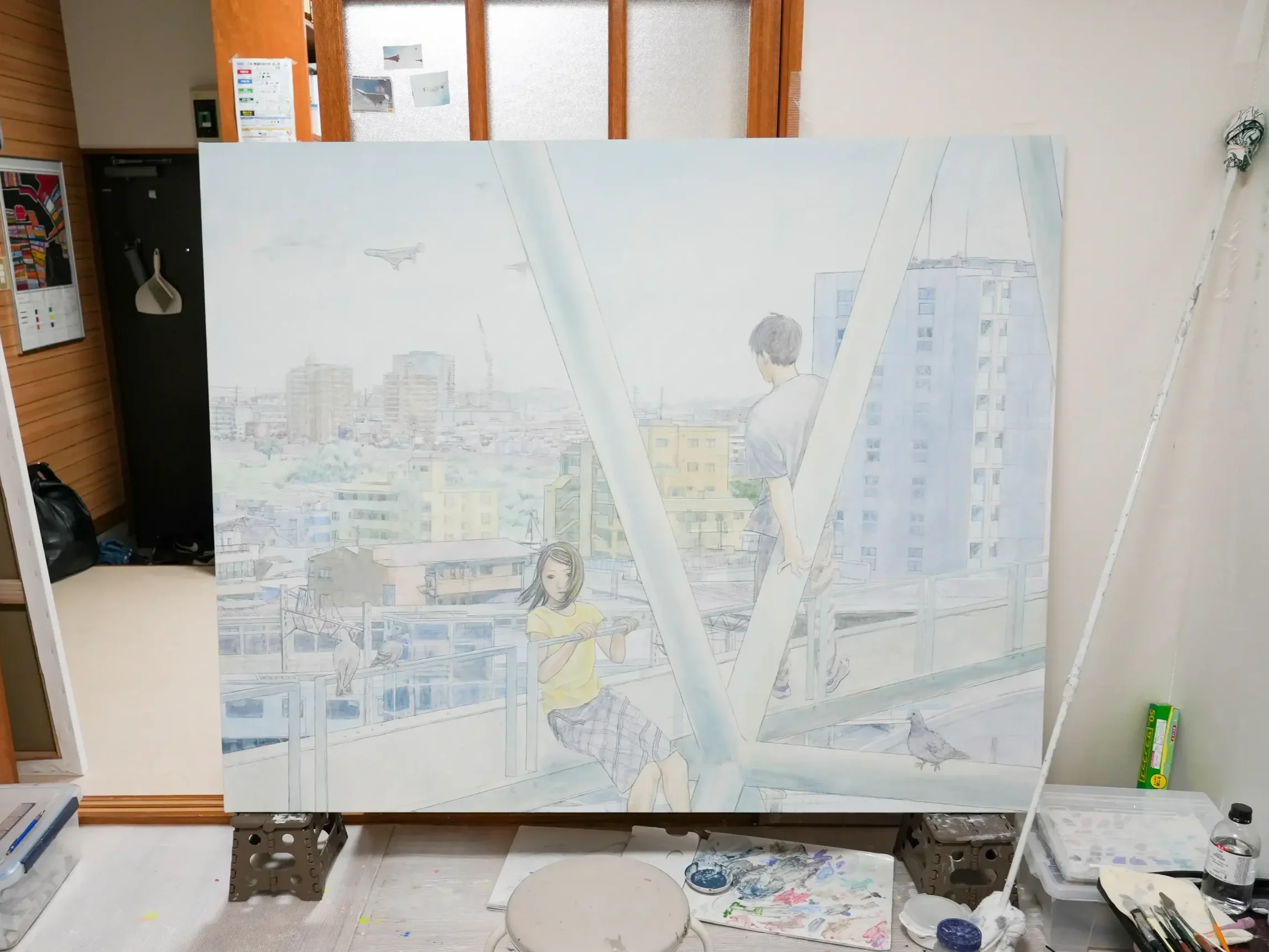
I can’t paint the background without reference material, so I make sure to take photos.
Do the figures have specific models?
There aren’t any specific models. I draw them from a general image, thinking things like, “Maybe they’re a bit of a troublemaker.” They aren’t based on particular people.
Do you think about your experiences in Japan, your perspective as a Japanese person, or the characters’ nationality? At the same time, the works seem to have a sensibility that could be shared around the world.
The people I’m drawing now are meant to be East Asian. But I’d also like to depict white and Black people distinctly. I haven’t yet drawn Black people after properly trying to do so, and I think history is involved, too. I feel I need to study and practice more before I can do that.
Even in the work depicting high school girls and homemade guns, I initially considered making the characters different skin colors. But I couldn’t draw them well, and because they were wearing sailor-style school uniforms, I thought they might look like they were in cosplay. It felt like there was too much information. This time, I made them all Japanese girls, but I don’t intend to depict only Japanese people in the future.
How did you first connect with Kaikai Kiki Gallery?
Gallery staff - It started when Takashi Murakami saw Utanhole’s paintings on Instagram. He found a self-portrait of someone with a bomb strapped to their body on welcome.jpeg, a website that collects street culture. Then he saw photos of Utanhole’s independent solo show in Kanda and thought, “I’d like to get in touch with this artist,” so we reached out. If I remember correctly, it was around last autumn.
Utanhole - I was really happy. I checked Gmail every day and went to bed thinking, “It’ll come tomorrow,” even though there was nothing there. Then the message really did arrive.
Gallery staff - Before we contacted Utanhole, we didn’t even know whether Utanhole was a woman or a man. The gallery team talked about whether they might like manga, and how the work brought Katsuya Terada to mind more strongly than Makoto Aida. Since we’d both attended Tokyo University of the Arts, we also asked our director, Kurosaki, whether he knew Utanhole, but they didn’t know each other.
Did you tell friends or people at university that Kaikai Kiki Gallery had contacted you?
I told my friends, “Something really good happened.” They asked, “Did you get a solo show?” I asked them where they thought it would be, and when I told them, they were surprised and happy for me. I didn’t tell many people, but my friends were glad.
I heard that an overseas visitor bought a large work at your solo exhibition in Kanda/Jimbocho.
We also shipped works overseas. The buyer’s country wasn’t established in the conversation. The venue’s owner was a really kind person. They let me do what I wanted, didn’t even charge for the boxes, and said they wanted to support artists. They ran a real estate agency. They were a huge help.
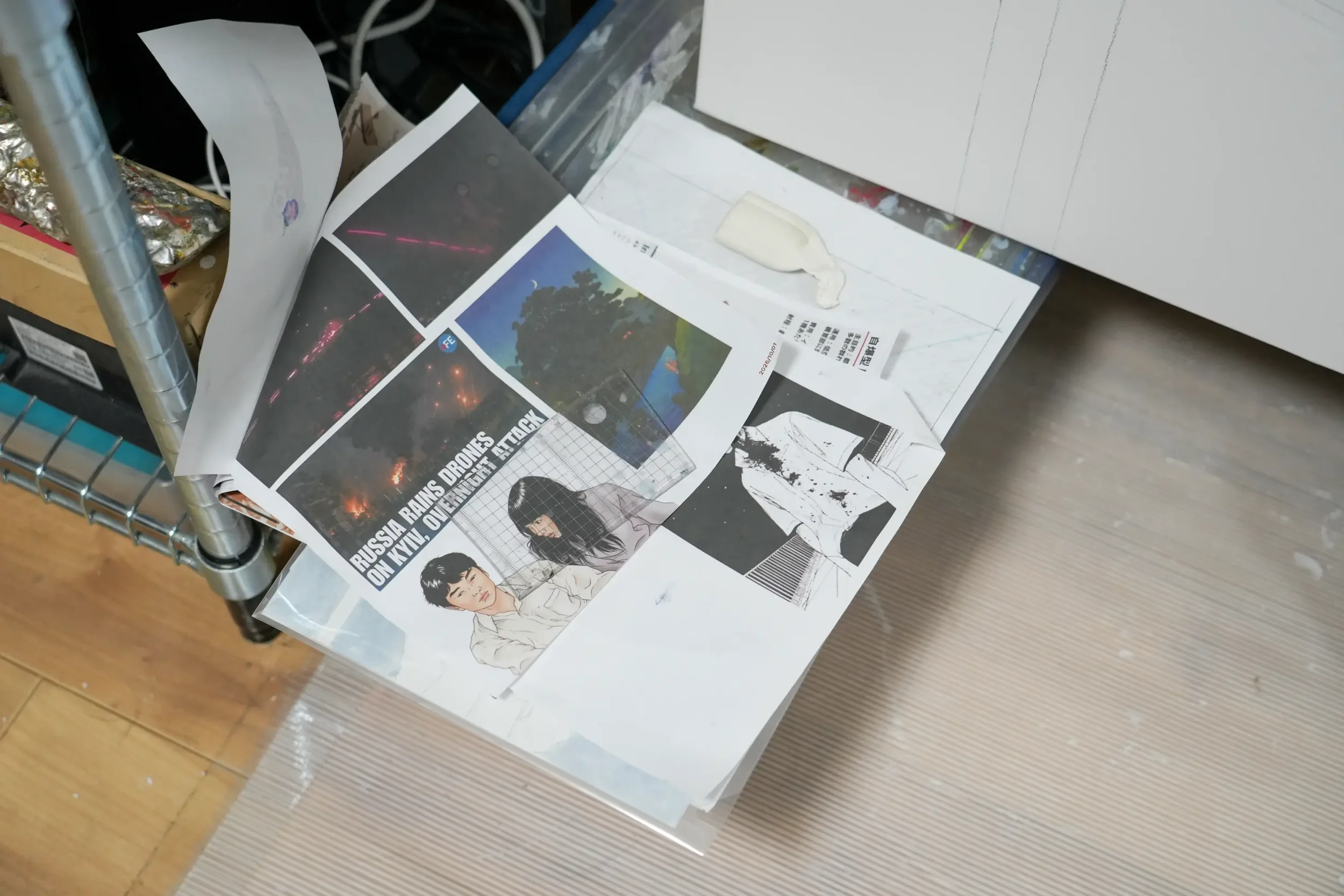
Do you take up events in Japan, such as Aum Shinrikyo or the incident involving former Prime Minister Shinzo Abe, because they’re within the range of information you can access?
That’s part of it.
From what you’ve said, it sounds as if you first find a good location and take photographs, then add elements of collapse or incident. Does the landscape come first, rather than the incident?
I combine all sorts of things, incidents, landscapes, things close to me, things that aren’t close to me, to make a single painting. It depends on the case what comes first. Sometimes I start with the landscape.
We live amid an endless, overwhelming wave of information: from events that shake society to small, personal scenes that go unnoticed. Perhaps Utanhole’s paintings quietly suggest the existence of faint, fleeting feelings hidden in the city’s clamor, feelings that can be overlooked and disappear unless we pay attention.
「Zipgunslingers」- Utanhole solo exhibition
Dates // Wednesday, November 4 – Saturday, November 28, 2026
Gallery hours // 11:00 a.m.–7:00 p.m.
Closed // Sundays, Mondays, and public holidays
Venue // Kaikai Kiki Gallery - Google Maps
During Art Week Tokyo (Wednesday, November 4–Sunday, November 8), the gallery will be open every day from 10:00 a.m. to 7:00 p.m.
Art Week Tokyo
This exhibition is being held to coincide with Art Week Tokyo.
Art Week Tokyo is an international art event organized through collaboration among Tokyo’s major museums and galleries, and held every November. It is known for its distinctive format, in which visitors travel between multiple venues on dedicated buses. The event shares Tokyo’s diverse art scene, with a focus on contemporary art, with audiences in Japan and abroad.
Latest articles

Alexandra Waespi documents the world of Gyaru, Otaku, and everything in between.