
The Fragile, Fleeting Wishes of Boyhood Brought to Light
© NOTHING NEW, MIYU PRODUCTIONS
Childhood is fragile in its own way, as it vanishes before most of us realize how much we wanted to cherish it. Film, anime, manga, and literature have all portrayed childhood in different ways, often capturing the fleeting nature of our earliest years. Yet the real challenge is to capture what gets lost, and which part we carry with us without even knowing.
Released in Japan on September 25, 2026,「We Are Aliens」is the feature debut of Japanese animator Kohei Kadowaki. Written and directed by Kadowaki, the film turns its attention to the small incidents and subtle shifts we encounter while growing up. Moments that seem negligible at the time, but end up influencing the rest of our lives. Kadowaki’s capability of communicating these shifts in the timeline of our childhood, confronted everybody in the audience with an uncompromising truth.
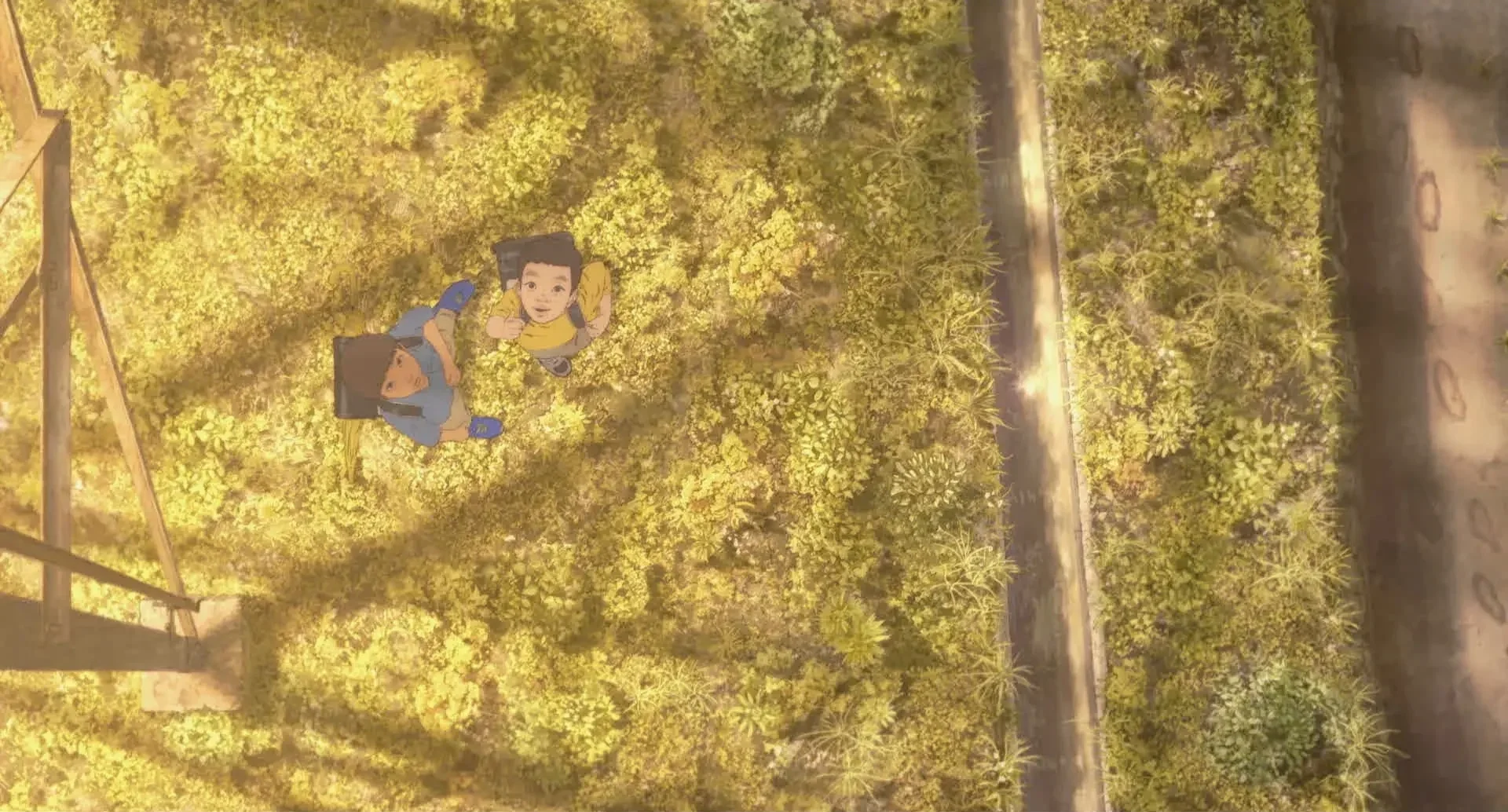
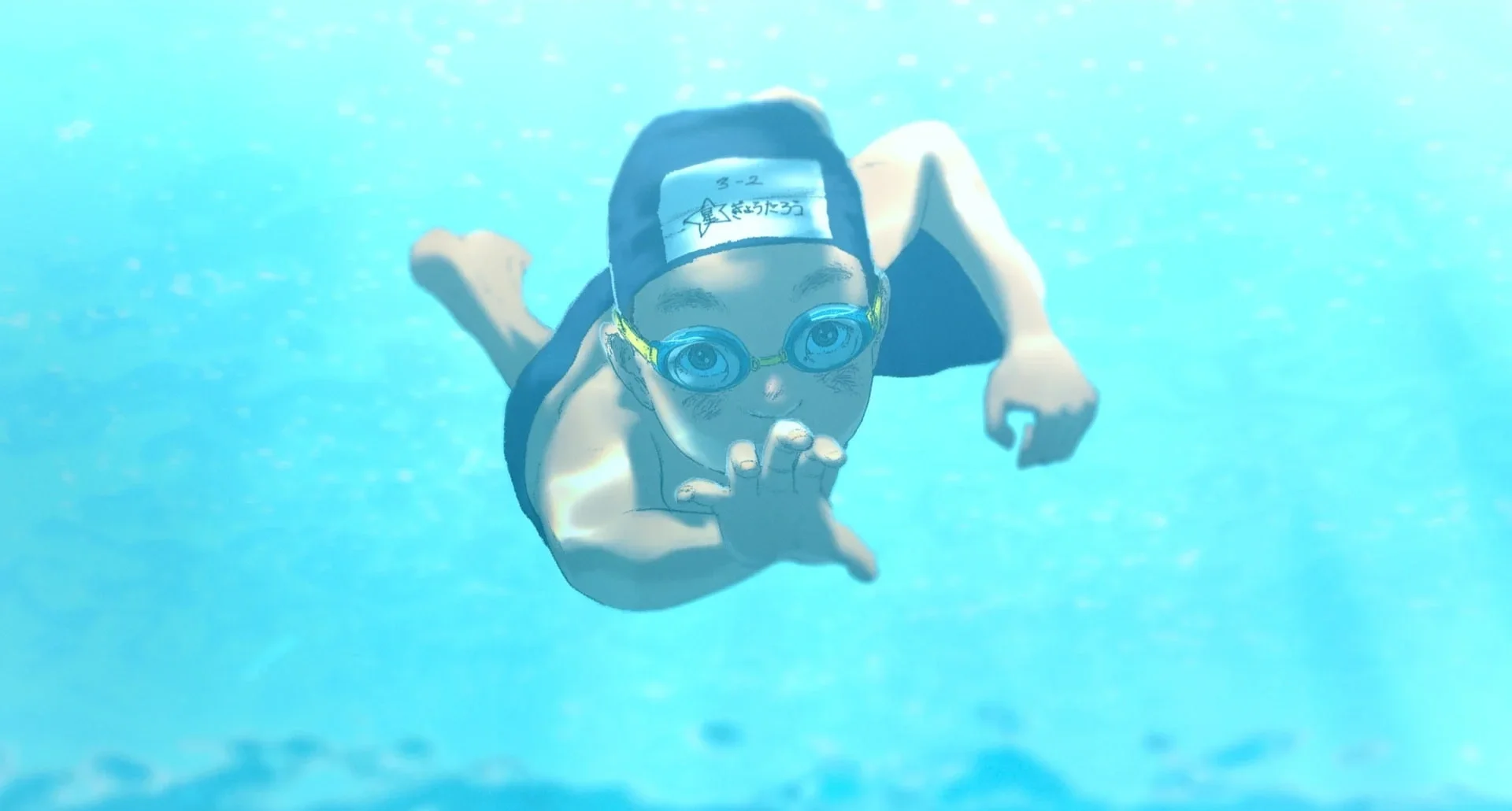
We are introduced to two elementary school boys, Tsubasa and Gyotaro, who meet in school in a rural town during the Heisei era. It doesn’t take long before both are inseparable.
While Tsubasa has his own struggles with being “ordinary,” Gyotaro is the oddball everybody likes. Then something happens, a tiny disturbance in their routine, and it changes their relationship forever.
© NOTHING NEW, MIYU PRODUCTIONS
Is this a story of two boys growing up together, or a memory they wish they could erase? A story of a friendship spanning thirty years, and a departure painted in the deepest blue.
The film premiered in the Directors’ Fortnight at the 79th Cannes Film Festival and was selected for the feature competition at the 2026 Annecy International Animation Film Festival. It drew attention at festivals around the world even before its release in Japan.
It went on to win the Grand Prize for Animated Feature at the 50th Ottawa International Animation Festival. Japanese media reported that Kadowaki, at 29, became the youngest filmmaker ever to win the award.
We had the chance to sit down with Kadowaki to learn more about making the film and the feelings he has carried with him since childhood.
© NOTHING NEW, MIYU PRODUCTIONS
Roman Shibata - To start at the beginning: what feelings, or what images, gave rise to We Are Aliens?
Kohei Kadowaki - I used to watch coming-of-age films like Stand by Me, and stories of what I think of as “idealized youth,” like going on dates in your school uniform. I went to all-boys schools in middle and high school, and I wasn’t exactly popular. If I managed to do something that resembled the youth I’d seen on screen, I counted it as having had a youth of my own. Otherwise, I didn’t feel like I’d really experienced one.
So I started thinking: if I could see my own uneventful life turned into a story, maybe that, too, could count as youth. I wanted to portray the overlooked, ordinary side of growing up: two boys playing with the button at a pedestrian crossing, for instance. Maybe that could expand what we think of as youth. Maybe I could make something for people who, like me, had looked at those familiar stories with longing. That was where it began.
Shibata - So you were thinking about what kind of approach you could bring to the stories already out there. After all the interviews you’ve given, is there a behind-the-scenes detail about the film you haven’t talked about yet?
Kadowaki - The finished 118-minute film represents about one-hundredth of all the ideas I started with. I had to cut them down, painfully, to keep the film under two hours. To keep the focus on Tsubasa and Gyotaro, I dropped material that didn’t connect to their story: a Tsubasa storyline, one about his mother, another about Gyotaro’s grandmother, and so on. I narrowed it down to what mattered most.
Shibata - Did you set out from the beginning to show the crueler sides of childhood, the sides that usually go unseen?
Kadowaki - Yes. I wanted to make the film for people who feel they somehow became adults before they even noticed, and give them a chance to look back at the past properly, so they wouldn’t forget it. I wanted to give the good memories and the painful ones equal weight, including being left out and all those bittersweet moments. I hoped that, after looking at all of that, people might leave the theater thinking, “I want to live a little more bravely.”
© NOTHING NEW, MIYU PRODUCTIONS
Shibata - What do you think separates adults from children? Is there a moment when one becomes the other?
Kadowaki - Ultimately, I don’t think there’s a huge difference between adults and children. For an elementary school student, having their game console taken away can feel like a matter of life and death. Adults are just as desperate when something important is taken from the society or the place they belong to. The circumstances and the scale of the world around them may differ, but the way their feelings move, or the way they get angry, is much the same.
Shibata - In the film, things drift apart because the characters don’t say what they mean. Were you someone who found it hard to put things into words as a child?
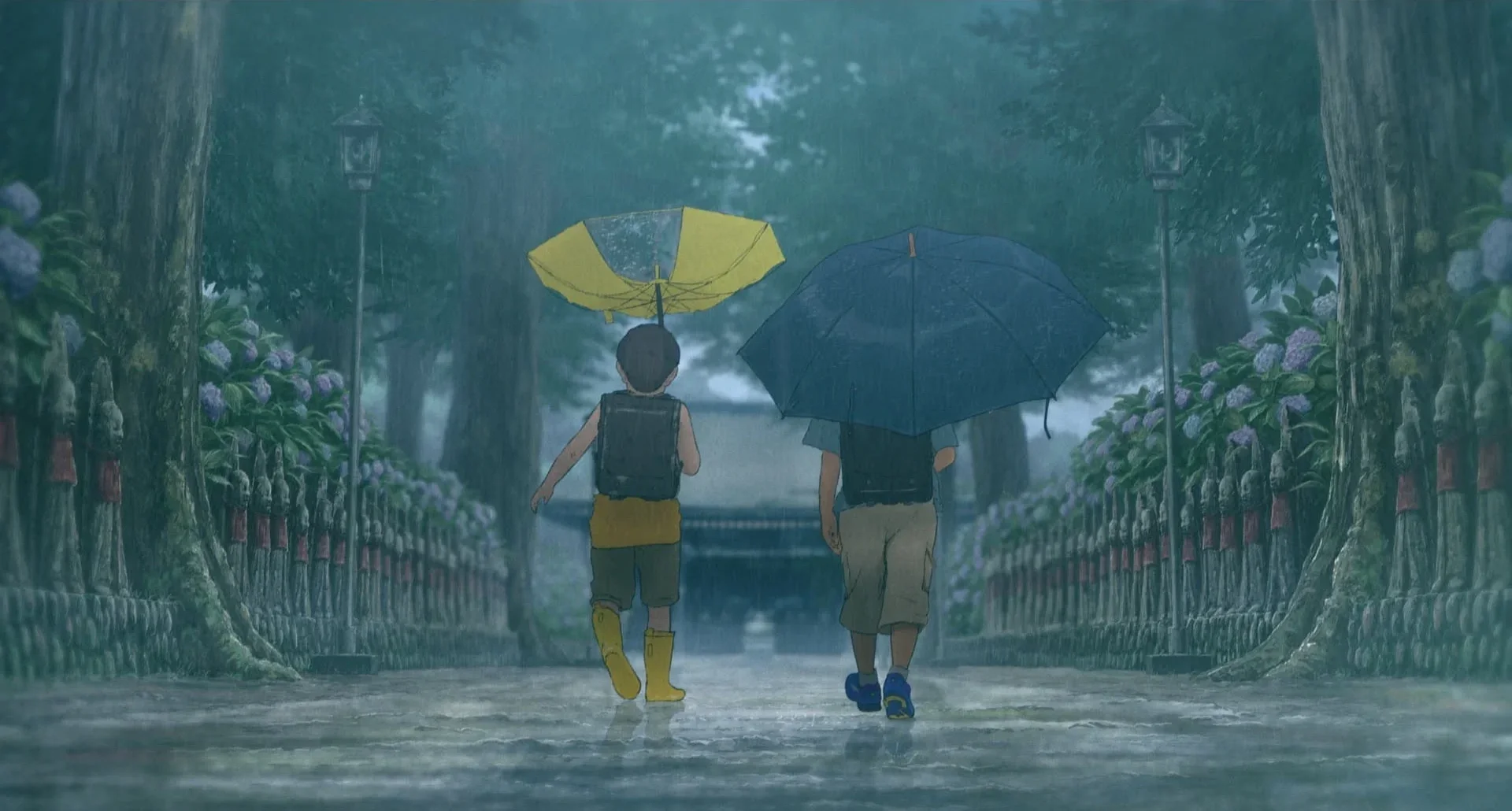
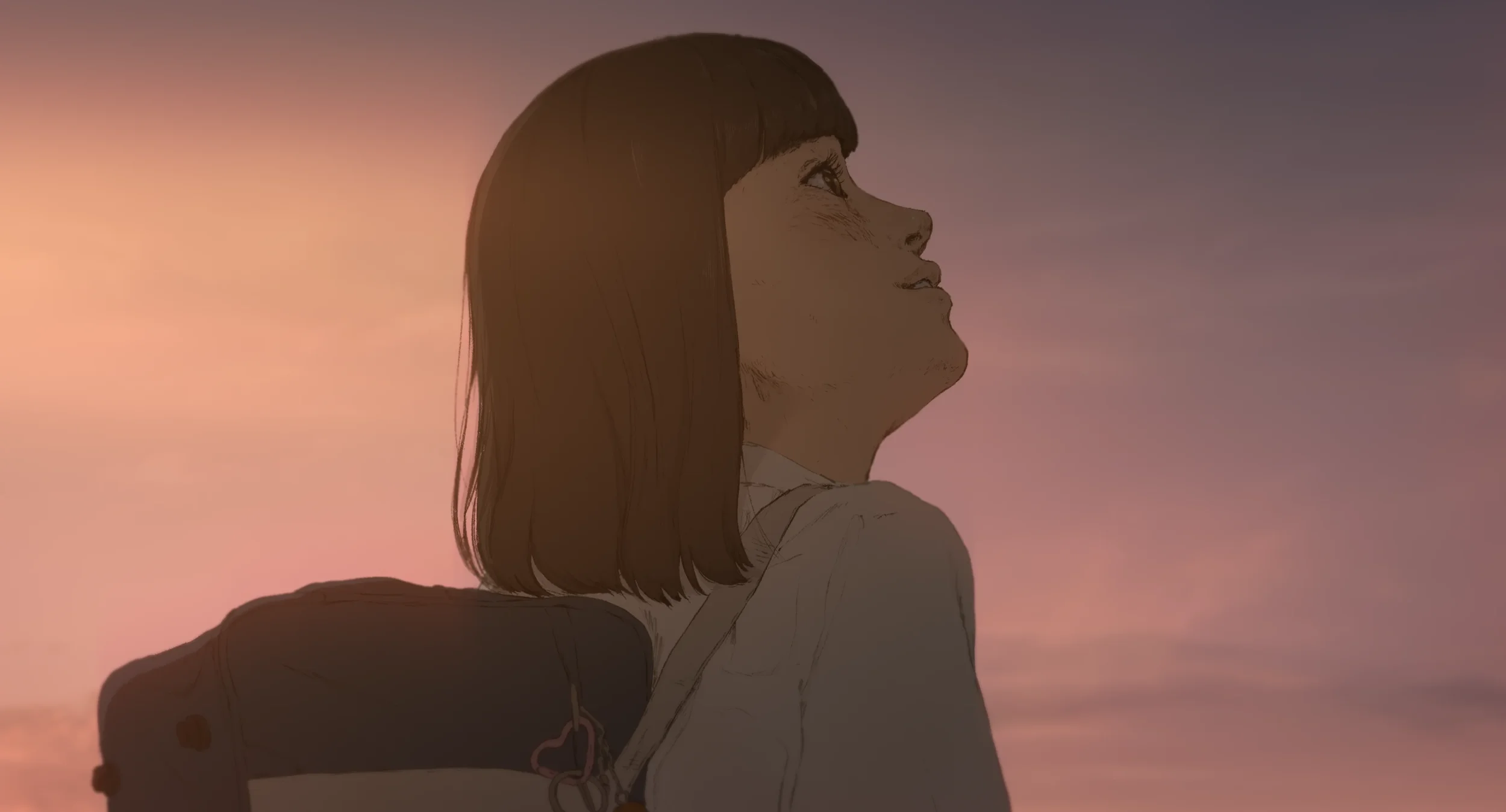
Kadowaki - A bit of both. Neither Tsubasa nor Gyotaro is especially strong inside. They’re alike in that neither can find the courage to apologize. If they were both good at putting things into words, they might have said, “Let’s talk in the park about what to do about the umbrella.” But the drama comes from the fact that they’re both too weak to say what they need to say.
© NOTHING NEW, MIYU PRODUCTIONS
Shibata - How do you decide what to put into dialogue, and what to leave unsaid?
Kadowaki - I don’t set out to take an argument that could be made in writing and express it through animation. Rather than making loud declarations to society, I want to deliver a message to each person through words. I spend years sitting with questions that don’t have answers, trying to find one possibility among the countless ways a life might unfold. That’s why I don’t put direct messages into the dialogue.
Shibata - If it isn’t a message, what feeling, or wish, did you put into the film?
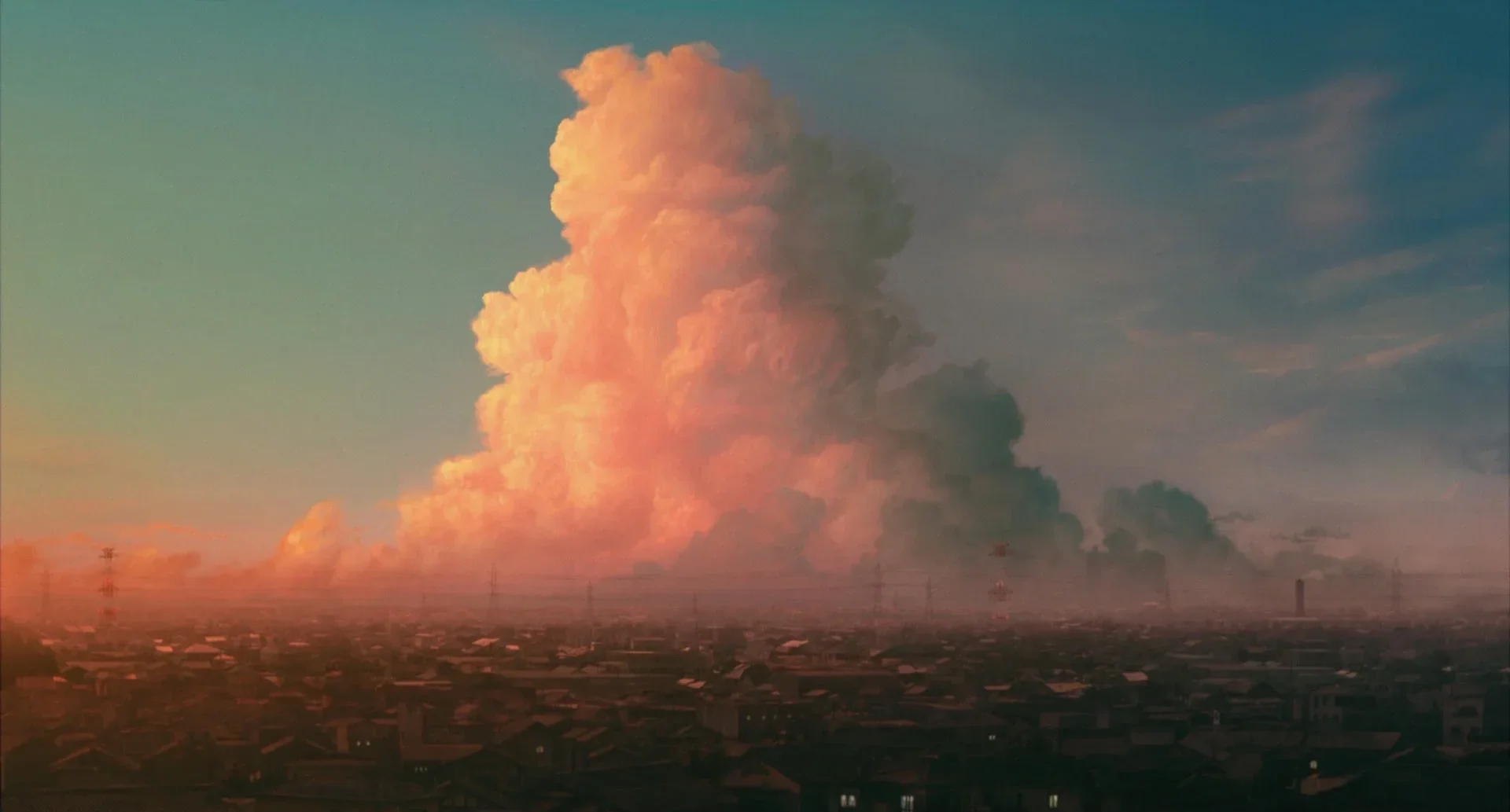
Kadowaki - I can’t quite put it into words, but it’s indeed more something of a wish. You watch the film, longing for the world inside it and thinking, “I want to live in that place again.” Then you leave the theater and realize that the real world outside is connected to the one you’ve just been watching. I hope the film can change the way people see the world around them, and make them think, “I want to take in a little more of this world. I want to live with a little more strength.” I hope it can give them a reason to keep going.
© NOTHING NEW, MIYU PRODUCTIONS
Shibata - How did you share that intention with such a large production team?
Kadowaki - The characters’ feelings and the intentions behind the direction were all built up quite logically. I explained them to the team in those terms as we worked.
Shibata - What was the production setup at your studio like?
Kadowaki - We worked out of an apartment building in Shibuya. There were four core key animators and four background artists, with around twenty people in all. The three-and-a-half years of production made me feel a bit like a homeroom teacher.
Shibata - Are there any works you particularly love, or that influenced you?
Kadowaki - I’d say Attack on Titan is the most compelling anime. I was also influenced by the stories of friendship and conflict in Naruto, which I’ve loved since elementary school.
For live-action films, my father introduced me to The Terminator, Die Hard and Back to the Future. But my favorite is Rocky. No matter how many times he gets hit, he won’t go down; he keeps fighting until the end. That’s a spirit I want to hold on to as someone who makes things.
Shibata - Did your thinking about making things change over the 1,443 days of production?
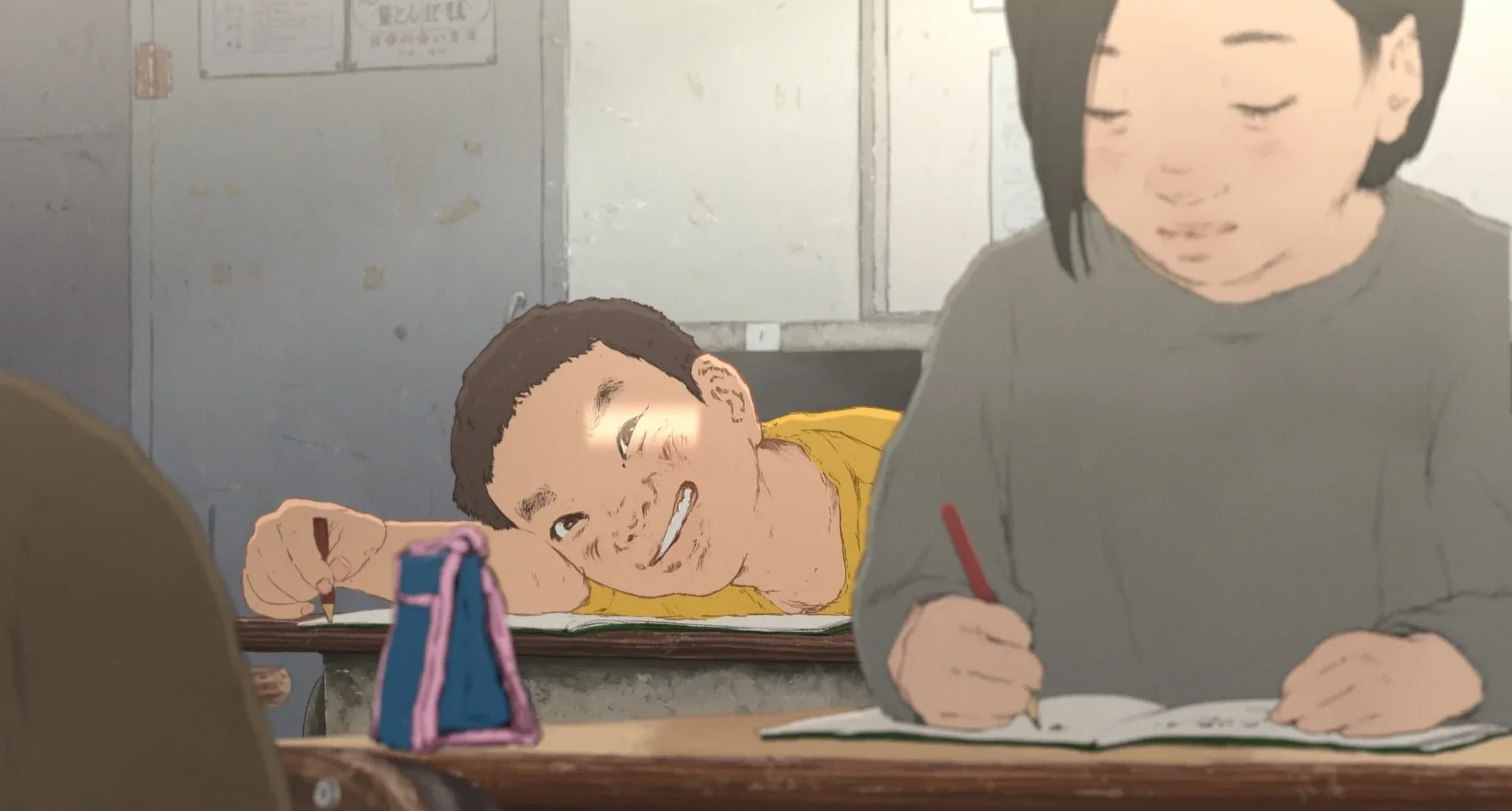
Kadowaki - At first, I thought that drawing every shot myself was what made a film unmistakably mine—what I called “Kadowaki-ness.” But as we divided up the work, I realized that the enormous number of revisions I’d checked and approved was itself proof that this was a film that was “100 percent Kadowaki.” If I could bring the work to a quality I believed in, dividing up the work wouldn’t dilute my authorship. That changed the way I thought about it.
© NOTHING NEW, MIYU PRODUCTIONS
Shibata - Did you plan from the start to release the film when you did, and to take it overseas, to Cannes, for example?
Kadowaki - I’d decided that I would release my first film as a director before I turned thirty. Even when someone suggested postponing it, I pushed myself as hard as I could and made the March submission deadline for Cannes. If you’re serious about making a film, aiming for the world’s greatest film festival feels like a natural goal.
Shibata - The film depicts a distinctly Japanese setting. How has it been received overseas?
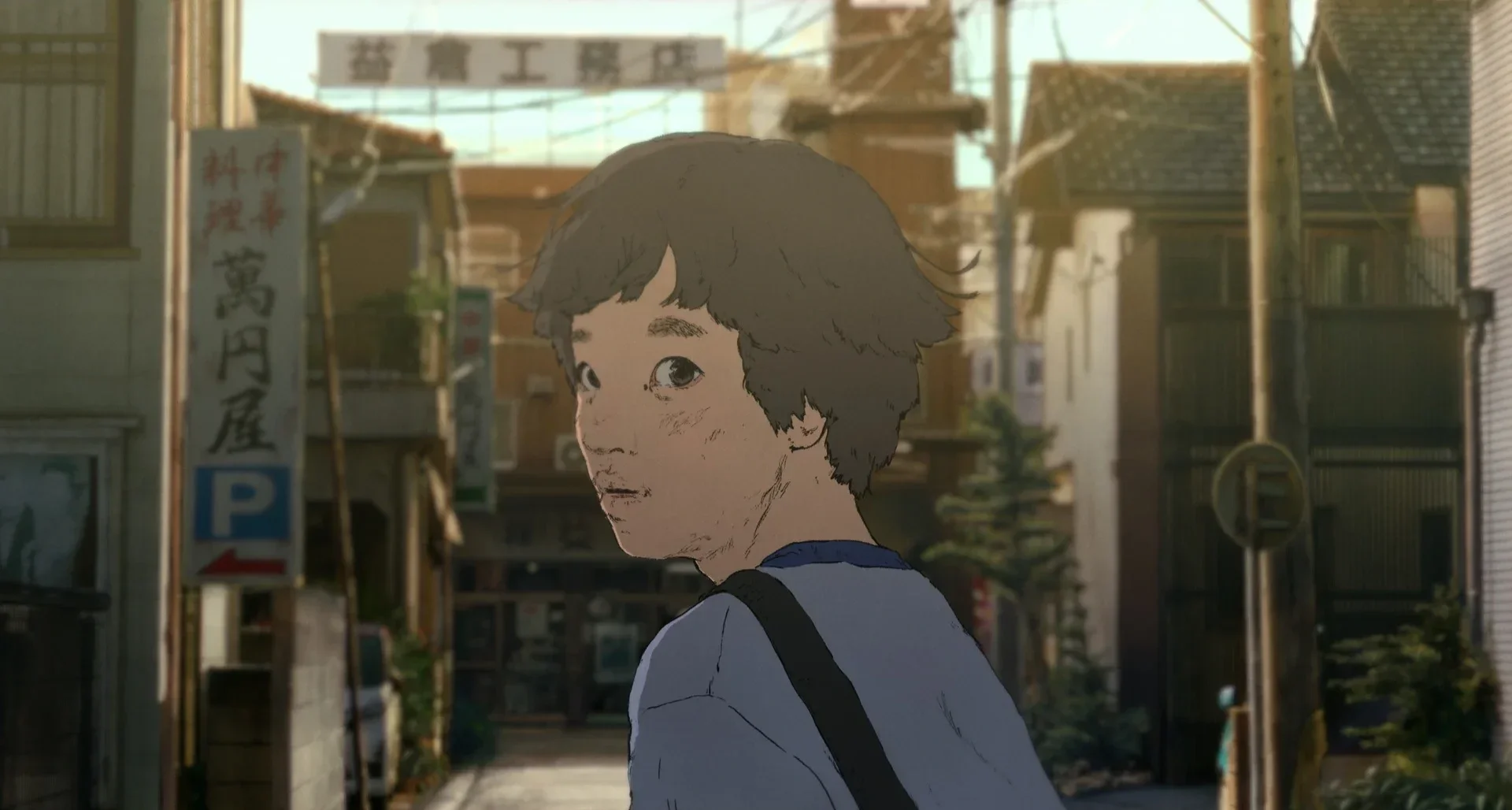
Kadowaki - At a preview in France, I was surprised, and also reassured, to hear people respond emotionally at exactly the same moments as audiences in Japan. You don’t need to know a particular culture to understand the awkwardness of breaking a friend’s things and not being able to apologize, or the particular distance children keep from one another. I realized those feelings are universal.
Shibata - Finally, what are you thinking about for your next film?
Kadowaki - I originally had an idea for a science-fiction anime with a robot as the protagonist, and even drew storyboards for it. But I’m taking it apart and rebuilding it now. The only thing I know for sure is that I want to make something that’s absolutely entertaining. I want to keep making films that give people something to look forward to every three or four years—a reason to keep going because they’re excited to see what this director makes next.
Latest articles

A psychological coming-of-age anime that doesn’t hide the truth