
© Shunpei Kamiya
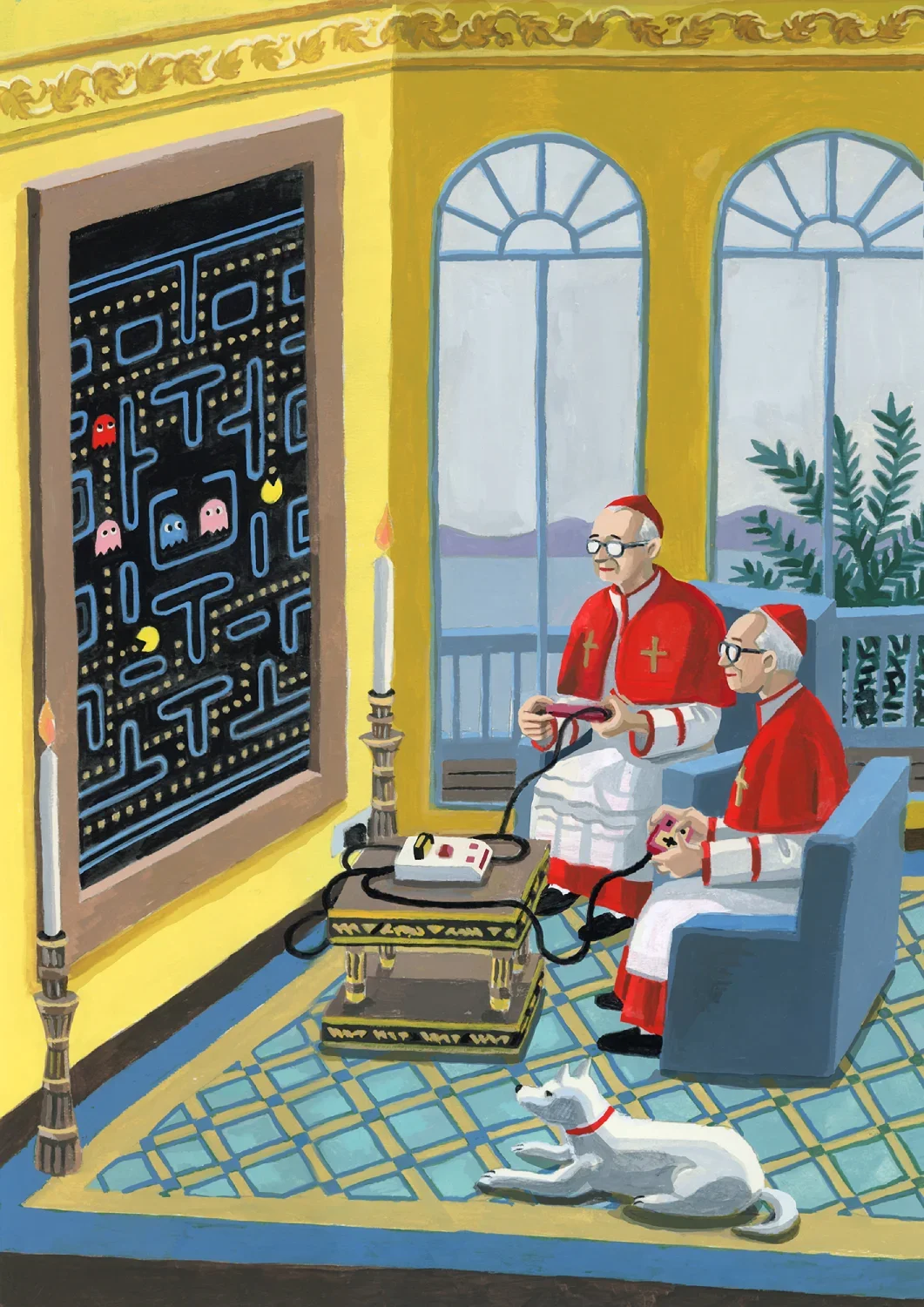
From student lovers with eyes shooting laser beams to bishops playing Pac-Man. It’s often easier to spot the strange in Shunpei Kamiya’s work before the regular reveals itself.
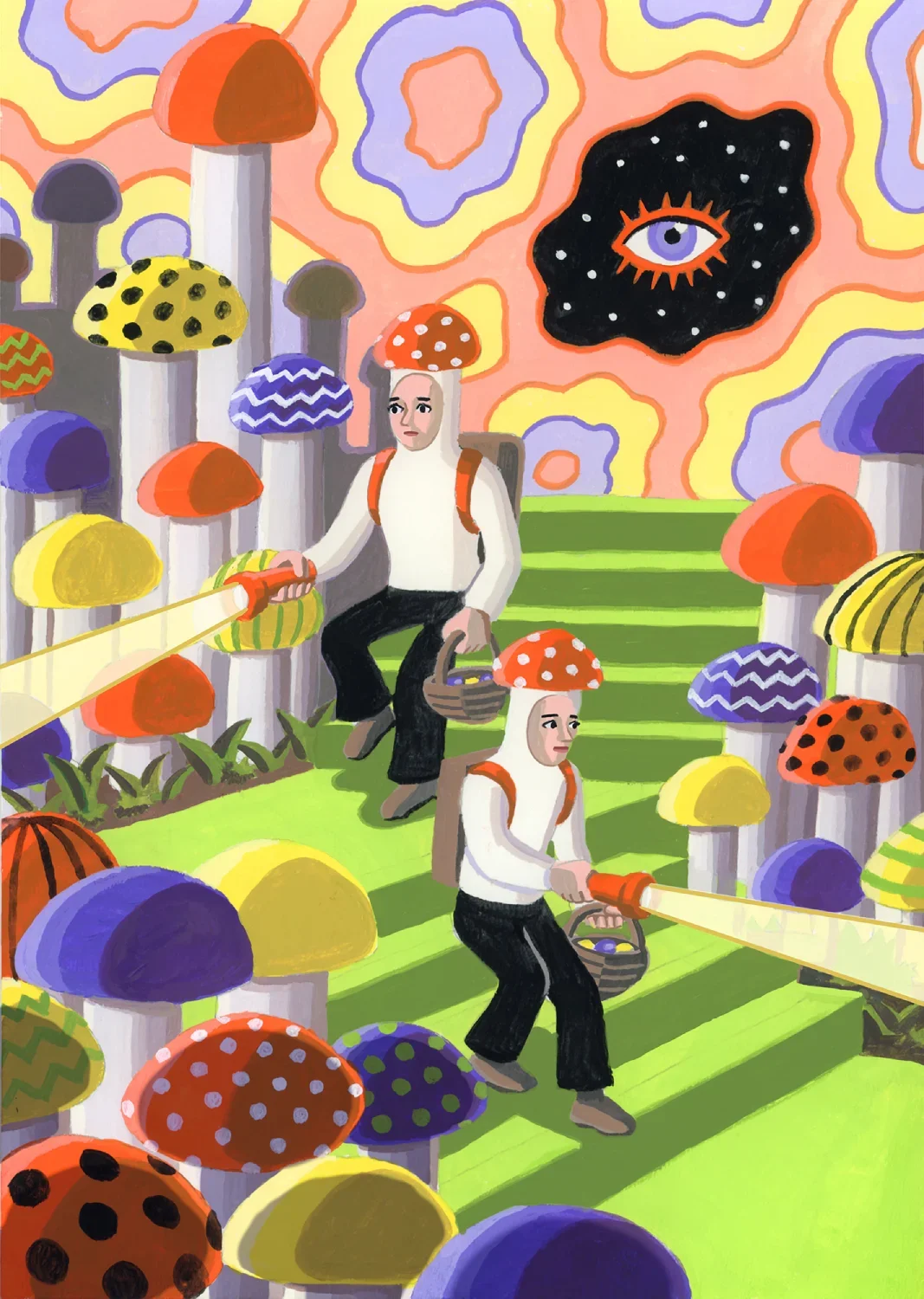
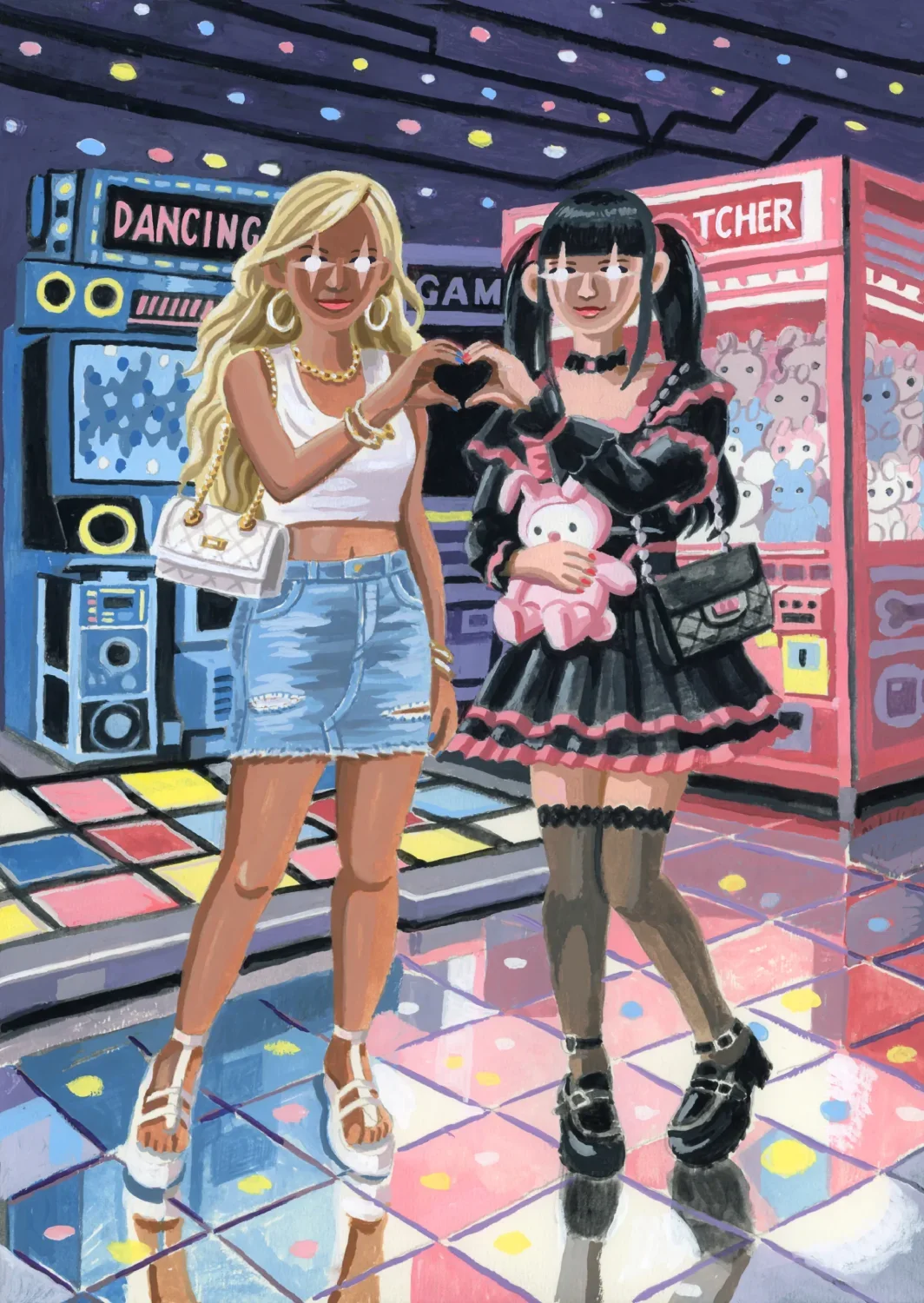
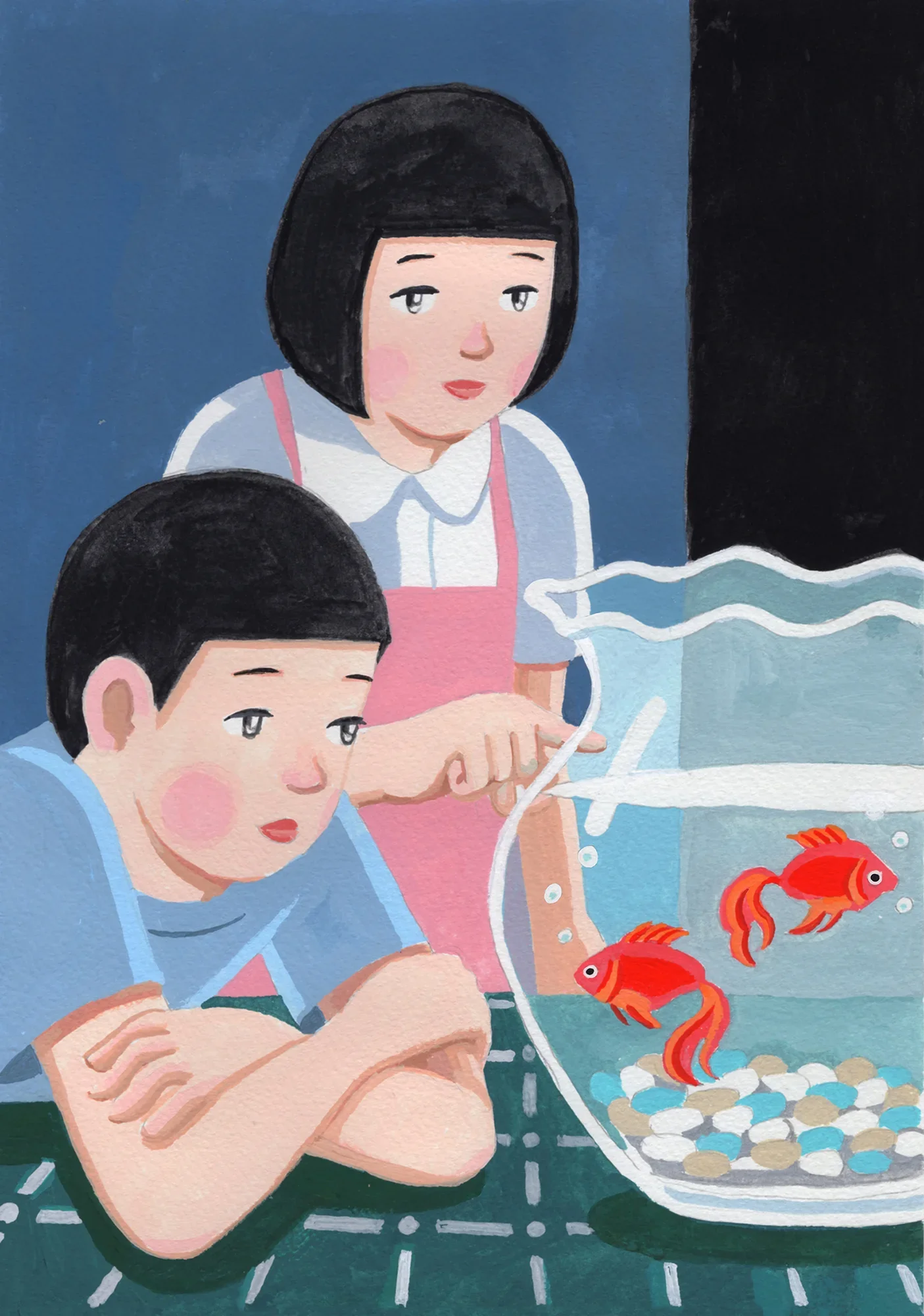
His pastel candy-coloured works drag us straight into his uncompromising flat style, marked by the expressions of his figures, which often sit somewhere between a porcelain doll’s blank stare and the uncanny valley gaze of a Polar Express character.
That’s exactly why Kamiya’s work feels so pronounced yet undefined. Every illustration is filled with activities that raise a ton of questions, yet more often than not, the expressions on his figures’ faces leave us wondering whether they’re actually seeing what we’re seeing.
In an attempt to learn more about Shunpei Kamiya’s work, we sat down with the artist to ask him about the messages he’s trying to share with the world through his art, while learning more about his characters’ eyes and childhood inspirations.
© Shunpei Kamiya
How do you choose the subjects and themes you explore in your work?
As an illustrator, I want to demonstrate the breadth of what I can do professionally and the variety of things I’m capable of drawing. I also want to create images that leave a lasting impression on people by depicting subjects that others don’t often explore.
At the same time, I need to draw things I genuinely like and find interesting if I want to maintain my motivation throughout the entire creative process.
I keep a notebook of ideas, and I have a lot of notes saved up for things I want to draw someday. On the other hand, I sometimes come across an image, picture, or artwork unexpectedly that inspires me and makes me want to draw something right away.
When it comes to my personal work, I try to work through these ideas in order of whatever excites me the most at any given moment.
For me, drawing, particularly my personal work, is in a sense a vessel into which I can pour everything that has influenced me throughout my life.
Of course, this is difficult to achieve in practice because drawing has its own formal limitations. But whenever something I’ve read, listened to, or watched has moved me, there’s always a part of me that wants to translate that feeling into an image someday.
That said, I don’t want to draw just anything. For example, even when dealing with subjects such as sex or violence, which can attract a great deal of attention depending on how they are handled, I feel that there is a certain line of good taste that I don’t want to cross.
Conversely, I don’t particularly want to create clean, conventional, almost model-student-like illustrations for my personal work, especially when there are already other people who are much better at that kind of thing. Well, I probably couldn’t draw them anyway (laughs).
For me, drawing is always an experiment. I want to try creating images that make people feel they are seeing something they haven’t seen before.
© Shunpei Kamiya
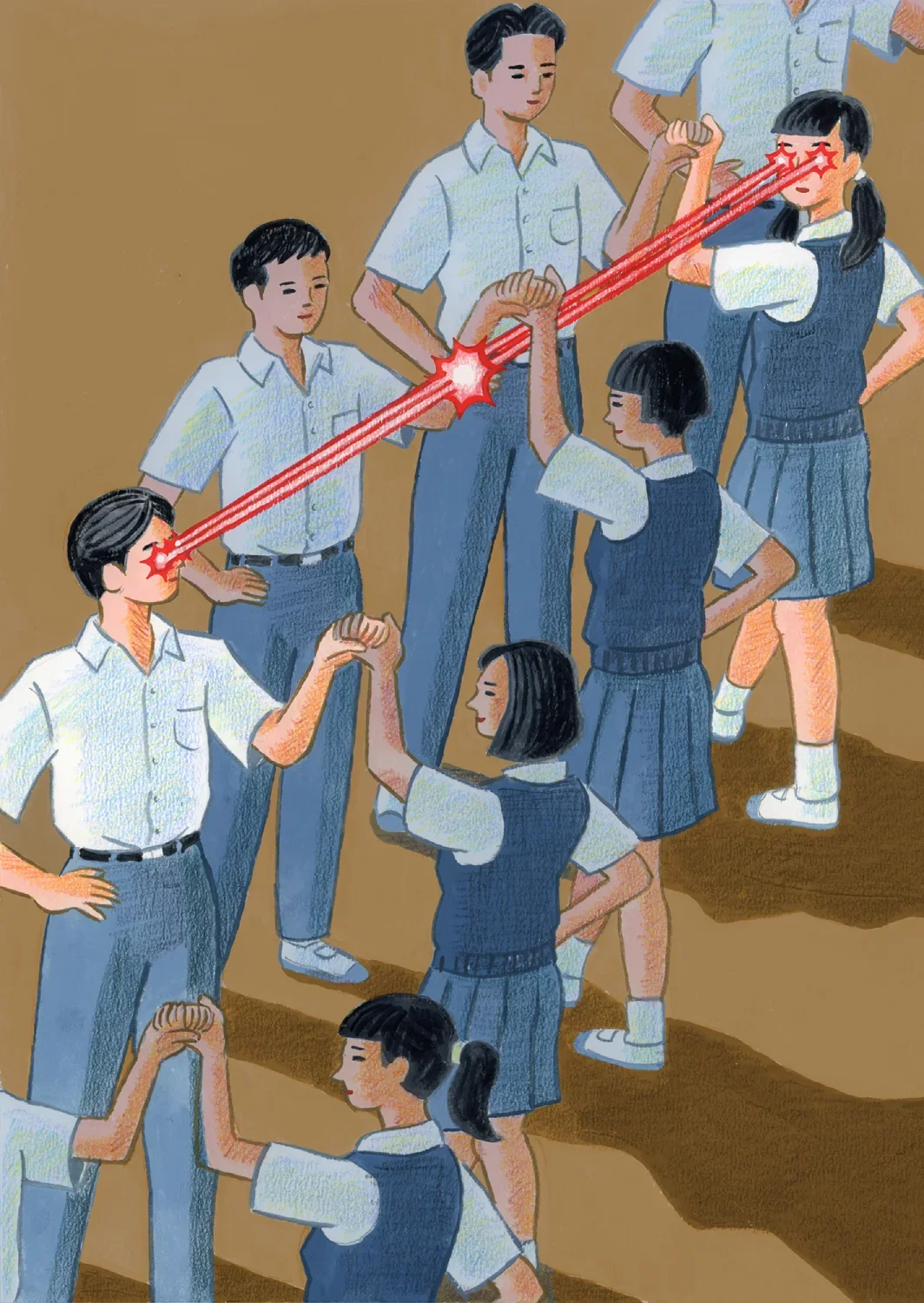
I first discovered your work through your Laser Beam series, in which a boy and a girl exchange powerful gazes through laser beams while the people around them carry on as though nothing special is happening.
What was your vision behind this this composition?
I wanted to capture a particularly distinctive period of my life: when I was in high school, I was extremely self-conscious and constantly worried about how other people saw me.
I also wanted to capture the special nature of romantic love within a single image.The gaze you direct towards someone you have feelings for collides with the gazes directed at you by others, like laser beams.
Rather than leaving this as a metaphor, I decided to depict the beams literally. I think this made the feeling of that period of life come across in a more tangible and realistic way.
Even I feel that this is a piece I managed to execute well, not so much in terms of technical drawing ability, but as a form of expression.
© Shunpei Kamiya
How did your visual style develop?
I don’t really think my drawings have such a clearly defined style. Although I depict a wide variety of subjects, I don’t particularly feel that the style of the drawings themselves has a distinctive individuality.
Since childhood, I’ve always been exposed to manga and anime and influenced by them, although I wouldn’t say I was particularly knowledgeable about them to the point of being an obsessive fan. I was a child who liked playing indoors, and even now, my parents tell me that as long as I had paper and a pencil, I would spend hours drawing.
In manga, I particularly liked works with simple, clean lines, such as those by Fujiko Fujio, Kinnikuman by Yudetamago, and Akira Toriyama.
When I was growing up, there was still a prevailing attitude that manga, anime, and video games were things you were supposed to leave behind when you became an adult. So, when I entered high school, I became deeply immersed in reading, music, and film. The things I became particularly obsessed with, to the point of almost becoming a specialist, were Japanese television comedy and Black music.
Even after I started working, I always read books on my commute, and I tried to watch around two films a week, renting them from TSUTAYA whenever possible. At the time, I wasn’t particularly knowledgeable about illustration. I liked Makoto Wada and Edward Hopper.
Later, when I began drawing seriously, I started to feel that the sheer volume of artwork I had seen up to that point was far too limited. Nowadays, I look at a great deal of art on social media every day and try to visit as many art exhibitions as possible whenever something catches my attention.
So, when I think about where my visual style comes from, I suspect it has been influenced little by little by everything I’ve encountered throughout my life, not just manga and anime, but also music, film, comedy, literature, and more.
© Shunpei Kamiya
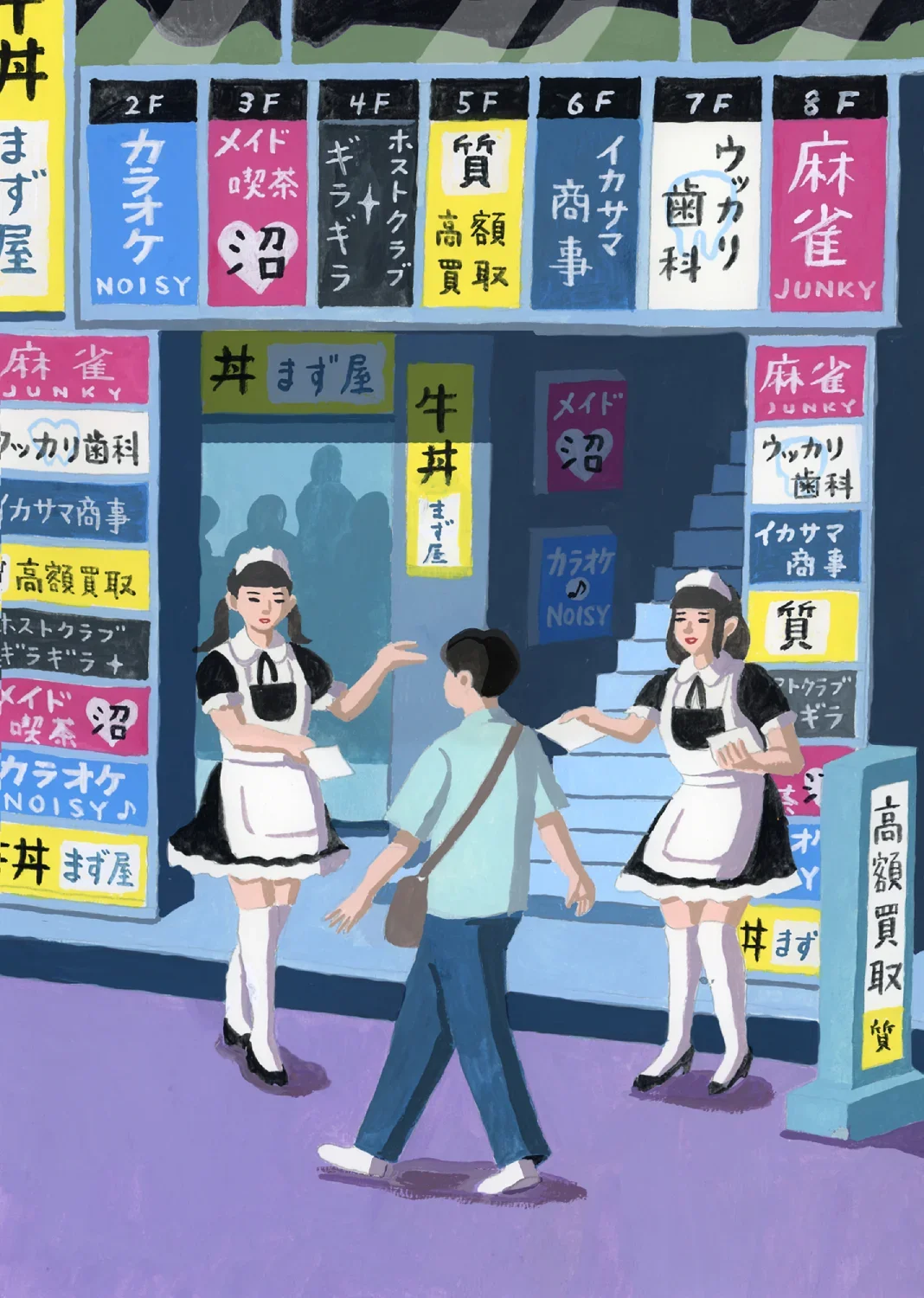
I sense something unsettling or vaguely ominous about many of your works. I feel this particularly strongly in pieces where the characters’ eyes are rendered as solid black shapes, often without pupils.
To what extent do you consciously decide how to draw the eyes?
I think the eyes are the part of the human body with the most symbolic function.
For example, when someone looks at a picture containing a person, they first notice the person, then their face, and then the shape and expression of their eyes. The expression in someone’s eyes can even determine the meaning of the entire image.
That’s why I’m very careful about how I draw a character’s eyes.
Someone once told me that the figures in my drawings looked like dolls, and that this was what made them interesting. When I give characters predominantly black eyes or leave out their pupils, perhaps it’s because I don’t want to restrict their emotions to a specific interpretation.
I think I’m always conscious of just how important the way I draw the eyes is, to the point that it can determine the entire character of a picture.
© Shunpei Kamiya
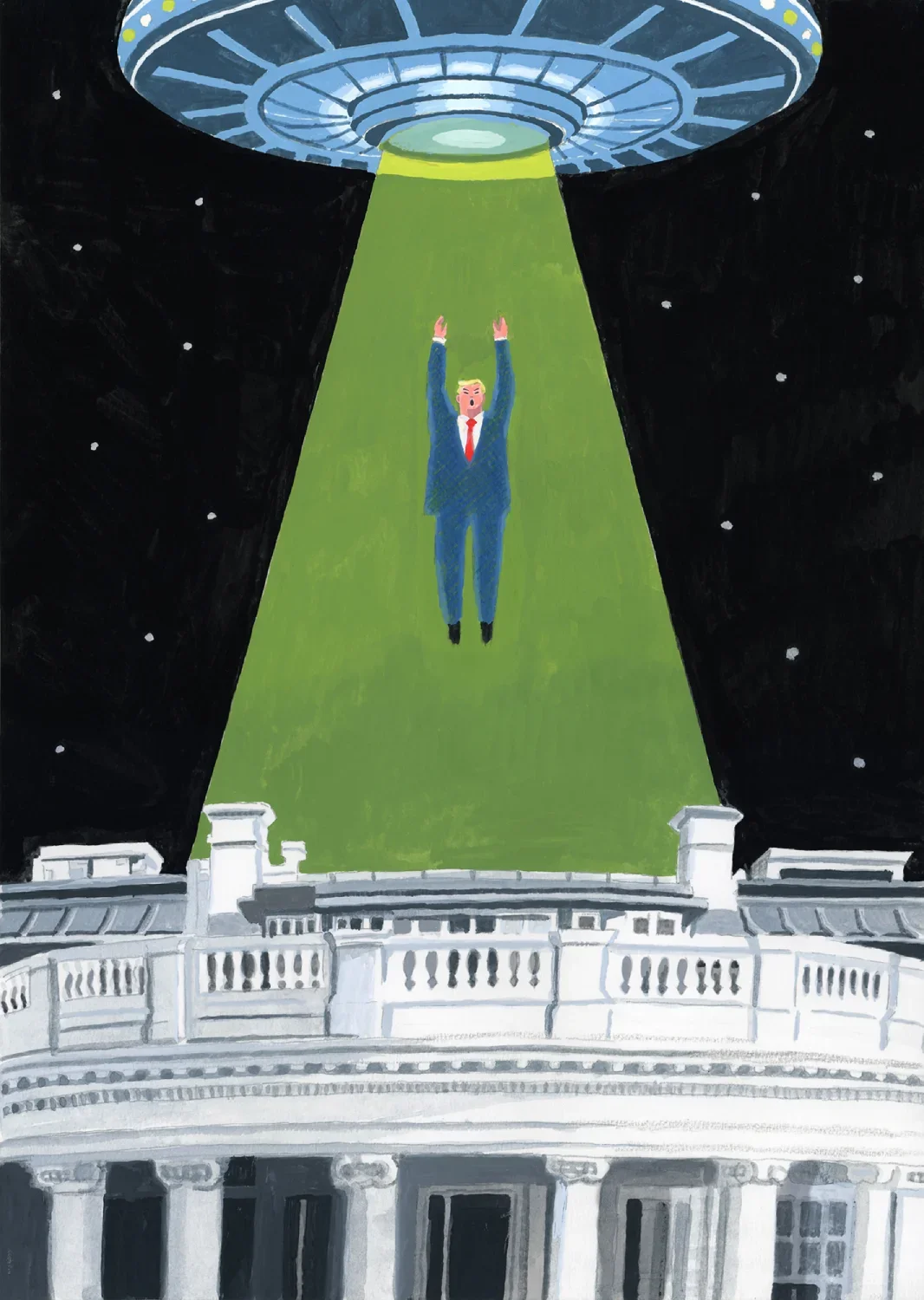
Your work touches on politics in different ways. How important do you think it is for artists to express their views on society through their work?
Given that I want to draw about such a wide variety of subjects, I think it would feel a little unnatural to draw everything except politics.
That said, I can’t simply treat drawing as a tool whose sole purpose is to communicate a message. No matter how strongly I feel about something, those feelings can become difficult to convey once I translate them into the form of an image.
Even when drawing about politics or society, I don’t think I should ever lose sight of the question of how to express the subject as an image in the first place.
I also don’t believe that every artist needs to take a political position through their work. If you feel you can express something through drawing, then draw it. If you want to express yourself through words, then use words. I think everyone should express themselves in whatever way they can.
© Shunpei Kamiya
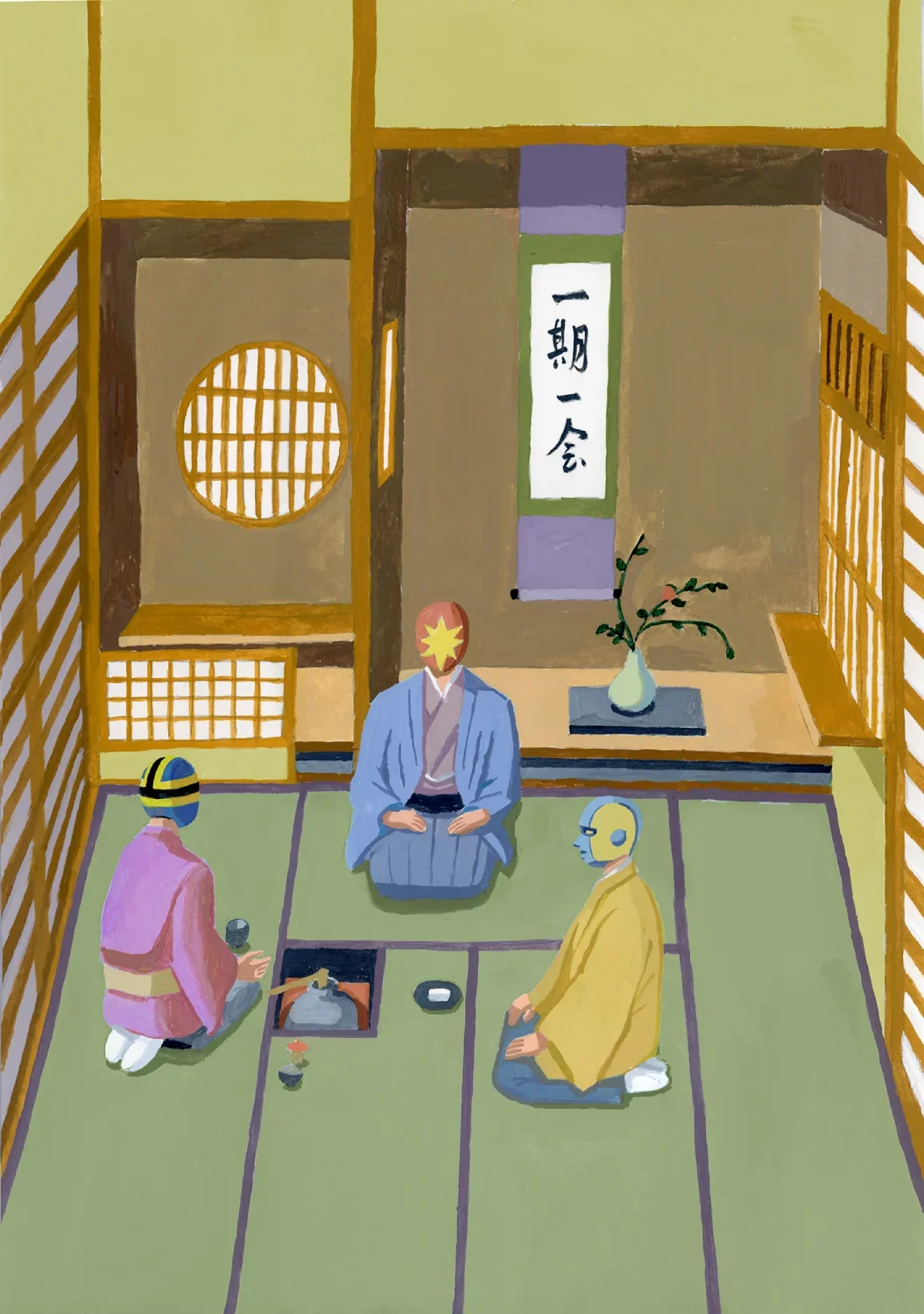
Some of your works remind me of pop culture icons like Power Rangers, Super Sentai, and Ultraman, although you seem to detach these influences from their original worlds to create your own narratives.
Is reimagining the things that inspire you in this way part of your creative process?
I think many boys who grew up in Japan were exposed to superhero shows and Super Sentai when they were children. When I trace my own earliest visual influences, I inevitably arrive at the manga, anime, and tokusatsu productions that shaped me during childhood.
I’m conscious that these foundations are something I can’t easily erase from within myself.
Every now and then, I find myself wanting to draw on the power of their colourful and original forms of expression.
I suspect that many Japanese creators, rather than drawing solely on Western art history and fine art, also have their earliest visual experiences rooted in manga, anime, video games, and tokusatsu.
In my own case, rather than consciously sampling these influences, I think it’s more accurate to say that they’ve remained with me all along and naturally find their way into my work.
© Shunpei Kamiya
Finally, is there anything you would like to tell or share with our readers?
Well, it’s not really my place to lecture anyone (laughs), but I think young creators should generally pursue the things they love while also exposing themselves to as many different kinds of culture as possible while they have the time.
Even if you don’t fully understand something when you first encounter it, I’m sure there are things that will eventually come into their own and influence you later in life.
To older readers, I’d like to say that we should all take care of our health, keep doing the things we love until the day we die, and enjoy the rest of our lives (laughs).
Lately, I’ve been trying to make the most of every day by reminding myself that, from this point onwards, today is the youngest I’ll ever be for the rest of my life.
Follow the journey of Shunpei Kamiya on
Trending articles

Shunpei Kamiya on exploring the familiar, the unsettling, and everything between.