
© FREQ
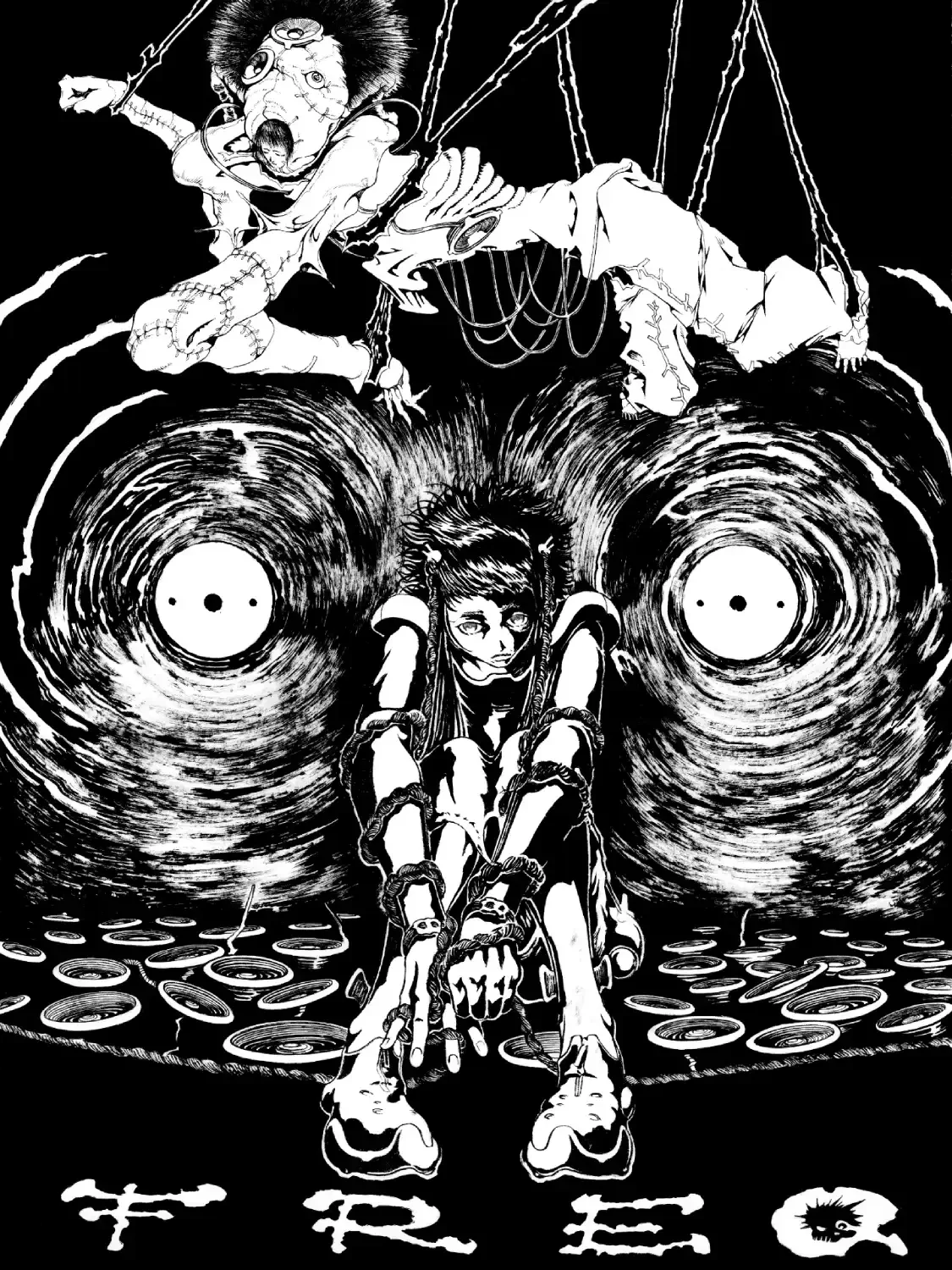
What happens when sound frequencies become the blueprint for an entire civilisation? This new manga offers a glimpse of what such a reality might look like. In FREQ, sound waves are the currency powering everything from electricity and transportation to surveillance and warfare.
Created by Swiss DJ and curator Nicola Kazimir, written by veteran anime screenwriter Dai Sato and illustrated by GOODNEWSFORBADGUYS, FREQ takes the visual language of sci-fi and plugs it directly into the history of electronic music subcultures.
But FREQ is doing more than dressing up a science-fiction narrative in rave graphics. At its centre is the idea that whoever controls sound ultimately controls society. In Rephlex, FREQ’s corporate city, frequencies are a resource to be extracted and distributed, forming the backbone of its economy.
The suburbs and industrial districts are the loudest parts of Rephlex, FREQ’s corporate city. Their inhabitants surrounded by the frequencies harvested to keep the city running. The wealthy retreat into a quieter leisure district, protected by noise-cancelling technology and restricted access. Citizen ratings determine who can enter these spaces. The people producing the city’s energy are condemned to live with its noise. Those controlling the infrastructure can afford to escape it.
In the midst of it all stands Akai, a young protagonist drawn into the Electribe, a rebellious faction operating outside the established order. Their struggle centres on finding ways to exist beyond the infrastructure that makes everyday life dependent on those in power.

© FREQ
The Three Frequencies Behind FREQ
The manga brings together an unlikely combination of creative worlds.
FREQ is the brainchild of Nicola Kazimir, a Swiss DJ, curator, and long-time enthusiast of electronic music culture. The project grew out of years spent exploring the connections between electronic music, its history, and the subcultures surrounding it. Kazimir set out to build an entire fictional universe around them, drawing on real-world movements and musical histories to shape FREQ’s political landscape, characters, and technology.
To translate that world into a narrative, he approached Dai Sato, the seasoned anime screenwriter behind Cowboy Bebop, Samurai Champloo, Ergo Proxy, and more. Music has always been central to Sato’s storytelling, from the jazz-soaked atmosphere of Cowboy Bebop to the hip-hop-inflected historical setting of Samurai Champloo. He also has a personal history with electronic music, having been involved in Japan’s techno scene and co-founded Frogman Records in the early 1990s. FREQ brings together two creators whose roots in underground music culture run deep.
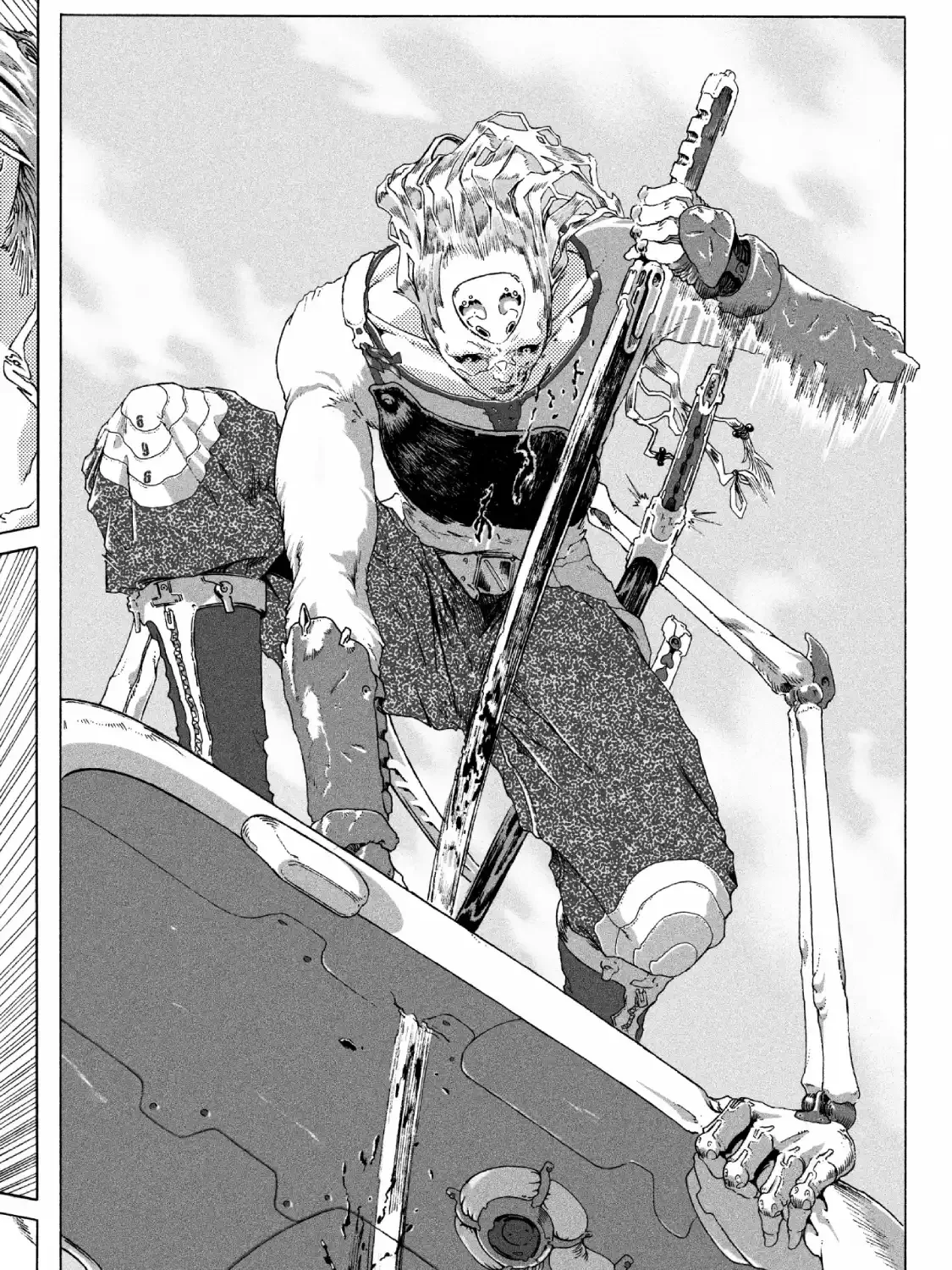
That worldbuilding finds its visual counterpart in the work of illustrator GOODNEWSFORBADGUYS. Before joining FREQ, the illustrator created Speed Biscuits, a comic following two girls heading to a rave during the COVID period. His cyber-noir illustration style, influenced by names like Koji Morimoto, was the perfect visualization of the universe Kazimir and Sato were envisioning. The illustrator spent an extended period in Zurich, developing the manga while regularly attending clubs and absorbing the city’s electronic music scene.
The attention to detail put into the visual world is admirable. Volume #0 includes 40 pages of concept art alongside its 40-page story. It also features collaborations with internationally renowned illustrators, presented as in-universe advertising pages. And so does volume #1 with 55 pages of story, and 25 additional pages of concept art.
With three core team members steeped in the culture of the fictional world they’re creating, it helps explain why FREQ feels bigger than just a manga.
© FREQ
In fact, FREQ is actually bigger than a manga. Its accompanying record label, FREQ Records, connects electronic musicians with the project’s fictional universe. The label’s catalogue spans different generations of electronic music, bringing together Detroit techno pioneer Eddie Fowlkes, Japanese techno producer Ken Ishii and electronic act Machine Girl.
Released in April 2024, Machine Girl’s SUPER FREQ EP arrived two years before the manga’s release. The three-track record was created specifically for the project. Machine Girl’s frenetic electronic sound, which moves between breakcore, digital hardcore and other abrasive dance music styles, makes for a fitting intro to FREQ’s universe. The EP’s artwork also shares FREQ’s visual identity, putting the FREQ aesthetic into circulation years before the manga saw the light of day.

And so, FREQ becomes an extension of the very history they build their story on. A history that is visible in all elements of their work, such as its rebellious Electribe, which draws inspiration from an important chapter in music history. In early 90s UK, collectives such as Spiral Tribe organised community parties in squatted buildings, hijacked land, or public spaces, obviously without the necessary licenses.
Between 1990 and 1992, Spiral Tribe played a constant game of cat-and-mouse with the police. Officers would set up roadblocks and routinely raid parties to seize expensive sound equipment. It all culminated into a massive lawsuit trying to label the Spiral Tribe as an organized criminal syndicate, leading to the legislation of the Criminal Justice and Public Order Act, which, among other things, banned outdoor gatherings with repetitive beats. The founders packed their bags, and continued their mission on mainland Europe, taking their rave movement across France, Germany, and beyond.
So much for your weekly piece of European music history. How the Electribe fights its own battles against injustice, we’ll leave for you to discover.
FREQ is funded by its own Kickstarter campaign, grown out of a shared understanding by creators that share a passion for electronic music, underground art and sci-fi, with each part feeding into the next.
FREQ volume #0 and #1 are available in their webshop.
Follow the journey of FREQ on
Follow the creators
Trending articles


A sci-fi world written by the legendary Dai Sato.