
How EVISU Jeans Found 2000s Skate Culture
© Evisu
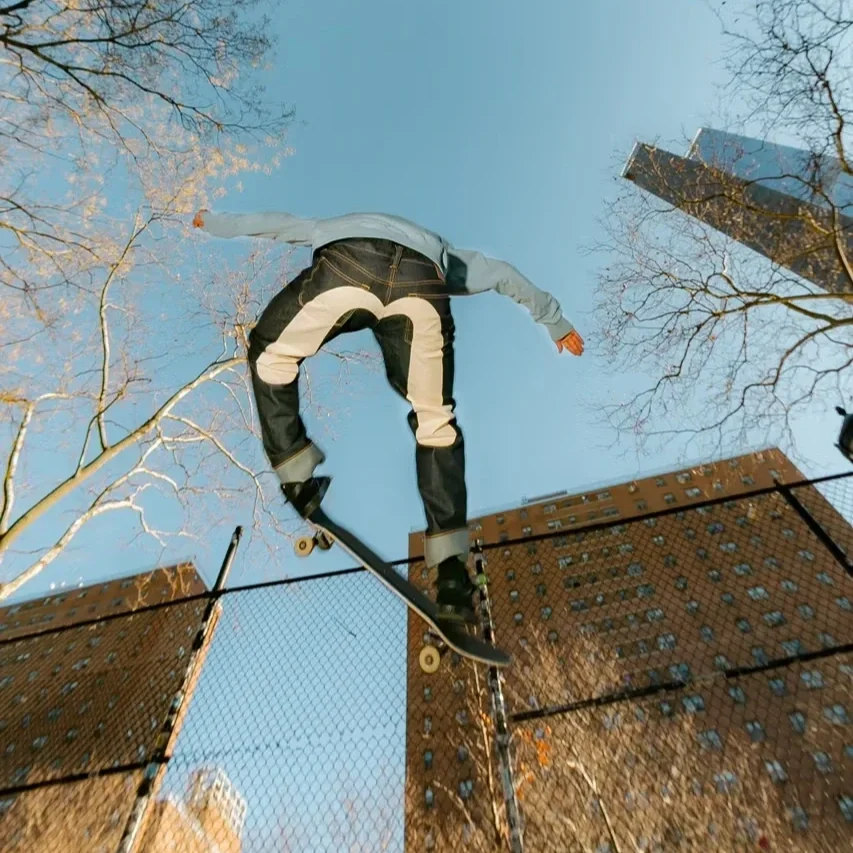
EVISU carries many labels. Premium denim, American workwear, hip-hop denim, depending on who is telling the story. And while all of those hold true, none of them explains how the brand actually entered skateboarding.
The denim brand was never conceived as a skate brand. Founder Hidehiko Yamane developed the label in early-1990s Osaka around a narrow and almost obsessive interest in vintage American denim. Its priorities were fabric weight, construction methods, and hand-finished details. Skateboarding does not appear in this list.
Early 90s Japan was obsessed with denim, and a cluster of small labels was dissecting mid-century American jeans. Emerging from this environment were brands like KAPITAL and EVISU, both focused on fidelity rather than fashion. EVISU circulated first among denim specialists and collectors who understood these technical statements and were specifically interested in quality, not any subculture alignment. Its early reputation rested more on how the jeans aged, the craftsmanship behind it, and not so much on how they looked new.
Once EVISU entered the American market in the mid-to-late ‘90s, the physical properties of the jeans stood out more clearly. The non-tapered wide silhouette easily stood out among the American mainstream models, and the early pocket paint was deliberately close to the language of American arcuates, a curved mark sitting where Levi’s had trained the eye to look. Yamane himself later described the paint as partly a joke. That detail matters because it helps explain why EVISU could move between worlds. Outside Japan, that same hand-painted mark became the fastest possible explanation of value.
As EVISU traveled, it became one of the first Japanese denim brands that Western consumers understood as more than a niche import. By the early 2000s, EVISU had moved from specialist denim circles into mass cultural recognition, especially through hip-hop. Jay-Z’s early-2000s lyrics referencing EVISU are one of the clearest markers of the brand’s status at the time. This is where EVISU stops being only “Japanese denim” and becomes a social object.
This is the backdrop for how EVISU slides into skating. The brand was never chasing skate legitimacy, but entered as an already-established premium signal moving through the same cities, the same music, and the same media circuits that fed skateboarding’s style imagination. Skate videos from the period document that overlap in real time. TransWorld’s Videoradio follows the Circa European Tour in June 2001 across seven countries, built around demos, street missions, and downtime. And when Lakai’s Beware of the Flare lands in 2002, skate media later notes EVISU appearing in that footage years before the jeans “burst in popularity.” 
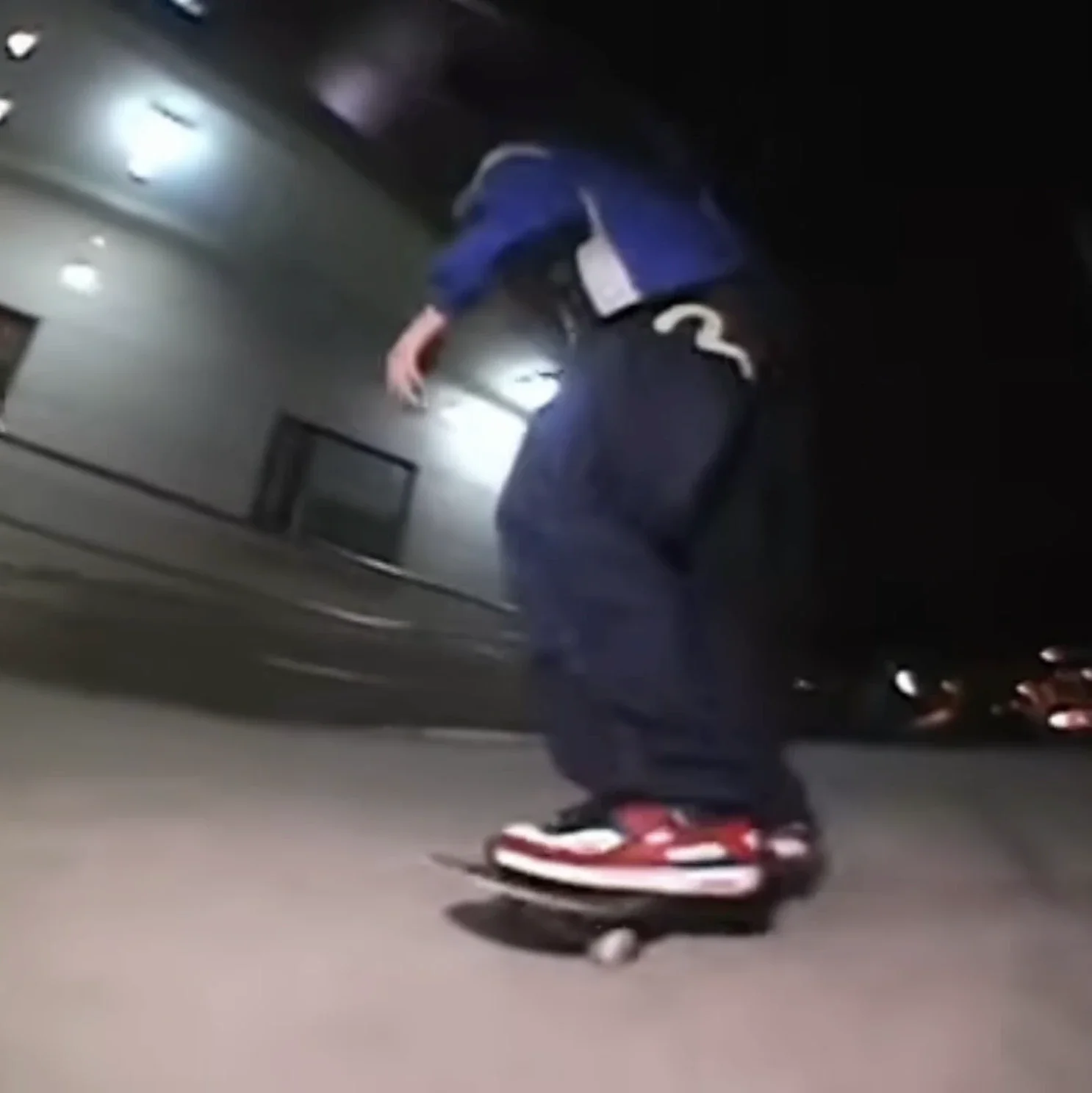
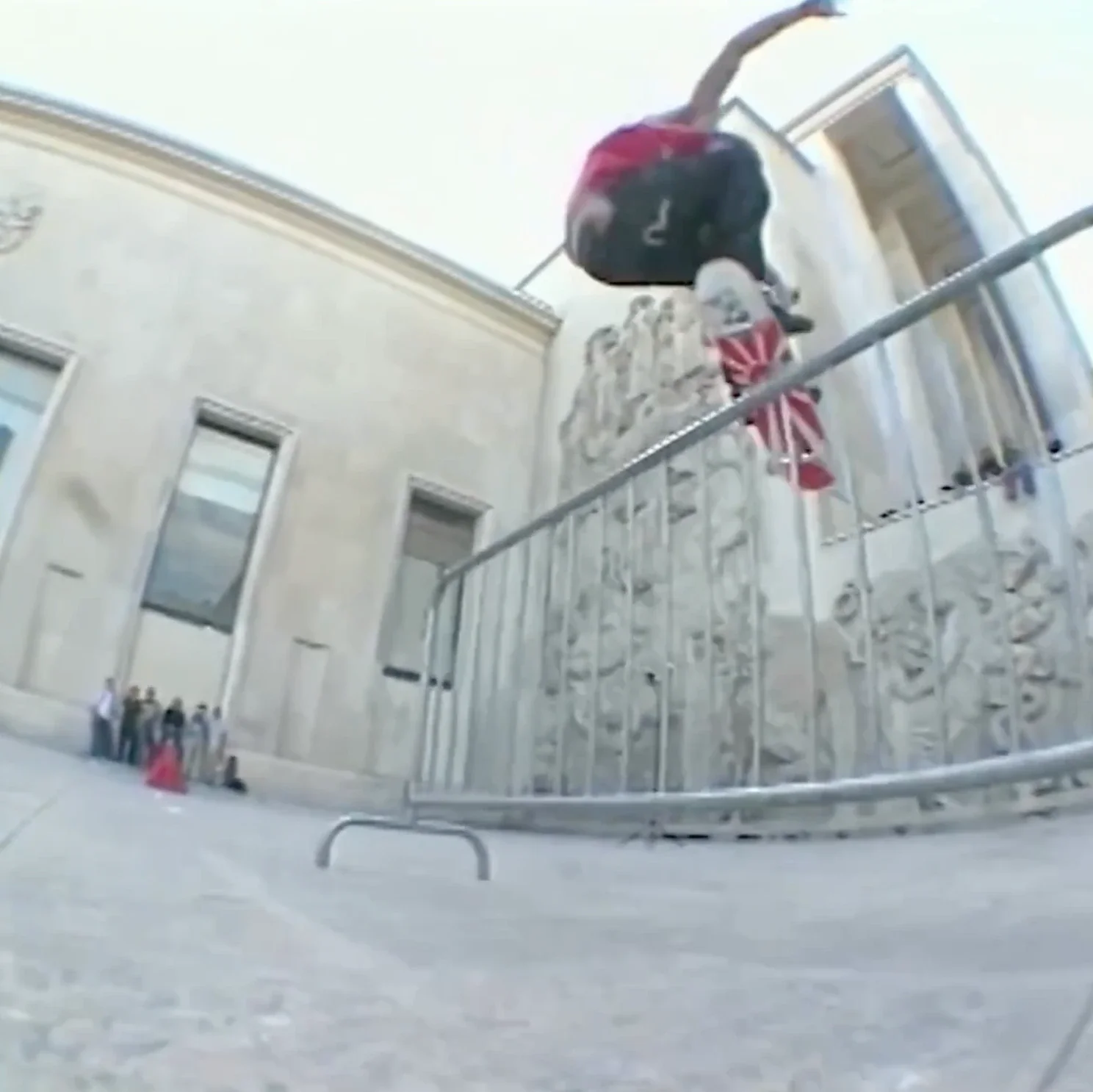

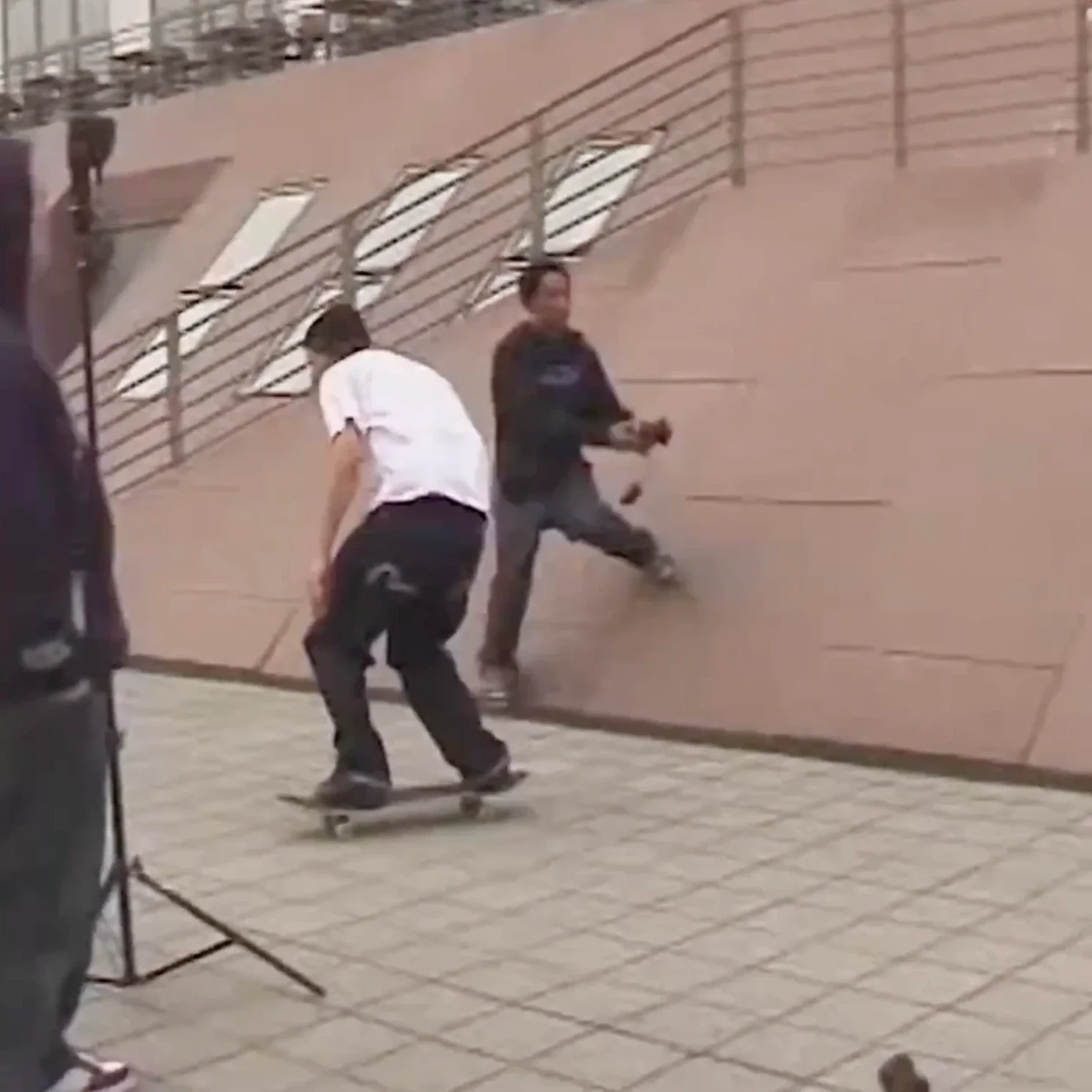
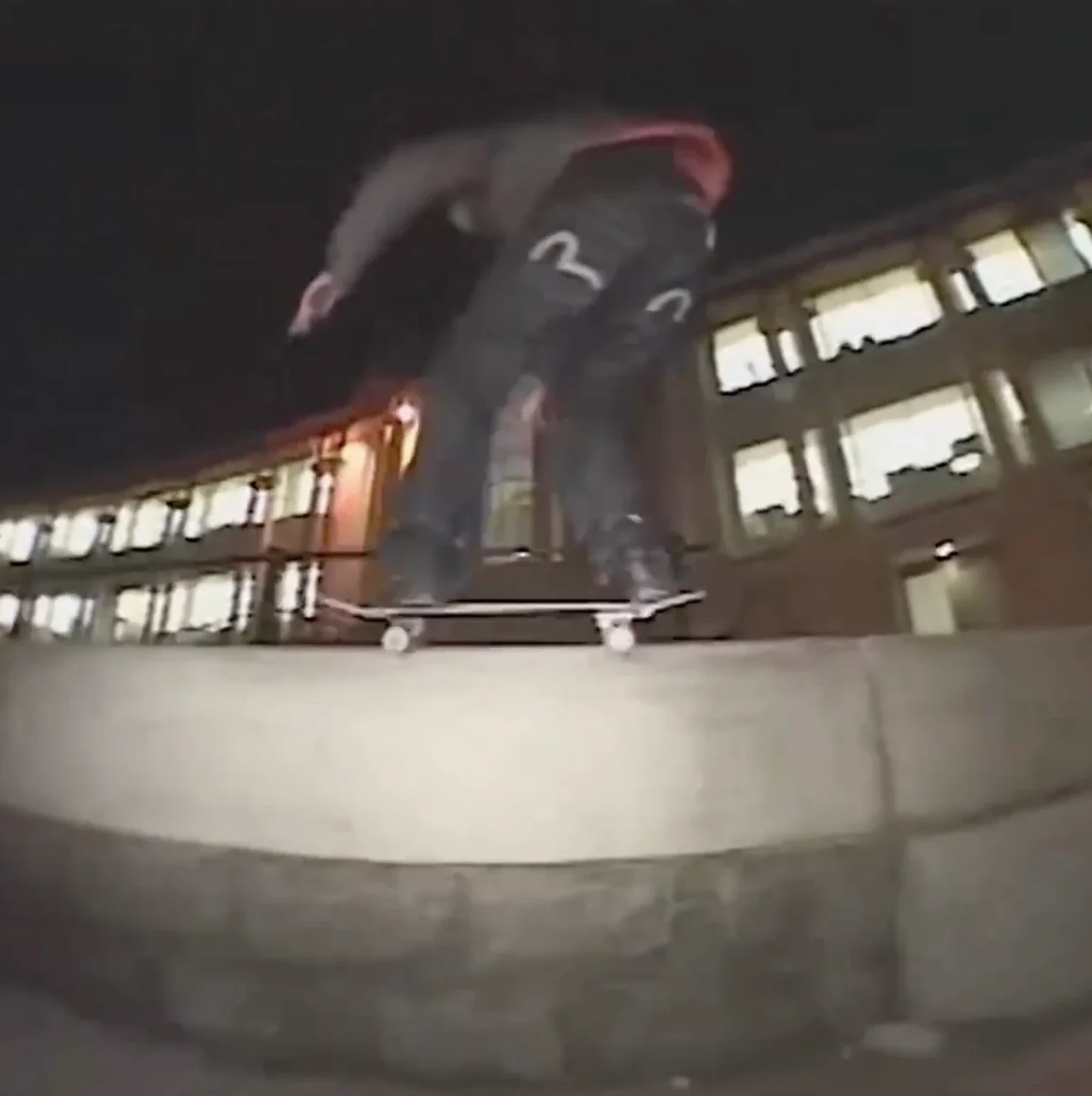
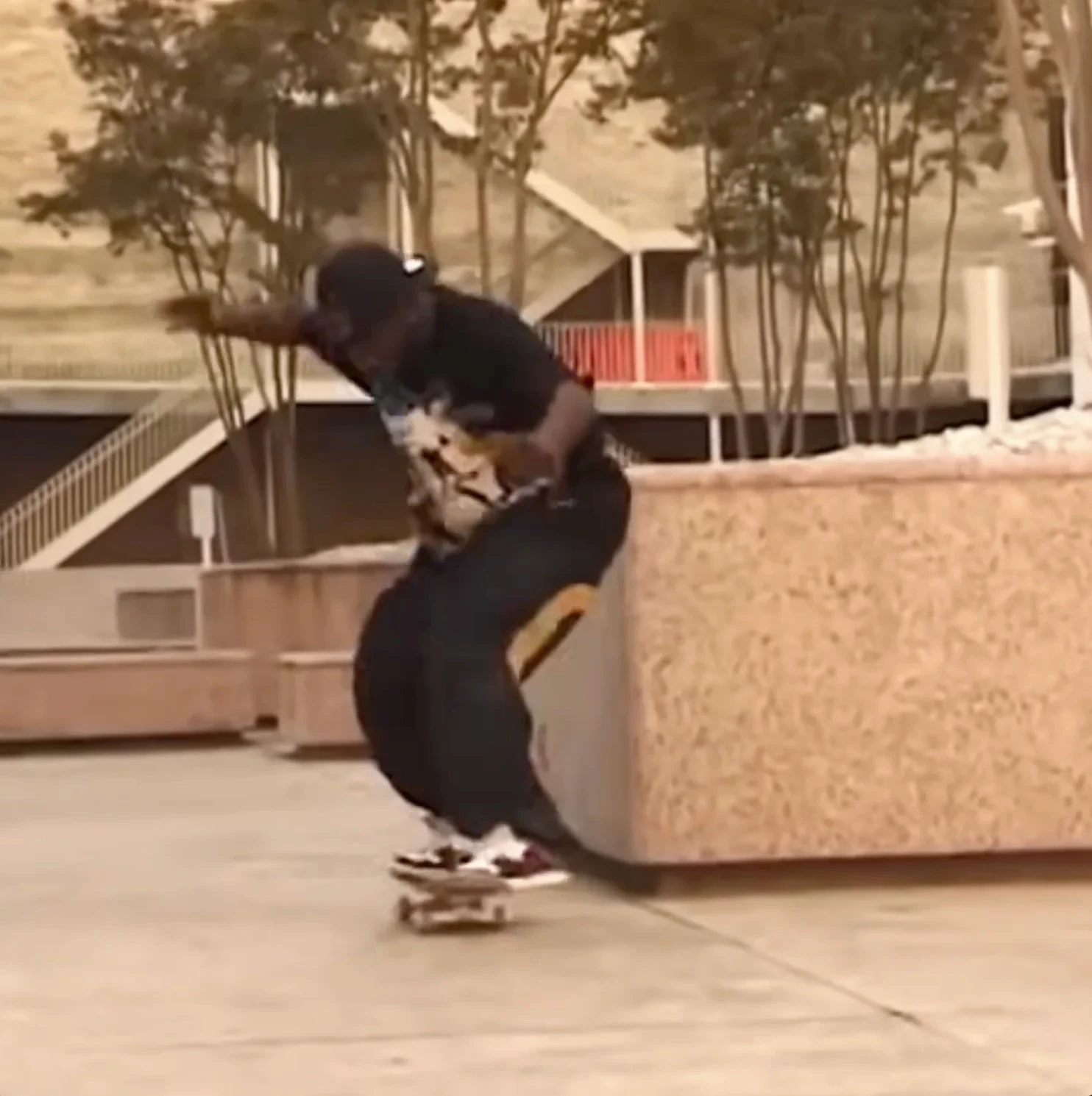
The point isn’t that EVISU became a skate brand. It’s that once the jeans were already loud in music and nightlife, and already circulating as premium imports, skateboarding, whose style historically spreads through what shows up on tape, had a ready-made symbol it could absorb.
That absorption becomes clearer when looking at who was wearing EVISU on camera. Skaters like Stevie Williams and Chad Muska occupied a rare position at the turn of the millennium: highly visible in skate media while also deeply connected to hip-hop, nightlife, and fashion circuits. Their presence in skate videos and tour footage functioned as an informal style transmission system. When EVISU appears on bodies like theirs, it reads as part of a broader urban uniform already circulating between music, street culture, and skating. The jeans gain credibility not because they are explained, but because they are worn without comment by skaters whose taste carried weight.
Behind the camera, filmmakers like Ty Evans were shaping how those choices registered. Evans’ filming style made clothing more visible than in earlier, trick-only edits. In this context, EVISU’s most recognizable designs mattered. Models like the No.2 cut and the exaggerated “Daicock” back-pocket paint were impossible to miss. The scale of the pocket graphic turned the jeans into a moving signal inside the video itself.
Skateboarding, especially in its core-media pipeline, has always been suspicious of brands that feel too designed for it. And that’s exactly why EVISU did not need to buy its way into skateboarding, nor did it ever intend to.
Trending articles




Inside the culture and friendship behind Matthew Ballard’s HIGH RECEIPTS.