
The Rise, Rupture, and Collapse of Gainax
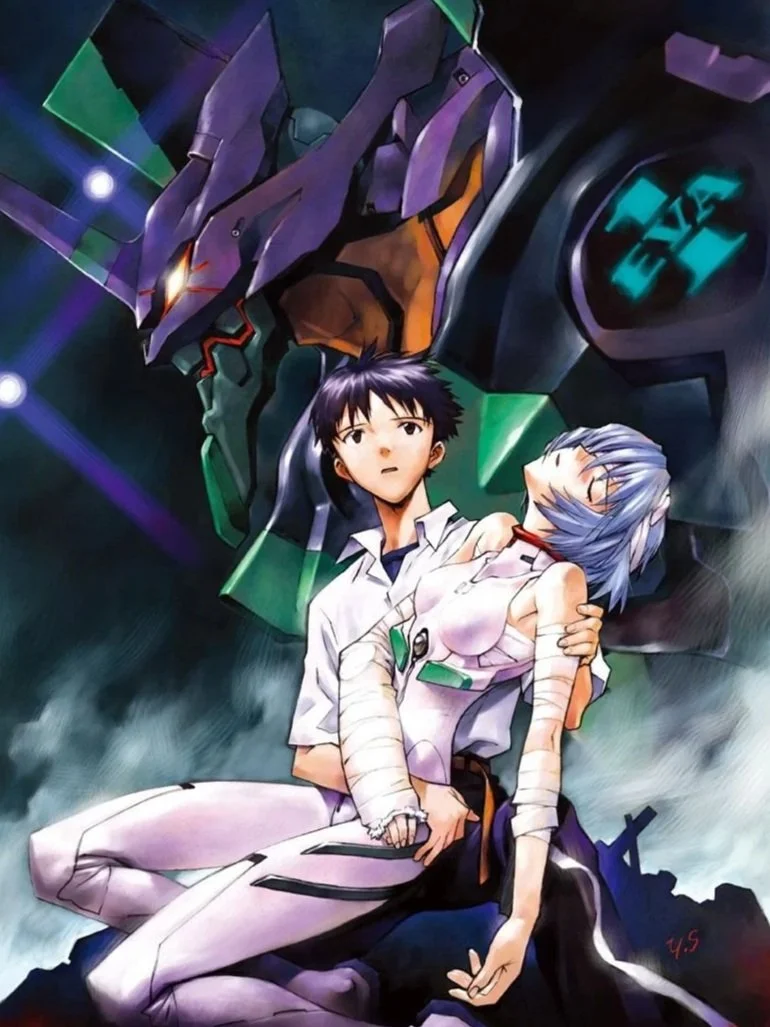
Neon Genesis Evangelion│© Studio Khara
Any anime fan knows the legendary studio Gainax, if not by name, then by its work. This is the studio behind Neon Genesis Evangelion, FLCL, Gunbuster, and many more anime that destabilized the industry. Years before Gainax pulled the plug in 2024, the studio had lost its charm as well as status. We take a deep dive into the studio’s rise, peak creations, and its unavoidable collapse.
From the beginning, Gainax was a company that operated as if it were an extension of fan culture. The studio was formed by a group of university friends that were massive science-fiction and anime fans, who later moved into professional production (more about those fans later). There was no need, nor a goal to serve any existing market efficiently. Through its many genre-breaking productions, it became clear that this studio had a different approach, as anime for them was a system to be studied and dismantled.
This fan-driven nature shaped the studio’s internal logic. Gainax’ works often felt as though they were speaking directly to people who already understood the references, the clichés, and the emotional shortcuts of anime and tokusatsu. That level of intimacy created a sense of belonging for a specific audience while alienating others. Unlike studios that positioned themselves as mass entertainment producers, Gainax seemed comfortable narrowing its focus, trusting that depth of engagement mattered more than breadth. In doing so, it validated otaku culture like no other studio, and that at a time when it was widely dismissed or pathologized in Japanese society.
So how did the studio behind anime’s most iconic titles come to a point of total collapse? Stay with us a little longer to paint the picture.

Gainax Tokyo headquarters in 2014│via Wikimedia Commons
Otaku With a Camera
Tracing all the way back to the studio’s early days is a small group of science-fiction enthusiasts active in the Kansai fan scene in the late 1970s and early 1980s. Central among them were Hiroyuki Yamaga, Hideaki Anno, Takami Akai, Mahiro Maeda, and Toshio Okada. At the time, none of them were industry professionals. On the contrary, they were students or hobbyists, and above all, obsessive consumers of anime, tokusatsu, and Western science fiction.
Their earliest collaborations took place within amateur fan circles, particularly through science-fiction conventions. These gatherings became the testing grounds where creative ideas could be executed without limits. During this era, with limited equipment and minimal budgets, animators that would end up becoming Gainax’’ core team polished their animation and film skills.
The turning point came with the opening animations for the Daicon III (1981) and Daicon IV (1983) science-fiction conventions in Osaka. Directed by Yamaga, animated largely by Anno, and supported by the rest of the group, these short films openly quoted anime, manga, tokusatsu, and Western science fiction, but did so with such an intensity that exceeded parody. These works are now widely regarded as proto-Gainax statements, establishing the creative logic that would later define the studio.
The Daicon openings were crucial for their content, yes, but equally important for what they demonstrated about process. These 5 minute animations showed that a small, self-organized group of fans could produce work that rivaled professional studios in impact, if not in resources. This challenged the traditional separation between consumer and creator that had long defined otaku culture, and this one-of-a-kind group of animators effectively forced its way into the industry.
What mattered most in these early years was a shared obsession for animation and storytelling. The lack of hierarchy among the group fostered experimentation, while also planting the seeds for long-term organizational problems that would follow the studio throughout its existence. Gainax’s founders belonged to a generation that no longer saw fandom as passive consumption. Knowledge of anime history, mechanical design, and narrative tropes became tools for production. In that sense, Gainax crystallized a moment when otaku began to see themselves as creators capable of reshaping the medium from within.
Becoming Gainax
The success and visibility of the Daicon openings created a problem as much as an opportunity. What had worked as an informal, volunteer-based collective was suddenly being approached with professional expectations. In 1984, the group formally incorporated as Gainax, a decision mostly driven by its unique momentum. The offers were coming in and the attention was growing, as the group of university friends chose to move forward without fully rethinking how their way of working would translate into a studio environment.
From the outset, there was a clear mismatch between Gainax’s creative instincts and the realities of production. The founding members were driven by ideas instead of logistics. Suddenly this group of creative minds were confronted with complicated schedules, budgets, and corporate management structures.
Gainax’s early commercial projects reflected this tension. Their first major feature, ‘Royal Space Force: The Wings of Honnêamise’ (1987), what should be a safe entry point into the industry, was conceived as a grand, original science-fiction epic. The film’s scale, complexity, and visual ambition were far beyond what a newly formed studio could comfortably support. While the film later gained critical recognition, its initial commercial performance left Gainax with significant corporate debt tied to its sponsors.
Debt proved to become a constant presence at Gainax. Instead of adjusting their scope to stabilize the studio, its founders repeatedly doubled down on ambitious projects, relying on future success to offset present losses. A gamble that occasionally paid off, but more often it deepened the studio’s dependence on external funding and complicated partnerships. Financial vulnerability became structurally embedded in Gainax’s operations, limiting its ability to plan long-term or retain talent consistently.
At the same time, these struggles helped define Gainax’s public identity. The studio developed a reputation for work that was irreverent and often deliberately provocative. Sexual imagery, exaggerated bodies, and playful self-parody were all too common in its productions. Technically, Gainax pushed animation to extremes of motion and detail, often compensating for limited resources with inventive staging and timing. This combination of audacity and instability became the studio’s most iconic signature.
Finding a Voice in Excess
By the late 1980s, Gainax’s internal contradictions began to crystallize into a recognizable creative voice. Titles such as ‘Gunbuster’ (1988),‘Nadia: The Secret of Blue Water’ (1990), and later ‘Otaku no Video’ (1991) marked the point where the studio’s obsessions were central to its identity. These works embodied as well as amplified everything that made Gainax a horror to manage.
Gunbuster, for instance, adopted the surface language of mecha heroism while systematically undermining its promise. Physical strength, technological superiority, and military escalation were portrayed as sources of awe, but also as mechanisms that isolated characters emotionally and psychologically (a harbinger of the studio’s most legendary anime).
Adolescent desire was treated with similar ambivalence. Gainax didn’t sanitize or romanticize youth in the way many contemporaries did. Sexuality, insecurity, jealousy, and fixation were rendered directly, often uncomfortably so.
As these themes accumulated, collapse became a recurring narrative endpoint. Gainax’ stories frequently moved toward breakdown rather than resolution, both on a personal and systemic level. The institutions in which we trusted failed, the mentors who we depended on disappointed. It’s almost as if Gainax works often appeared to comment on their own inability to fully function within the genres they inhabited.
Taken together, these works defined Gainax’s voice before ‘Eva’ ever entered production. Power was depicted as isolating, adolescence as unstable, institutions failed under scrutiny. By the early 1990s, the studio had established an identity that was intellectually confrontational, emotionally abrasive, and ultimately, structurally volatile. ‘Eva’s’ role was to simply concentrate it to a breaking point.
The Evangelion Moment
When ‘Neon Genesis Evangelion’ aired in 1995, it arrived as a violent rupture within anime culture. Evangelion entered a medium that was already saturated with mecha series, genre formulas, and merchandising logic, yet it immediately destabilized all three. A series that initially appeared to be another robot anime quickly revealed itself as something far less accommodating, as the story redirected its gaze toward psychological fracture and emotional withdrawal. Elements for which, we know by now, Gainax has been building the foundation for years.
The conditions under which Evangelion was produced were far from ideal. By the midpoint of the broadcast, the series was already running behind schedule. Scripts were frequently delivered late, storyboards were revised during production, and some episodes entered animation with incomplete plans. The production strain intensified toward the final quarter of the series. Episodes 23 (“Tears”) and 24 (“The Last Messenger”) underwent significant last-minute restructuring, with animation shortcuts, reused footage, and reduced action sequences becoming increasingly visible.
By the time the series reached Episodes 25 and 26 (“The Ending World” and “Take Care of Yourself”), the original narrative outline for the external conclusion had collapsed entirely. The televised ending replaced physical events with static imagery, text screens, and voice-over introspection as a direct consequence of production failure. These limitations were acknowledged openly by director Hideaki Anno in later interviews. Anno has stated that the TV ending represented what could be completed under the constraints at the time, not the ending originally envisioned.
Anno himself played a massive role in Evangelion’s atmosphere, as his psychological state during production became inseparable from the series itself. Anno has spoken openly about his depression during this period, and Evangelion internalized that condition.
Shinji, Ayanami, Misato, and basically all the rest of Eva’s main characters struggled with paralysis, self-loathing, and avoidance. And more remarkable, 'Eva did not offer catharsis or resolution as much as it doubled down on the sustained discomfort. In doing so, it pushed Gainax’s long-standing interest in self-critique to an extreme that few studios would have tolerated, let alone embraced.
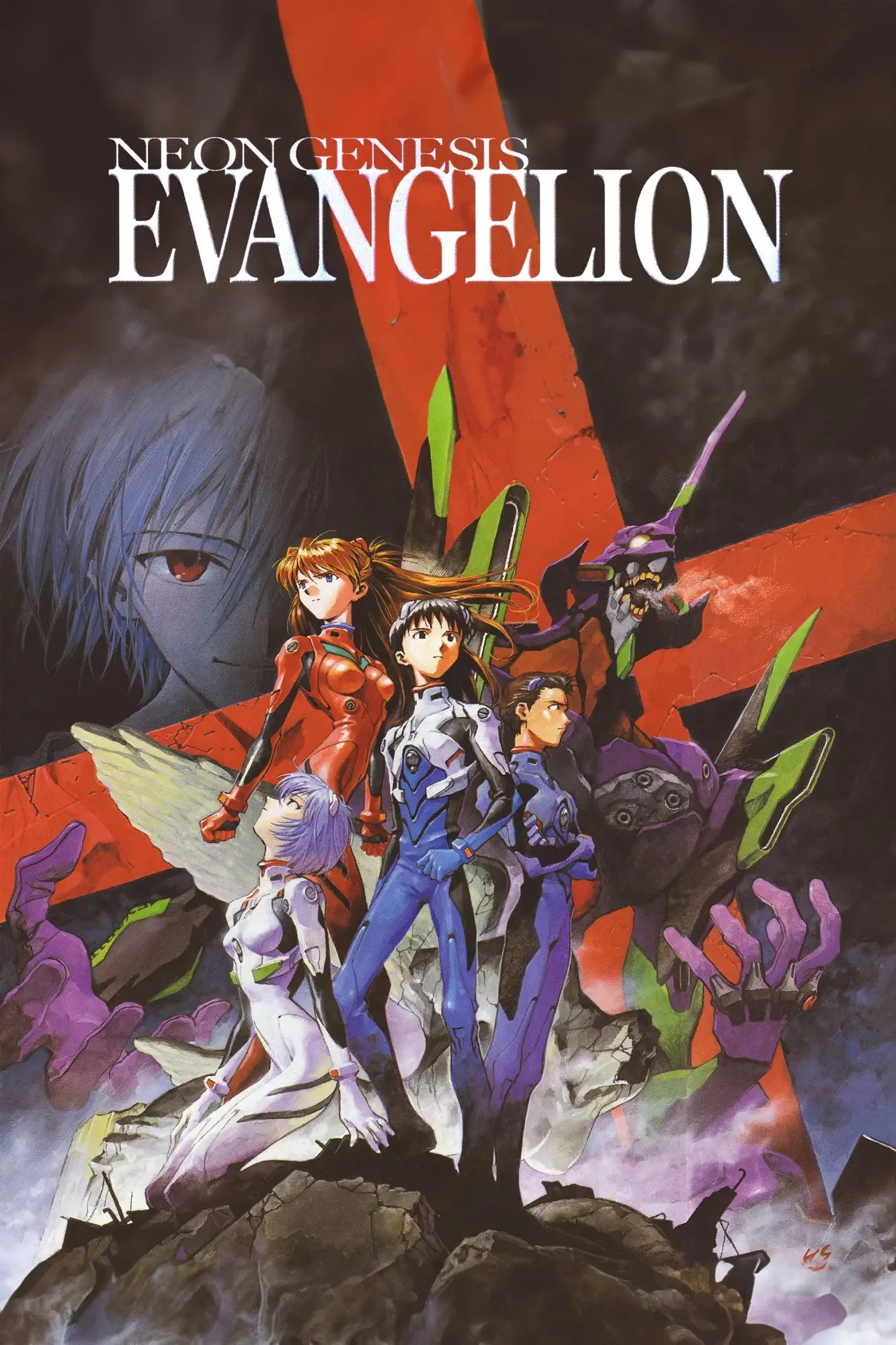
Neon Genesis Evangelion│© Studio Khara
Financially, Evangelion changed everything. Merchandise sales, home video releases, and licensing deals transformed the series into a massive commercial success, pulling Gainax out of the financial precarity that had followed it since Royal Space Force. For the first time, the studio was solvent because of its excesses. Evangelion became the economic foundation that allowed Gainax to continue operating through the late 1990s, paying off debts and securing industry leverage that had previously been out of reach.
You may feel this one coming. That same success quickly hardened into constraint. Eva became unavoidable, the studio’s public identity collapsed into a single title, and every subsequent project was measured against it. Creative risk meant deviation from Evangelion’s shadow. Expectations from sponsors, fans, and partners increasingly revolved around the continuation, repetition, or monetization of the franchise. Eva had transformed into an anchor.
This dependency proved dangerous for Gainax. Evangelion’s scale distorted the studio’s internal balance and resources around a single creator and a single property. Gainax was no longer understood as a collective of experimental creators, but as the company behind Hideaki Anno and Evangelion. In the long term, that association eroded the studio’s autonomy and contributed directly to the fractures that would soon follow. Evangelion saved Gainax financially, but it also locked the studio into an identity it could neither escape nor sustainably maintain.
After Evangelion
In the immediate aftermath of Evangelion, Gainax entered a period of intense activity that, paradoxically, lacked a clear direction. Financially stabilized for the first time in its history, the studio was no longer operating in crisis mode. Yet the question of what Gainax was supposed to be next remained unresolved. The studio fractured into parallel creative paths, each pulling in different directions.
Post-Evangelion productions reflected this uncertainty. Projects such as ‘Kare Kano’ (1998) revealed an attempt to redirect the studio’s psychological focus into more grounded, relationship-driven storytelling. While Kare Kano initially showed strong creative promise, its production collapsed into severe conflicts between Gainax and the publisher Hakusensha, resulting in uneven direction, reused footage, and a visibly compromised second half. Once again, internal misalignment between creative ambition and production reality surfaced publicly on screen.
FLCL (2000), produced in collaboration with Production I.G, abandoned traditional storytelling almost entirely in favor of frenetic pacing and cultural collage. While FLCL later achieved cult status, it functioned more as an isolated release valve that didn’t create the future blueprint Gainix might have hoped for.
Internally, Evangelion had distorted Gainax’s balance of power. Creative authority gravitated increasingly toward individual figures rather than collective decision-making, most notably Hideaki Anno. Ideologically, the studio was no longer aligned around a shared understanding of what its role in the industry should be: auteur-driven experimentation, commercial franchise management, or something in between.
The broader anime industry was also changing rapidly. By the late 1990s and early 2000s, production committees had tightened control, late-night anime slots expanded, and merchandising logic became more dominant. Studios that thrived in this environment were those that specialized, streamlined, or aligned themselves efficiently within the committee system. Gainax, by contrast, remained structurally loose and resistant to standardization, traits that had once fueled its originality but now worked against its survival.
What followed was a slow diffusion of potential. Gainax continued to produce work, but without the coherence and cultural urgency that had defined its earlier years. In trying to move forward without resolving those contradictions, Gainax entered a prolonged phase of missed futures, filled with projects that hinted at reinvention but never fully materialized into a sustainable new identity.
The Slow Collapse
By the early 2000s, Gainax’s problems had become structural. Despite the financial windfall generated by Evangelion, the studio never developed stable internal systems for budgeting or long-term planning. Gainax continued operating with the same informal decision-making culture that had defined its earliest days, now scaled up to a company handling major intellectual properties and large sums of money.
The most damaging issue, however, centered on ownership and rights, particularly Evangelion. While the franchise generated enormous revenue, Gainax’s control over it became increasingly contested. Conflicts with Hideaki Anno over creative authority and rights eventually led to the establishment of Studio Khara in 2006, which assumed control of the Evangelion rebuild films and, effectively, the franchise itself. For Gainax, this was a critical blow. Losing Evangelion meant losing not only its primary revenue engine, but also the cultural asset that had justified its continued relevance.
As these disputes unfolded, talent drain accelerated. In 2011, a group of senior Gainax staff (Hiroyuki Imaishi, Masahiko Otsuka, and Yoh Yoshinari) left the studio to establish Studio Trigger. Imaishi and Otsuka publicly acknowledged dissatisfaction with Gainax’s management structure and inability to support new projects efficiently. Trigger’s early success with ‘Kill la Kill’ made the contrast impossible to ignore: the Gainax “style” was thriving elsewhere, without Gainax.
Other departures followed different trajectories. Toshio Okada had already distanced himself from Gainax in the 1990s, becoming a critic and commentator. Mahiro Maeda moved between studios and freelance work. What remained at Gainax was a rotating mix of freelancers, junior staff, and short-term contracts. The informal, trust-based system that had worked in the 1980s collapsed.
Inside the industry, Gainax’s reputation deteriorated accordingly. Where it had once been seen as daring and innovative, it became associated with instability and risk. Production committees grew wary of entrusting the studio with major projects. Younger creators admired Gainax’s legacy but hesitated to attach their careers to its present reality. By the 2010s, Gainax’s name still carried symbolic weight, but its operational credibility had largely evaporated.
This growing disconnect between myth and reality defined the studio’s final years. Culturally, Gainax remained a foundational force in anime history, cited endlessly by fans, critics, and creators. Operationally, it functioned as a hollowed-out shell of its former self, unable to capitalize on its legacy.
At the time of its collapse, Gainax’s influence had already migrated elsewhere. By the time bankruptcy was declared in 2024, Gainax no longer represented a living studio so much as the legal remains of a vision that had moved on.
Did Gainax Really Die?
By the time Gainax ceased to function as a meaningful creative force, its ideas were already being shaped elsewhere. The most direct inheritors of Gainax’s creative DNA emerged through splinter organizations formed by former staff who carried its working methods, obsessions, and visual language into projects.
As mentioned before, two studios in particular represent this continuity. Studio Trigger, founded in 2011 by former Gainax staff including Hiroyuki Imaishi and Masahiko Otsuka, openly embraced the exaggerated motion and self-aware genre play that had defined Gainax’s late-1980s and early-1990s output.
Meanwhile, Khara, founded by Hideaki Anno, represents a different legacy. Anno’s studio institutionalized introspection and auteur control. The Rebuild of Evangelion film series (2007–2021) reflects this: tightly managed and technologically advanced, yet still rooted in the psychological and structural concerns first articulated at Gainax. Khara shows how Gainax’s most inward-facing tendencies survived by abandoning collective authorship in favor of centralized creative authority.
Long before self-referential narratives became common in anime, Gainax works openly acknowledged genre mechanics and the artificiality of storytelling itself. Titles like ‘Otaku no Video’ and ‘Gunbuster’ directly commented on genre conventions. These techniques prefigured later anime that consciously deconstruct tropes rather than reproduce them uncritically, such as Puella Magi Madoka Magica (2011) and SSSS.Gridman (2018).
Gainax also reshaped how anime engaged with otaku self-awareness. They didn’t present the fandom as escapist fantasy fulfillment, but doubled down on inward obsession. ‘Otaku no Video’ framed otaku culture as both creative and socially isolating. ‘Eva’ confronted the psychological consequences of retreating into fiction without offering a comforting resolution. This approach normalized introspection and discomfort as legitimate narrative outcomes.
The studio, or at least its original vision, demonstrated that extreme creative freedom can generate breakthroughs, but also that freedom without organizational discipline is unsustainable. Chronic debt, informal hierarchies, and unresolved authority structures repeatedly undermined its ability to retain talent or plan long-term. Passion alone cannot substitute for governance, leading to an unavoidable collapse under its own weight.
In that sense, Gainax did not fail creatively; it failed organizationally. Its ideas outlived the studio precisely because they escaped it. Modern anime continues to absorb Gainax’s lessons, both its successes and its mistakes, making the studio not the fallen giant many believe it to be. Gainax will slide into our collective memory as a reference point for a golden time in anime history.
So did Gainax really die? As a company, yes. As a creative force, no. Its influence remains alive as questions that are shaping anime production to this day.
Trending articles




SEVESKIG embraces the Wired world of lain.