
Japan as Interface - Vaporwave Art Culture of the 1990s
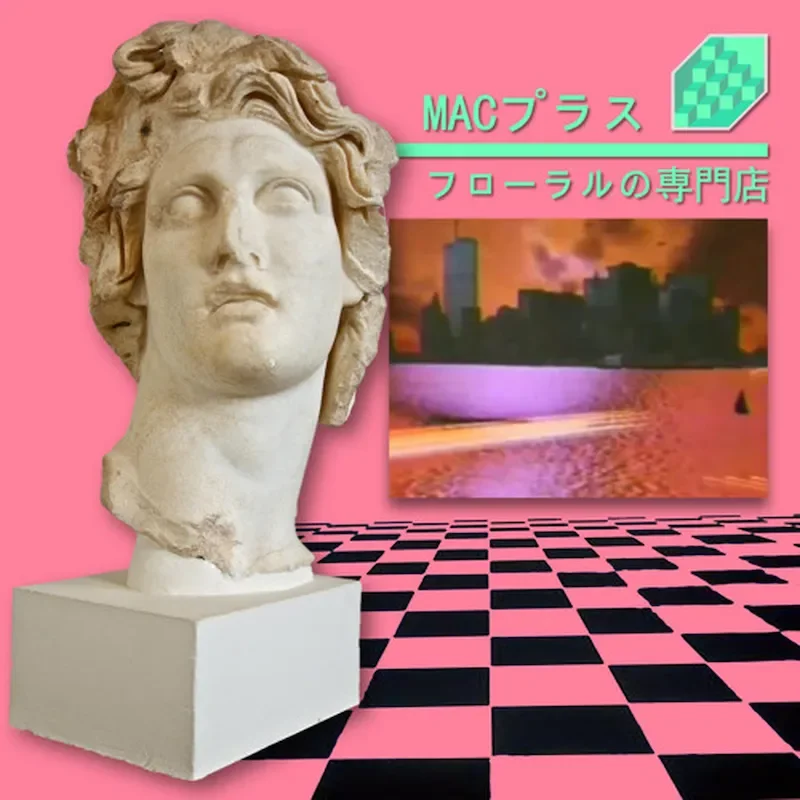
Floral Shoppe album artwork│© Macintosh Plus
Vaporwave is often described as an internet-born aesthetic, but its visual language comes from a much earlier moment. Long before it appeared on Tumblr pages or YouTube loops, its raw material existed in the commercial environments of late-20th-century Japan, a period marked by expanding consumer spaces and an unshaken belief in technological progress.
Much of what later became Vaporwave imagery originates in Japan’s Bubble Era, roughly spanning the late 1970s through the early 1990s. During this period, economic growth reshaped daily life at a rapid pace. Department stores multiplied, electronics chains expanded, and advertising grew increasingly polished. Different industries, from music to design, worked together to project comfort and confidence.
The purpose of this projection was to reassure, to soften, to keep people moving smoothly through consumerism. Yet decades later, once digitized and detached from their original context, they turned into something else entirely.
When Vaporwave began to take shape in the early 2010s, it emerged from small, loosely connected online music communities. Producers working under aliases such as Daniel Lopatin, Vektroid, and James Ferraro began experimenting with sampling techniques which, instead of building progression, isolated fragments and stretched them into repetition.
Lopatin’s Chuck Person’s Eccojams Vol. 1 (2010) became an early reference point, using slowed and looped segments of American soft rock. Shortly after, Vektroid’s Floral Shoppe (2011), released under the Macintosh Plus name, established many of the conventions that would define Vaporwave: dramatically reduced tempo, degraded audio quality, and visual presentation that paired consumer-era imagery with Japanese text and early digital design.
Visually, a similar logic developed alongside the music. Early Vaporwave releases circulated with artwork assembled from scanned VHS frames and fragments of corporate advertising. Album covers and promotional images drew heavily from early computer graphics, Windows 95–era interfaces, and degraded video stills, materials that artists such as Vektroid, Internet Club, and New Dreams Ltd. consistently used across Bandcamp and Tumblr.
Japanese typography slipped into these artworks as a recurring feature. Companies such as Sony, Panasonic, and Sharp, alongside imagery of Tokyo’s commercial districts, were widely circulated in advertising and popular journalism as evidence of a coming hypermodern future.
Neon signage, dense urban nightscapes, and kanji characters entered Vaporwave imagery as shorthand for that moment. These elements referenced Japan’s mediated image, a future projected outward during the Bubble Era and later reassembled online as static visual debris.
By the time Vaporwave adopted these images, that future had already passed. What remained was the shell of its promise.
Japanese text added distance, abstraction, and a sense of technological otherness. This phenomenon aligns closely with what cultural theorists describe as techno-Orientalism: the tendency to project fantasies of futurity onto East Asia, particularly Japan, while removing social or historical specificity. Vaporwave inherited this imagery almost unconsciously, repurposing it as visual shorthand for a world that once believed capitalism and technology would resolve everything.
Online discussions later attempted to rationalize this aesthetic shift. Some users pointed out that Japanese commercials and obscure media were easier to sample or archive. Others noted that the foreignness of the language allowed emotion without meaning. Regardless of explanation, the outcome was consistent: Japan became the aesthetic backbone of Vaporwave without being its cultural author. Over time, this distorted mirror returned to its source.
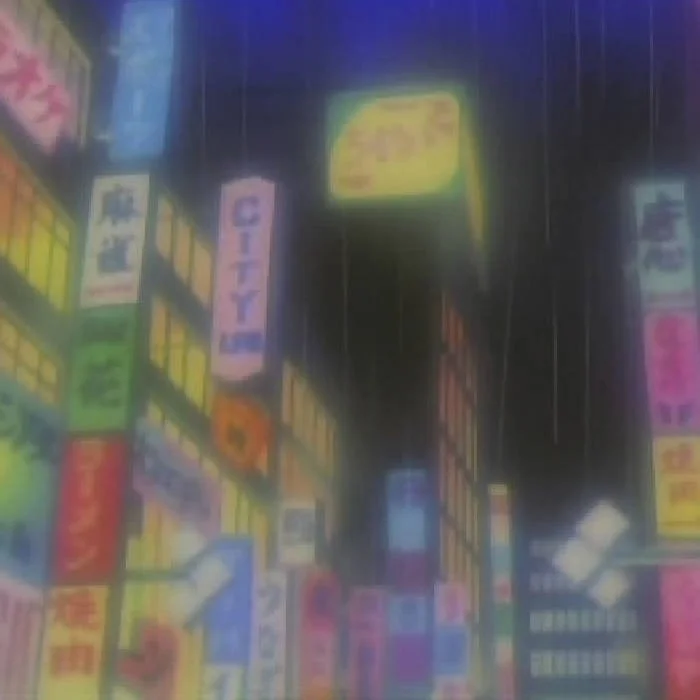
VANISHING VISION album artwork│© INTERNET CLUB
As Vaporwave and city pop revivals gained visibility, Japanese creators began encountering fragments of their own cultural history circulating globally. Many Japanese artists embraced this visual identity by reconnecting the imagery to its origins.
Illustrator Hiroshi Nagai became one of the most visible figures within this process. His sunlit coastal scenes and leisure-class imagery, originally commissioned for albums by artists such as Eiichi Otaki and Yu Hayami, were designed to visualize this contemporary aspiration. Decades later, these same illustrations circulated widely online as emblematic “city pop visuals,” detached from their commercial context and reclassified as symbols of a lost era. In that sense, Vaporwave’s visual logic helped reposition Hiroshi Nagai as a foundational figure in global retro aesthetics.
A parallel transformation occurred in music. Japanese city pop artists such as Mariya Takeuchi, Tatsuro Yamashita, Anri, and Miki Matsubara, experienced a revival through YouTube algorithms and vinyl reissues. Producers operating under aliases like Night Tempo, Desired, and Yung Bae reshaped these tracks into what became known as ‘future funk’. A good example is this remix of Takeuchi’s ‘Plastic Love’. Unlike Vaporwave’s slowed melancholia, future funk accelerated tempo and emphasized rhythm, reframing 1980s pop as danceable digital tracks.
Within Japan itself, digital-native scenes had already been developing independently. Online labels such as Maltine Records, founded by Tomoaki Baba, fostered a generation of producers working across footwork, juke, glitch, and internet-based club music. While not Vaporwave in sound or intent, these communities shared a similar reliance on online circulation and anonymity, conditions that allowed an aesthetic overlap without shared ideology.
Out of this environment emerged artists who absorbed Vaporwave’s visual language. Illustrator Yoko Honda, active online since the early 2010s, developed a graphic style built on neon palettes, simplified geometry, and 1980s commercial color theory. Her work references global retro imagery but removes the sense of parody entirely.
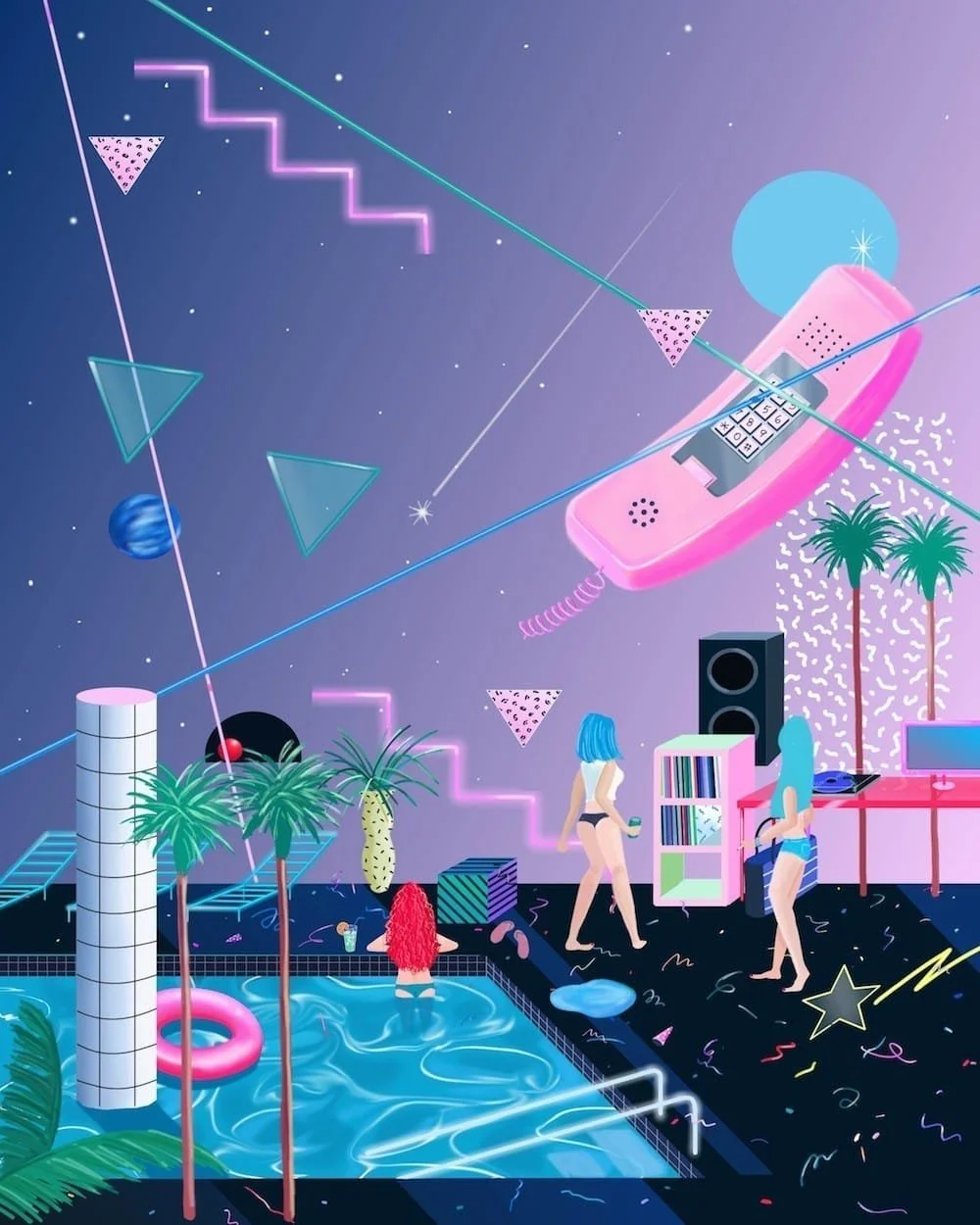
© Yoko Honda
Together, these developments illustrate how Vaporwave did not enter Japan as an external reinterpretation that Japanese artists selectively absorbed and redirected. Today, Vaporwave no longer exists as a defined genre. It functions as a visual and conceptual archive with a language that appears in fashion imagery, digital art, and algorithmic nostalgia cycles.
Japanese Vaporwave culture, then, was a story of circulation. Images created during Japan’s Bubble Era traveled outward, were abstracted by Western internet culture, and eventually returned transformed. What survives is its belief in progress, in technology, in a visual future that once felt so close we’d almost be able to touch it. That belief has not been replaced. And that absence is what Vaporwave continues to echo.
Trending articles



Inside the culture and friendship behind Matthew Ballard’s HIGH RECEIPTS.