
Sukeban Women’s Wrestling Takes Over NYC
Courtesy of BFA, Deonté Lee
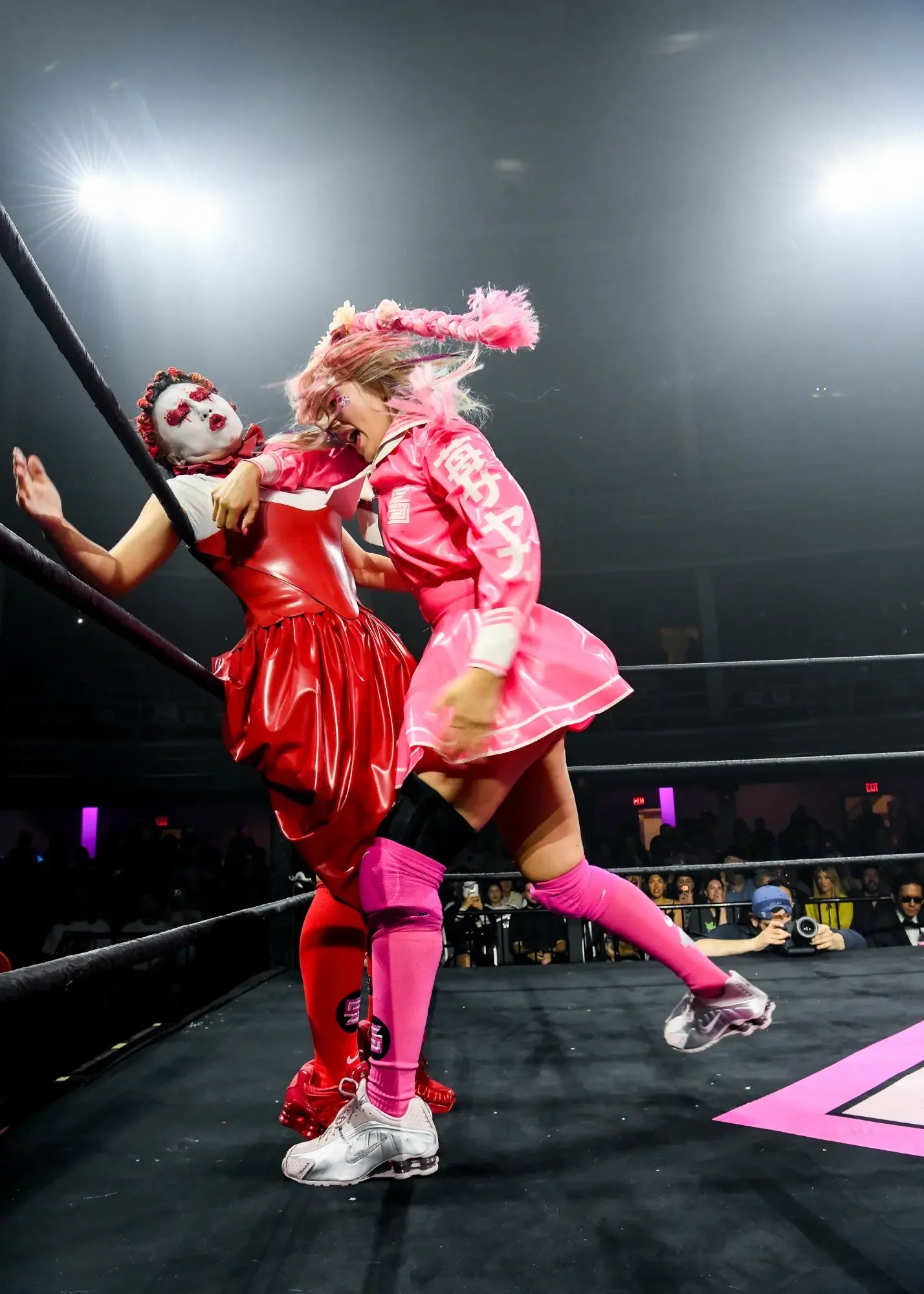
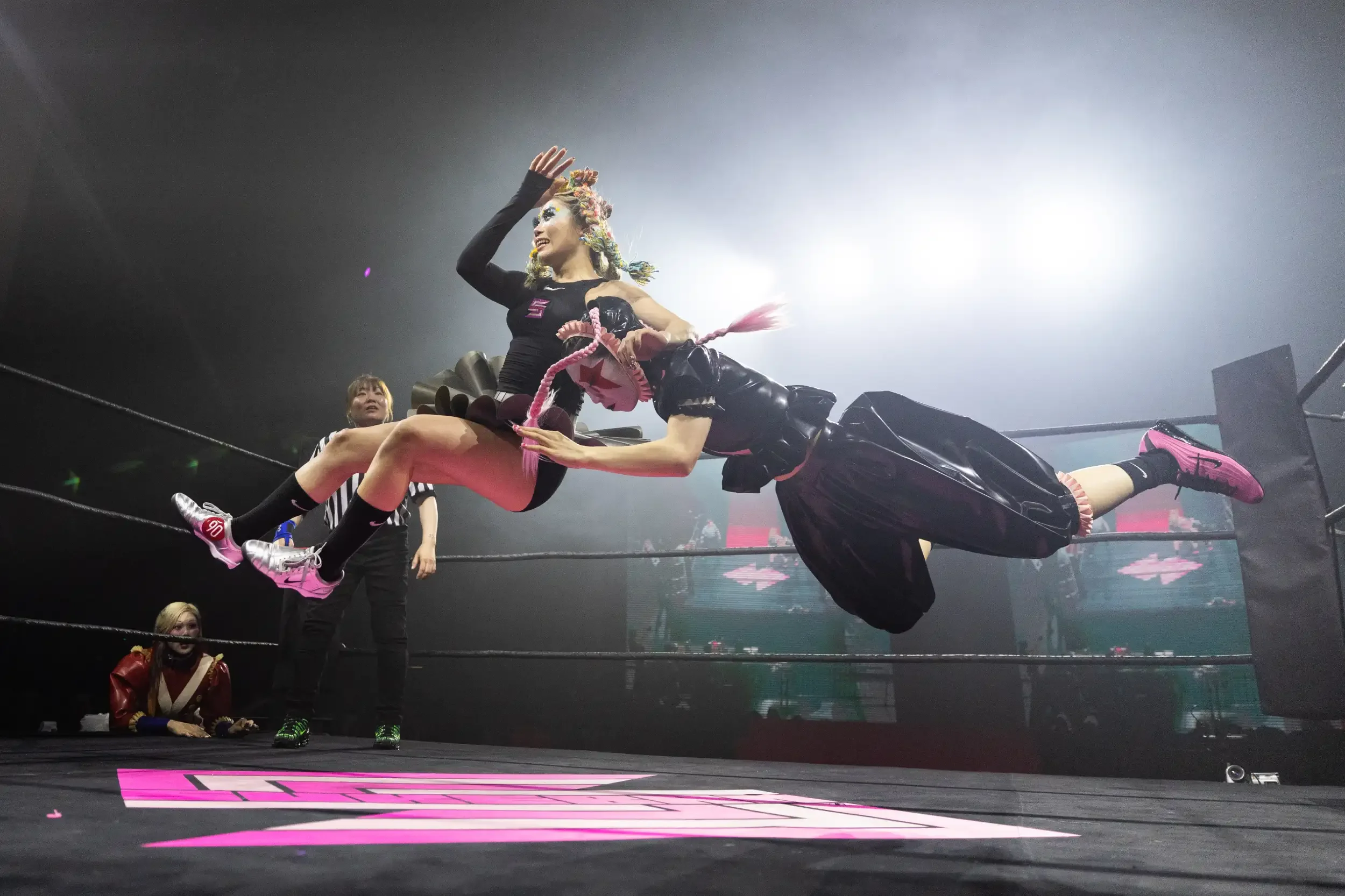
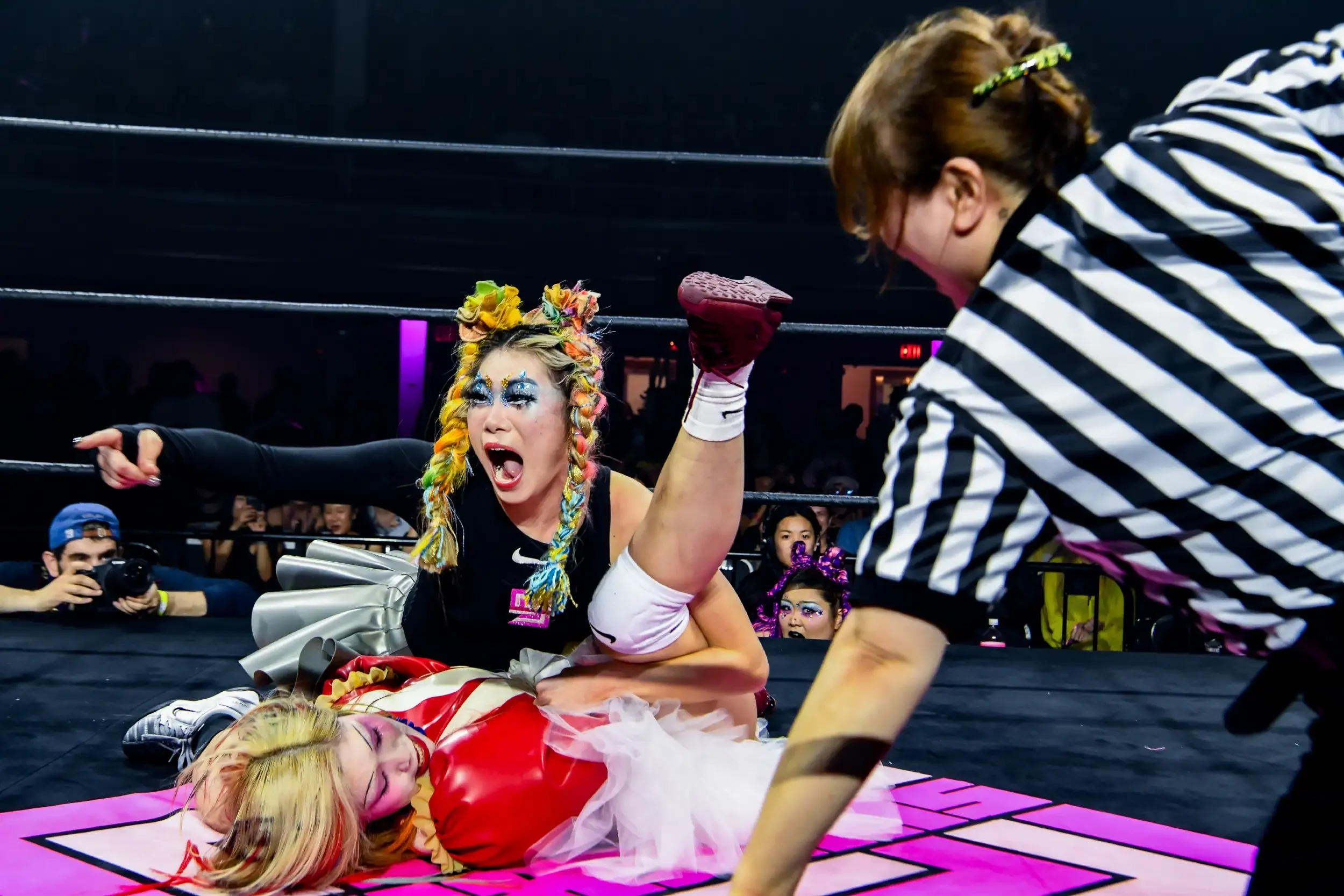
On May 19, Sukeban returned to New York with its biggest production yet. The Japanese women’s wrestling league takes over Hammerstein Ballroom with a 22-wrestler Tokyo roster, a five-match card, live music performances, surprise cameos, and a World Championship main event that saw reigning champion Ichigo Sayaka retain her title against longtime rival Queen of Hearts.
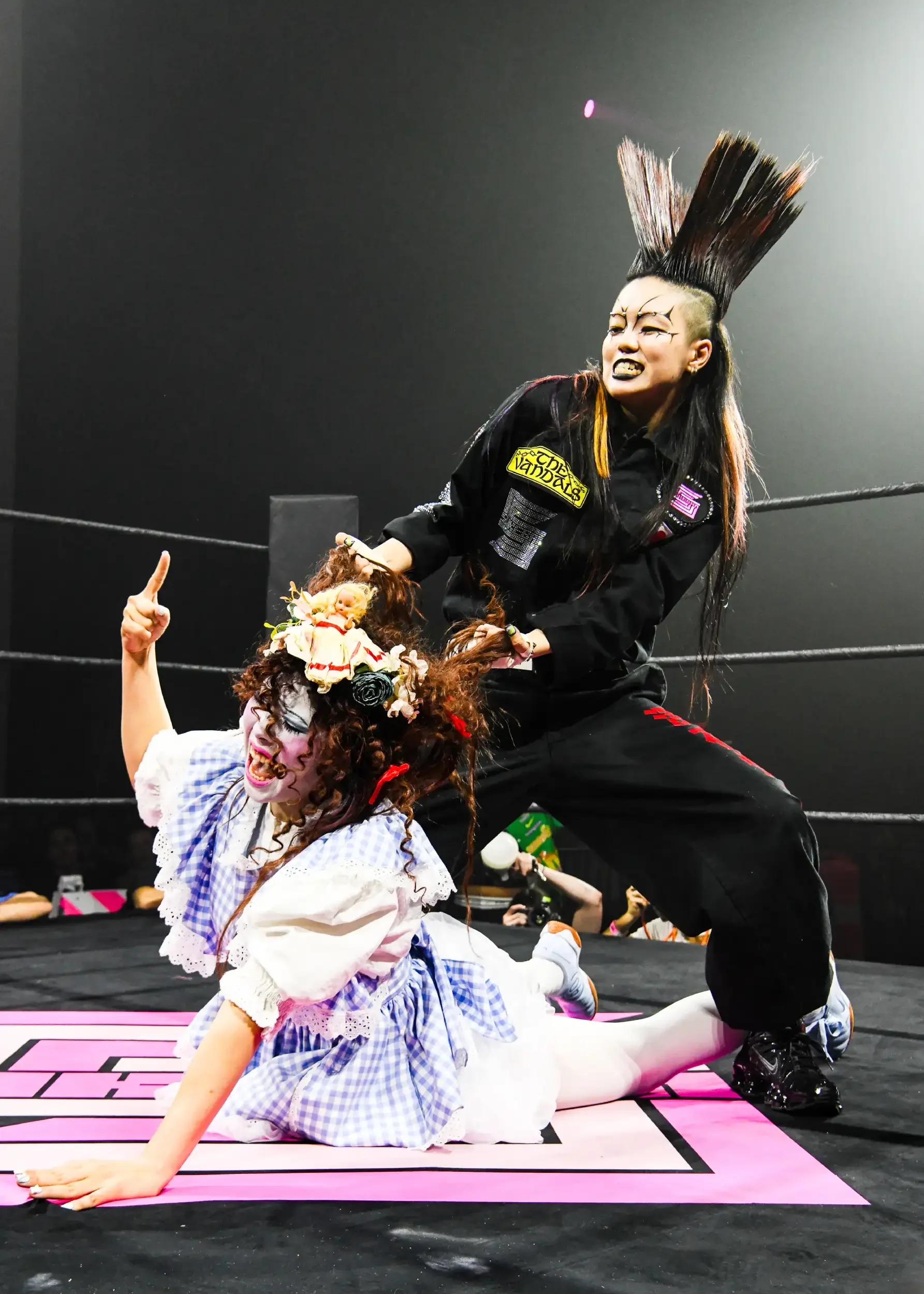
But Sukeban has never really presented itself like a traditional wrestling promotion. Sukeban sits somewhere between joshi wrestling and fashion show, where entrances, costumes, and characters carry as much weight as the matches themselves. Its audience has grown far beyond traditional wrestling fans. Previous shows in New York, Los Angeles, Miami, London, and Berlin sold out quickly, while clips of its wrestlers, entrances, and faction aesthetics have spread across TikTok and fashion media alike.
This New York edition pushes that world even further. Nike joins as an official partner, co-designing new Cherry Bomb Girls costumes, while Tokyo creative unit Margt handles the visual direction surrounding the event. Elsewhere, Olympia Le-Tan oversees a network of collaborators that reads more like a fashion week lineup than a wrestling card: Vanna Youngstein, Miss Claire Sullivan, Stephen Jones, Katie Hillier, Nails by Mei, and the Pat McGrath team all contribute to the visual identity of the night.
Courtesy of Dustin Satloff
At the centre of it all sits a strange but compelling tension: real joshi wrestlers, many with long histories in Japan’s independent wrestling scene, moving through a world increasingly shaped by global image culture. In New York, wrestling becomes part of a wider system of fashion, styling, music, and collaboration that shapes the entire show.
Ahead of the Hammerstein Ballroom show, creative director Olympia Le-Tan reflects on how Sukeban evolved from costume design into a full visual universe, what happens when joshi wrestling leaves Japan and enters an international cultural circuit, and why this New York event feels like a turning point for the project.
What did Sukeban set out to do at the beginning, between wrestling and fashion?
Initially, when my brother-in-law and business partner came to me with the idea, he was asking me to design their costumes. But when I started diving into the world of joshi I felt we could do so much more. It wasn’t so much about filling a gap and merging the two worlds. It’s more about telling a story about these fighters, creating characters and using fashion, beauty and manga to do that.
What drew you to sukeban culture as a starting point?
It felt like a perfect starting point for these strong rebellious women. In fact when we suggested the name to our commissioner Bull Nakano, she confessed that she loved the idea, since she used to be a Sukeban.
How has Sukeban changed since the early shows, and what feels different about New York?
The New York fight is going to be our biggest yet. We have learned and grown so much since the beginning. We are working with La Mode en Image on producing the event. They usually work with big luxury brands on fashion shows so this is completely new to them and for us it adds a whole new layer.
We also play music during the fights which is unusual for wrestling fans but our non-wrestling fan audience loves it. We worked with MARGT, the Tokyo based creative collective, on all the video assets leading up to and for the show, which shows the characters through a new lens which we love.
Courtesy of BFA, Deonté Lee
What surprised you most about the world of joshi wrestling?
There’s so many moving parts. Anything can happen and unhappen. Wrestlers getting injured a few days before the fight, the beef and politics between the different wrestlers. It’s a bit of a hornet’s nest sometimes.
What interested you about shaping wrestlers’ identities through costume, styling, and visual collaboration?
It’s kind of similar to how I’ve always worked. Even when I had my own brand. When I design a dress, I always imagine it on a character, a woman, what does she do, who is she? And while this mostly lived in my imagination before, with Sukeban I am able to fully portray these characters through their clothes, hair, makeup, nails and stories. It’s the best of both worlds.
Has working with wrestlers changed how you think about femininity or female performance?
Not really. You do have to be more careful and more specific about things you might not usually consider since they are actually fighting in these clothes, doing backflips and all sorts of crazy things. We want them to look amazing in any position and we don’t want them to feel uncomfortable.
How does the Nike collaboration shape what we’ll see in New York?
The pieces I am most excited about are the Cherry Bomb Girls’ entrance jackets. We reworked some classic Nike styles into basically couture. The jackets are made out of silk faille and entirely embroidered by hand with beads and Swarovski crystals. It was great to be able to do what I love most again and to work with my favorite artisans on this. I love this extreme contrast of sportswear and craft. It feels almost like a metaphor for our fighters: delicate but tough.
Why is New York the right stage for this moment in Sukeban?
New York is where it all started for us. It’s home. So it’s a sort of homecoming before the real homecoming in Tokyo.
Courtesy of BFA, Deonté Lee
Results
The Hammerstein Ballroom show unfolded across five matches, balancing spectacle, character work and championship stakes.
In the main event, Ichigo Sayaka retained the Sukeban World Championship after defeating Queen of Hearts, closing the night on a title defence that anchored the card.
Elsewhere, Crush Yuu emerged victorious in a Four-Way Mayhem match against Babyface, Atomic Banshee, and Stray Cat.
In the Special Weapons Match, Lady Antoinette and Countess Rea Seto defeated Yukina and Saki Bimi.
Tag team chaos followed in the Gang Warfare match, where The Dangerous Liaisons (Claressa Shields and Commander Nakajima) defeated the Cherry Bomb Girls (Supersonic and Rina Yamashita), the Vandals (BINGO and Midnight Player), and the Tokyo Toys (Delirious Dolly and Seri Bear).
In a separate tag team bout, the Tokyo Toys (Krackin’ Kouki and Smack in the Box) defeated the Cherry Bomb Girls (Nagisa and Crush Yuu).
Trending articles

Exploring Yuri Sugiura’s creations from tiny foam cats to full & dragon masks.