
GEZAN Beyond the Meaning of Words
GEZAN’s Mahito The People on getting lost in the world to come
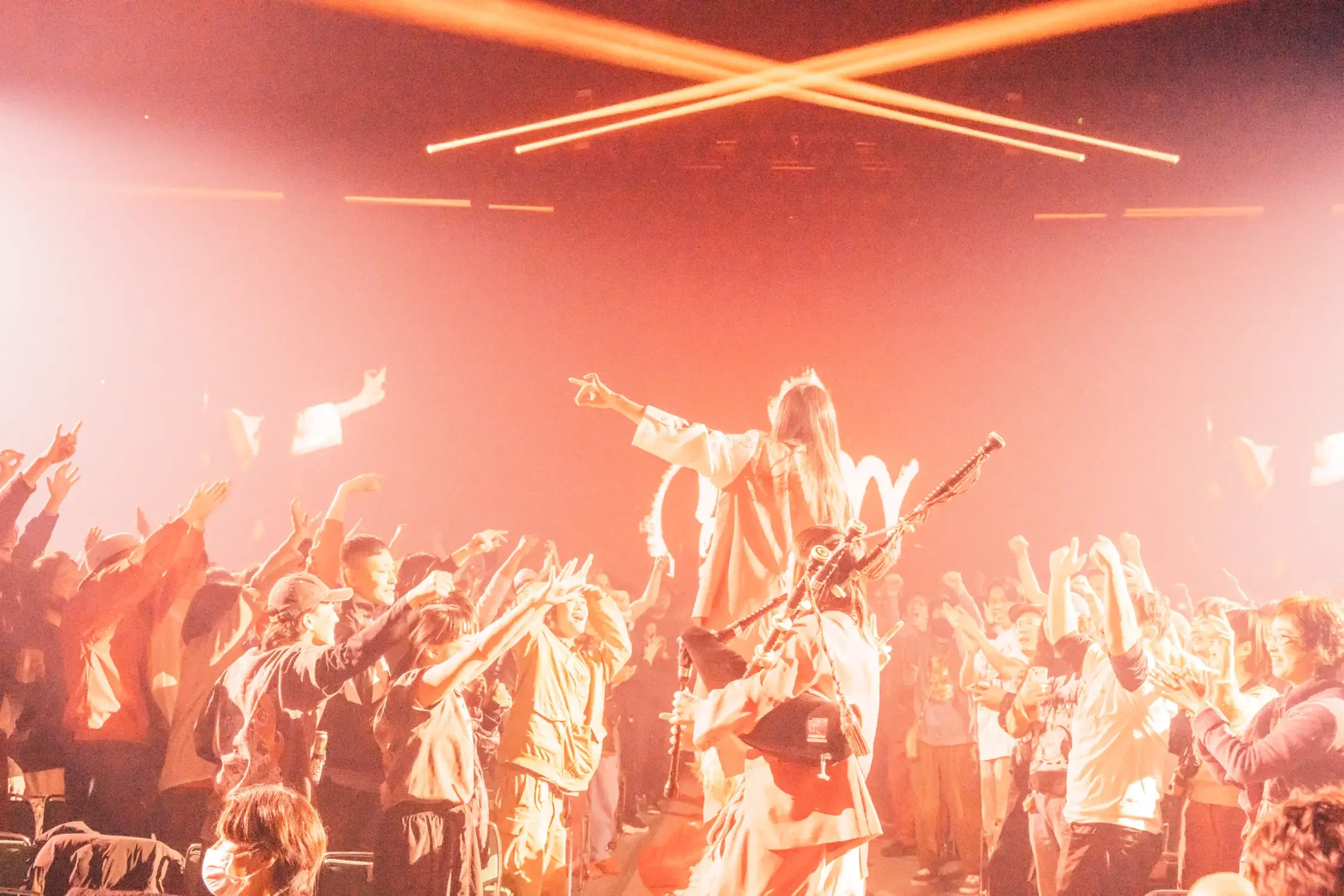
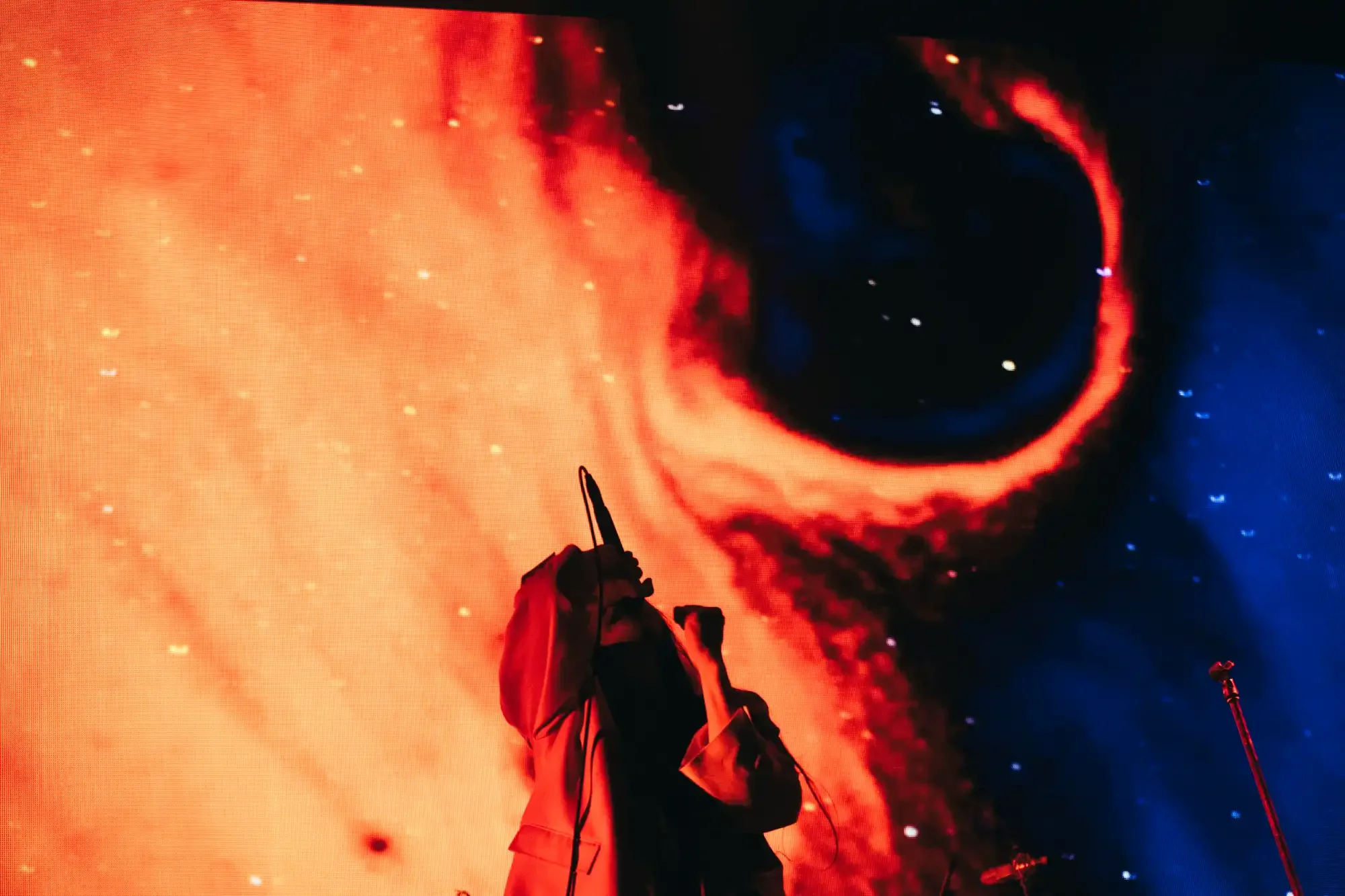
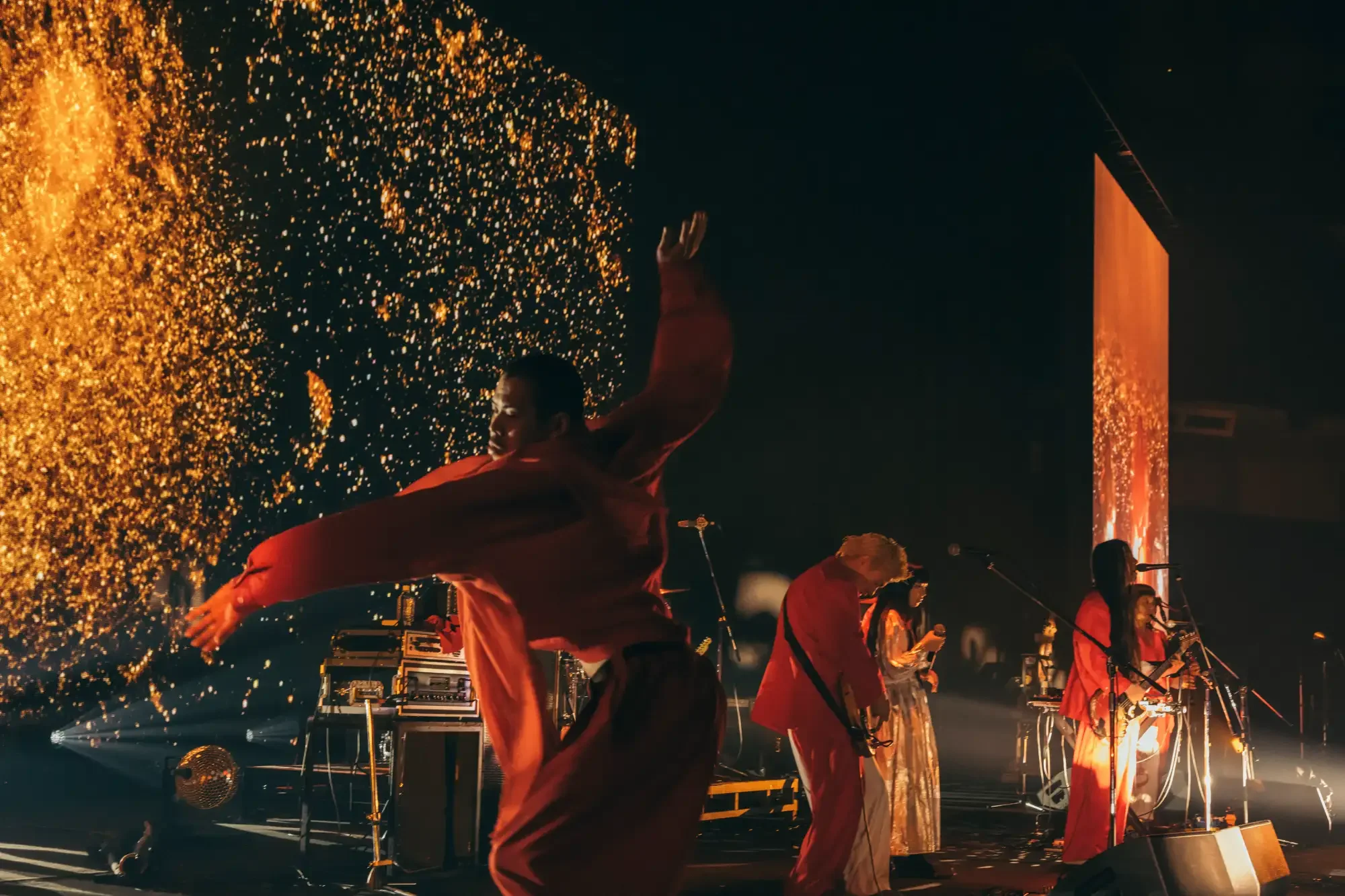
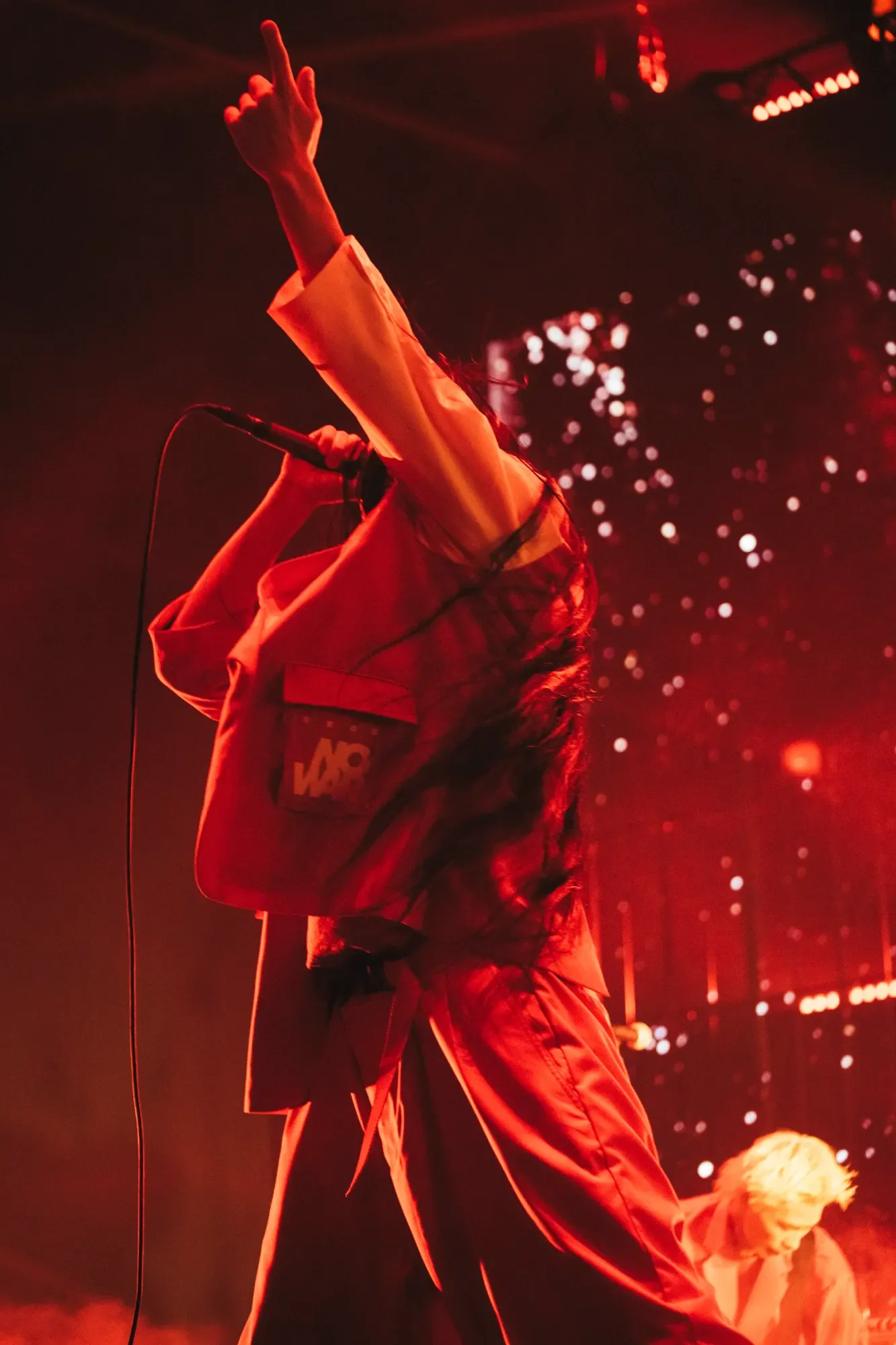
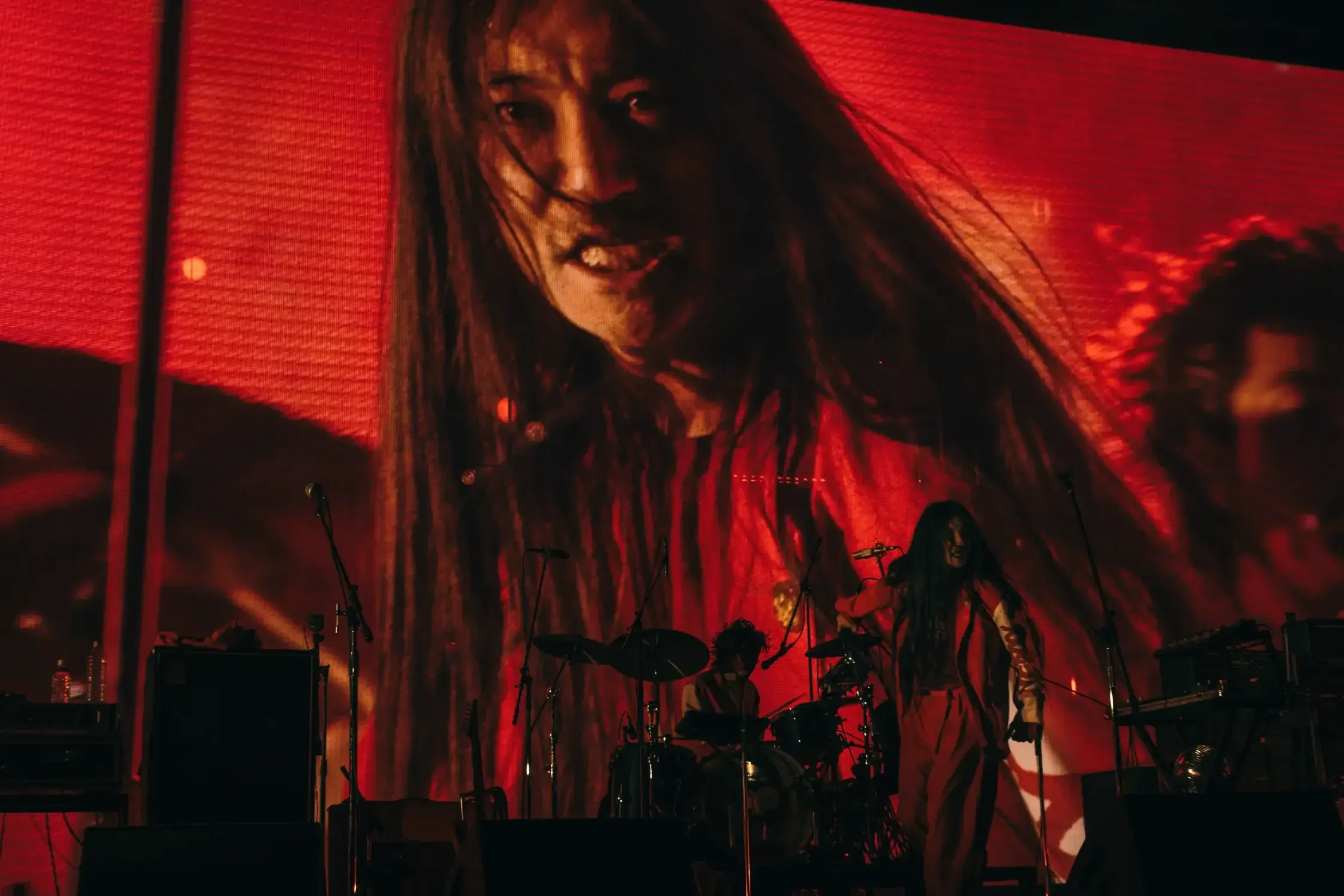
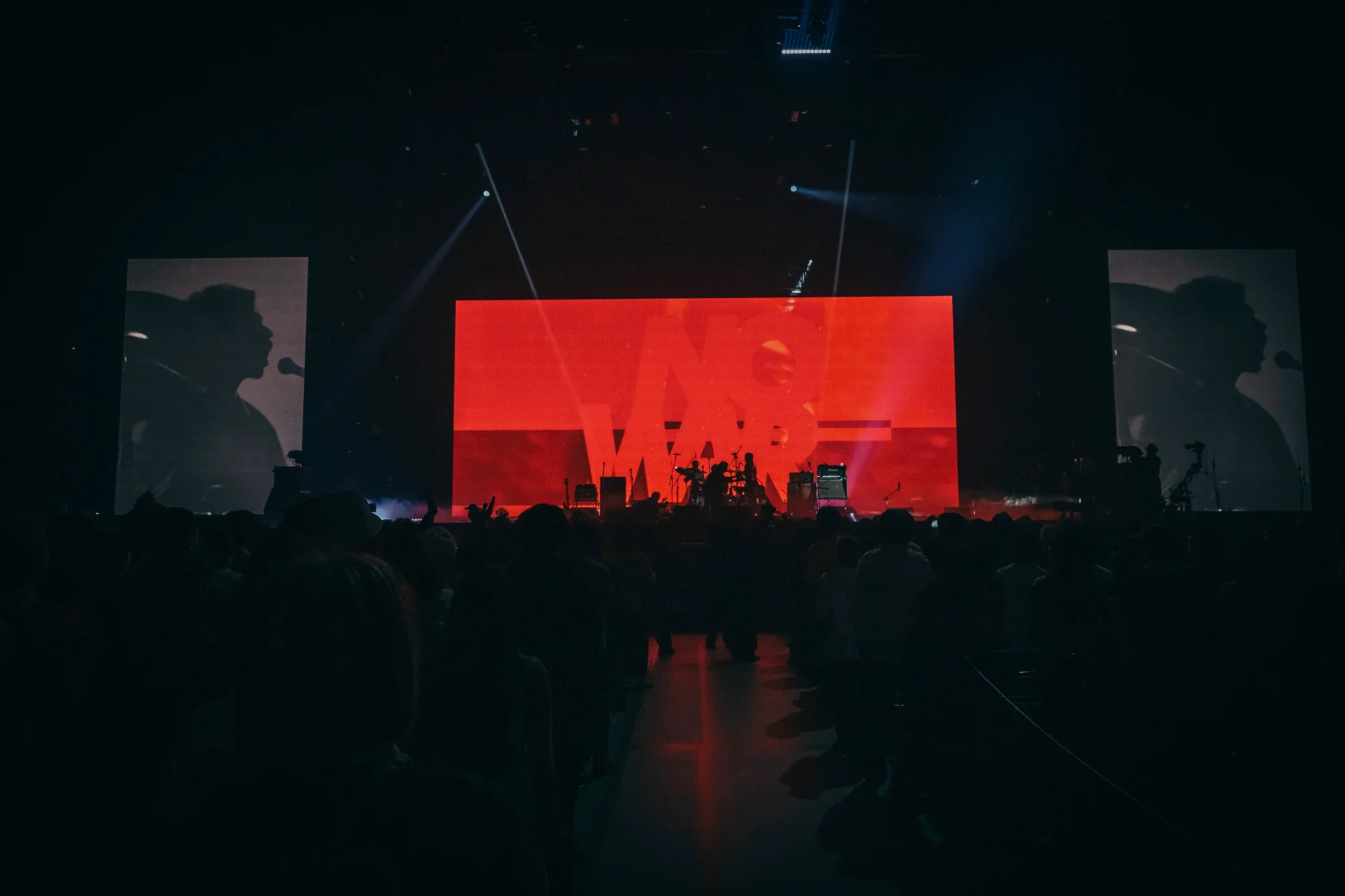
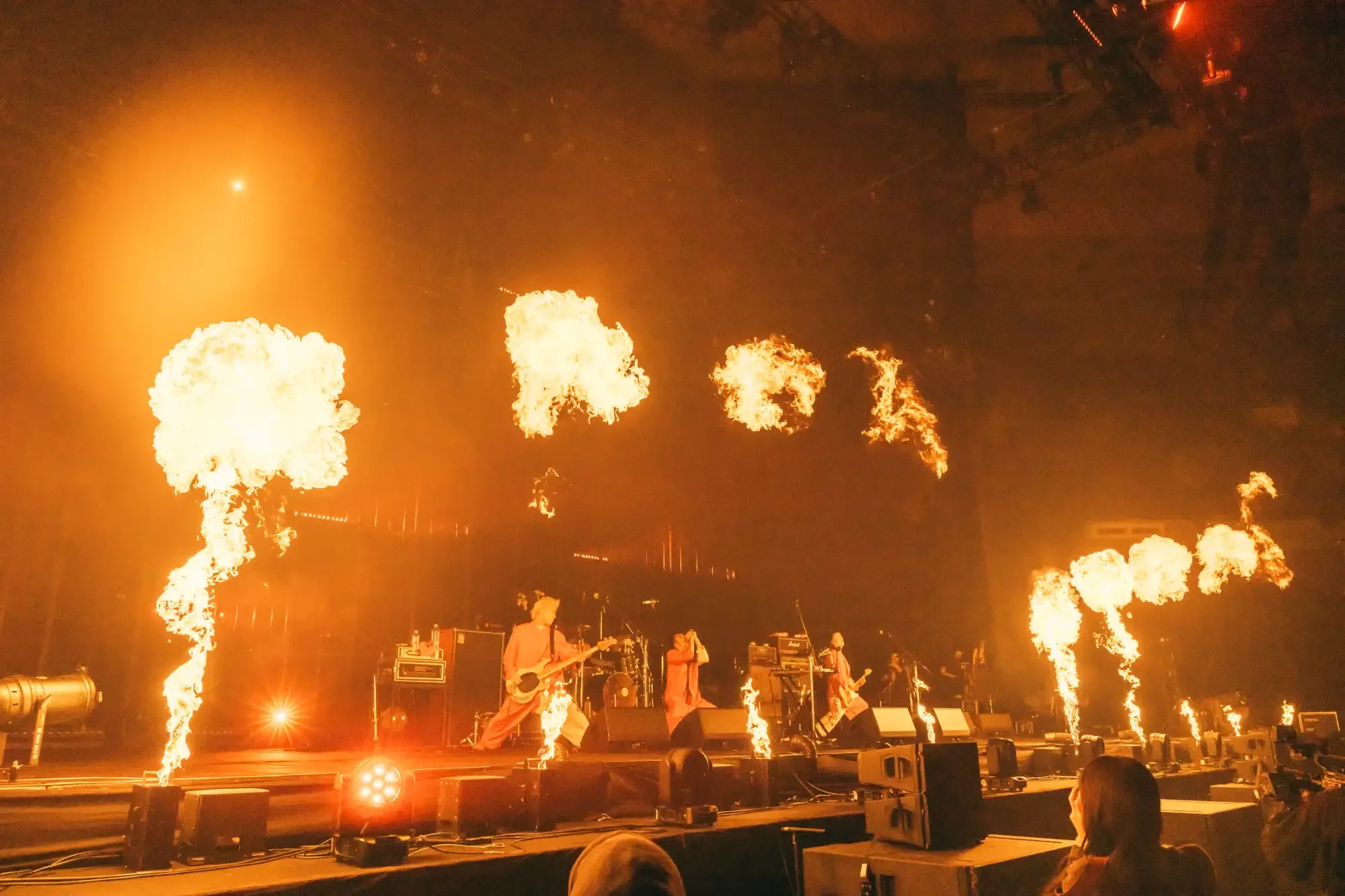
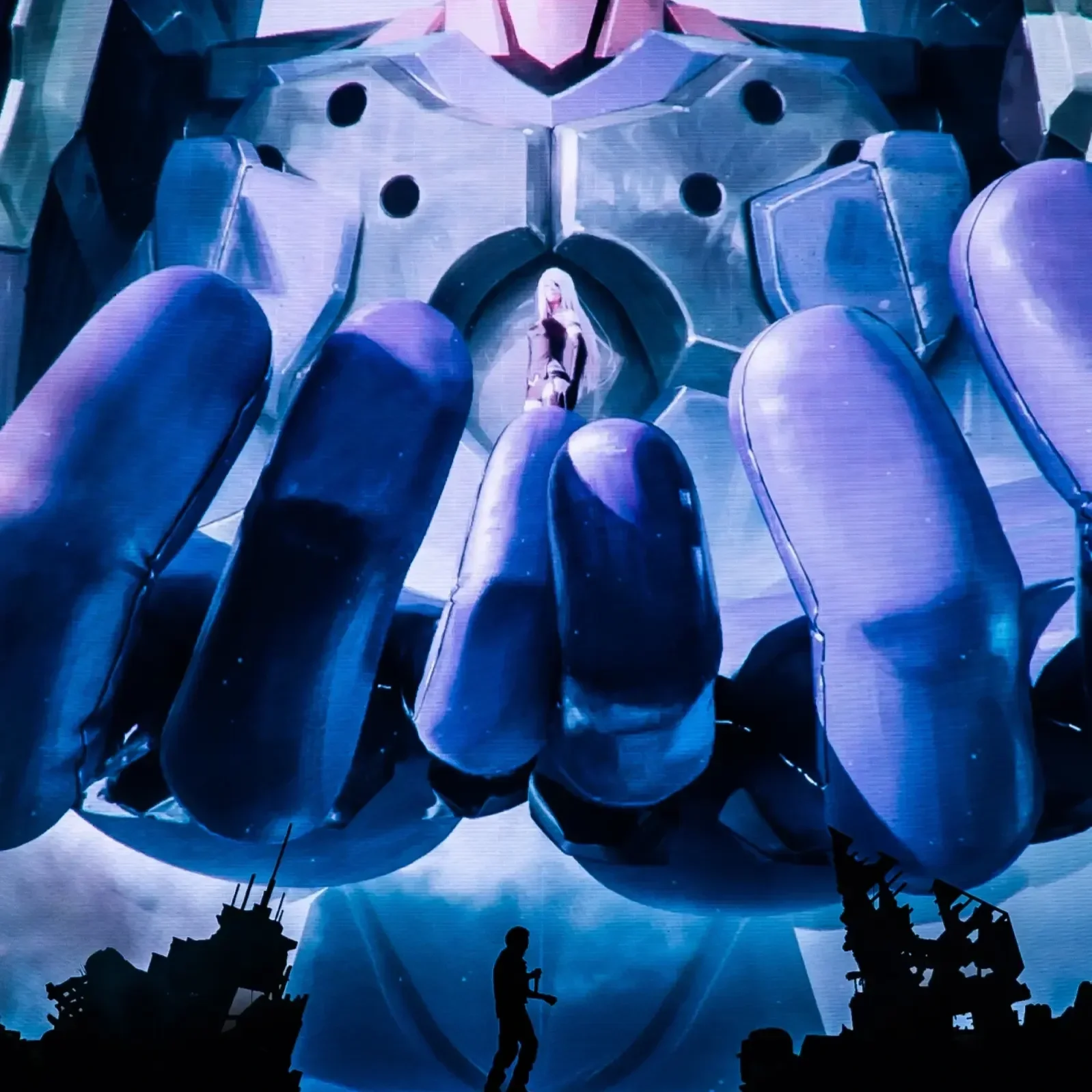
GEZAN at Budokan│© Taro Mizutani
“Hey, there's this insane band called GEZAN. Have you heard of them? You’ll see them described online as 'alternative' or 'a punk band leading the Japanese underground,' but honestly, I don't know how to express it. During the Ukraine crisis, they gathered musicians in Shinjuku to sing for protest; they played live for 100 hours straight. They are like a shifting, writhing kinetic body. I can’t say it any other way: GEZAN is GEZAN. I think you’ll understand once you hear them. If you can, go to one of their live shows, but start by listening to I KNOW HOW NOW or KLUE. I really want to interview them.”
When I first reached out to Gill, our editor-in-chief, about GEZAN, I found myself at a loss. As an editor, I usually pride myself on finding the right words, but I couldn't bring myself to pin the band down. I didn't want to suffocate the music with clumsy labels; I felt it was better for him to simply listen and feel it. Now, GEZAN is on heavy rotation for him. Even without fully understanding the Japanese lyrics, he tells me the sound just feels right.
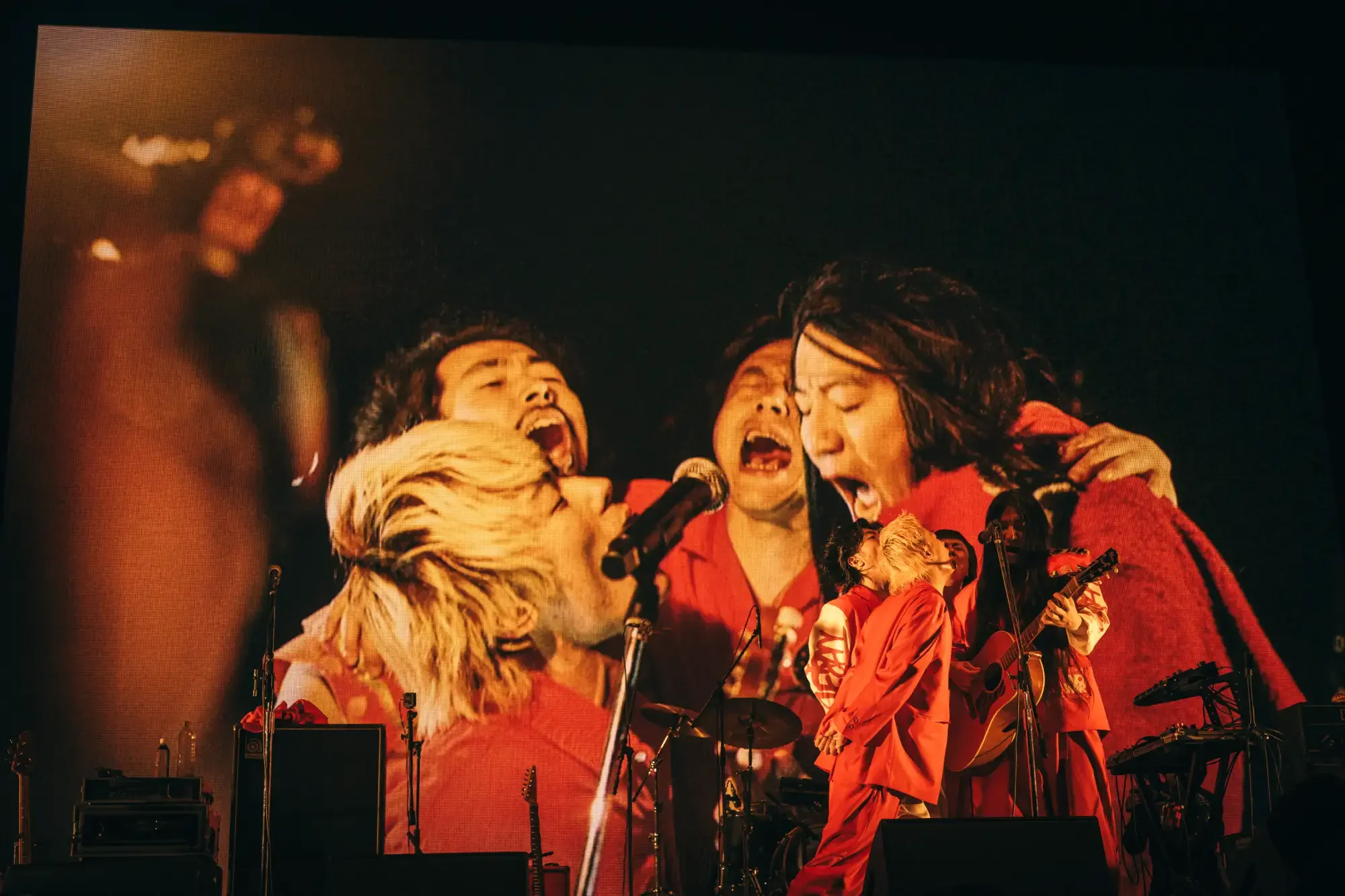
“Beyond the Warm Illusion of City Pop”
“Do not panic, do not rush, do not run, do not be irritated. Do not win, do not retaliate, do not surrender.”
GEZAN’s music always catches me off guard. There is a sharpness in their lyrics that captures the friction of society, but beneath the words, I feel a surge of anger, sadness, joy, and a sense of prayer. Does this sensation come from the literal meaning of the words, or is it triggered by something perceived through the sound itself?
Wednesday, March 25th. Rain in Tokyo.
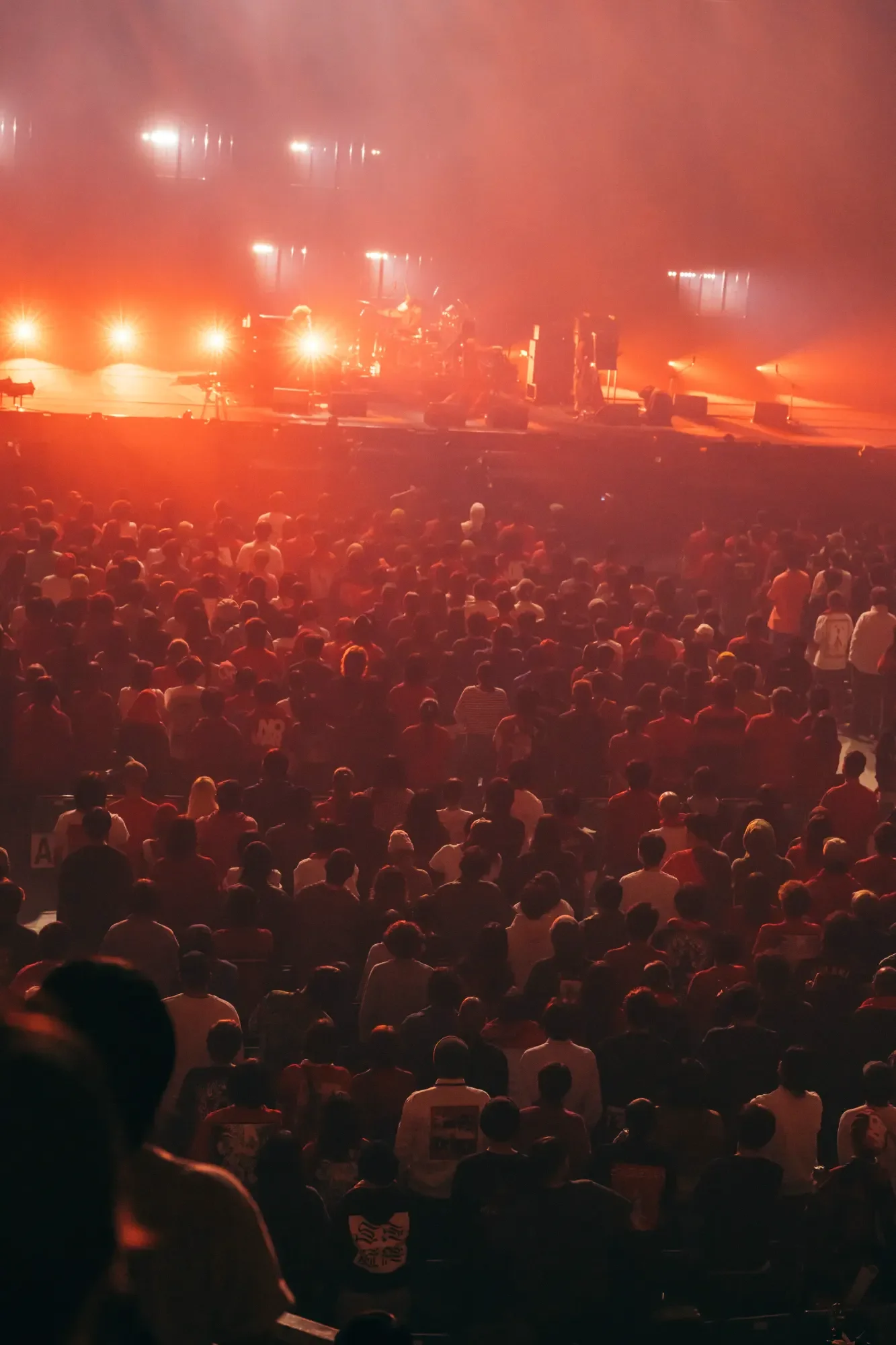
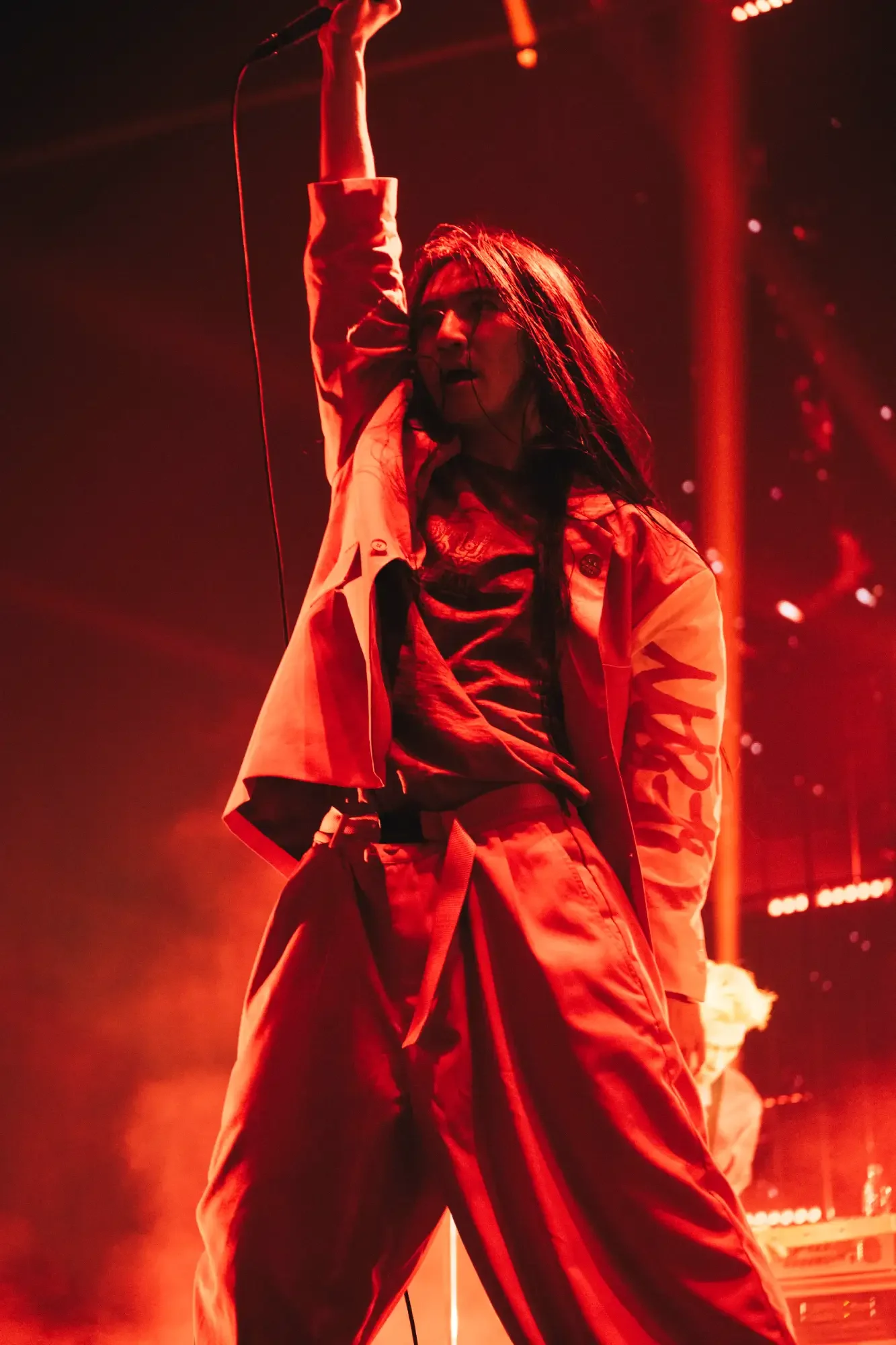
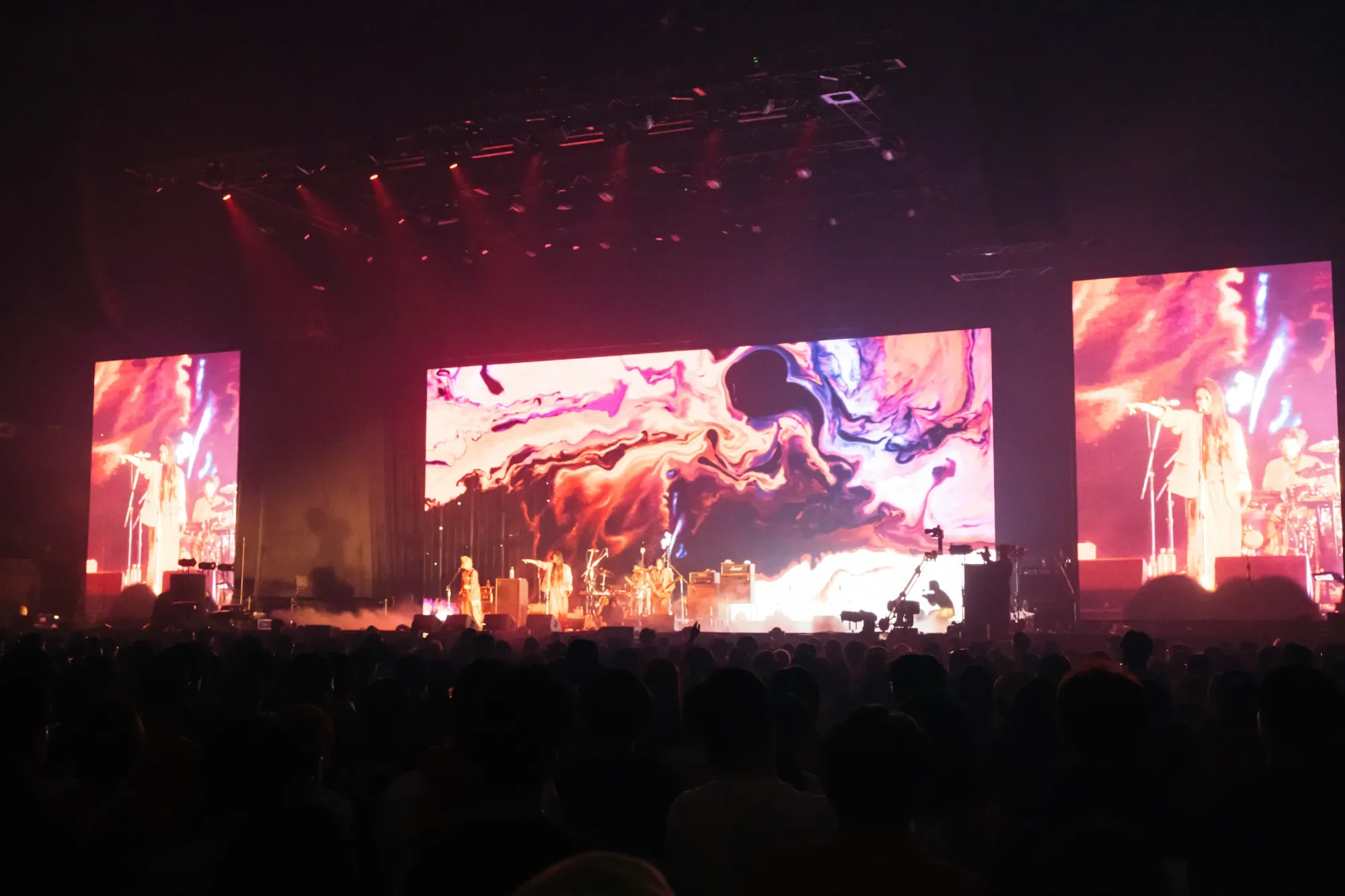
I interviewed Mahito, the vocalist of GEZAN. After touring all 47 prefectures and selling out 8,000 seats at the Budokan - the holy ground of Japanese music - GEZAN is set to expand overseas this April. We spoke with him about the state of Japan as he has seen it, and the role of the music they are about to carry across the sea to Europe.
The Scent of the Land - Beyond Categorization
Roman: Today, as GEZAN prepares to head overseas, you’ve just finished a journey from local live houses across Japan to the Budokan. Looking back, what is the "image" of Japan through your eyes right now?
Mahito: It’s the same in any country. At the airport, you see the version of the country they want to sell. In Japan, it’s all anime. That’s the first point of contact for people coming from abroad. But the further you go into the rural areas, you find something that isn't a "character"; you find a "way of living" rooted in the town. It isn’t designed; it feels completely untethered from the modern era.
"Airports gather all the local souvenirs in one place, but there’s a certain 'scent' you only find by actually being there. It’s in the eccentric shop owners and the specific energy the locals create. Most of it is impossible to put into words. But in the middle of a mundane daily life where 'fun' is hard to come by, people turn to local venues and clubs as a lifeline. That kind of 'scent' can’t be turned into data or captured in a photo. It’s invisible, but it’s real. Touring made me realize how impossible it is to boil 'Japanese culture' down to a single word."
I don’t know why, but some venues are just full of drunks and guys looking for a fight. Other places have a twisted ki (気) because of a massive shrine nearby. It was fascinating to see that there are still so many places where logic and atmosphere haven't quite aligned yet.
Roman: Does the audience reaction differ by region?
Mahito: Completely. In some places, they’re heckling; in others, they listen in total silence, letting the music melt into them. So when people ask "how Japan looks," I can't give a simple answer. I think that’s true of any country.
If I had to put it into words... walking through Shibuya, you’re hit by advertisements moving at a terrifying speed; there isn't a single corner of silence. You have people headed somewhere and people heading home. The destinations, the entrances, and the exits all bleed into one another. In the middle of that chaos, buildings go up only to be torn down again. If you pointed a camera at one spot for a year, the scenery would be unrecognizable. Tokyo is constantly replacing itself. It’s a city built on confusion, stacking layer upon layer of chaos until it collapses. It’s a place destined to always be in transition. The scenery cycles too fast to ever truly call it 'home.' It’s a strange, singular kind of city.
Roman: I was born and raised in Tokyo, and the speed at which information moves here is just relentless. There are benefits to that, of course, but I can’t help but feel that it’s also a source of suffering for a lot of people.
Mahito: Exactly. It feels like Tokyo is being stripped of its "scent." There are plenty of scents within the city, but everything cycles so fast that the next thing arrives before a scent even has a chance to settle. With a club or a venue, it’s not just about having a sound system to make noise. I believe the walls, the floors, and the very air soak up the history. Every step danced on that floor, every "Document" of raw reality that happened there. That’s what settles and hardens into a legacy. In Tokyo, too many places are replaced before that can ever solidify. Of course, you still have landmarks like the Budokan or Nakano Sun Plaza, though.
When things move this fast and you can't find an axis to stand on, you end up clinging to numbers. Follower counts, likes, annual income... you start to verify your own existence through those metrics. It’s becoming harder to feel the simple reality of "I took one step forward today" through anything else. I think that’s one of the root causes of the suffering people feel today.
Stripping Away the Noise - Right Here, Right Now
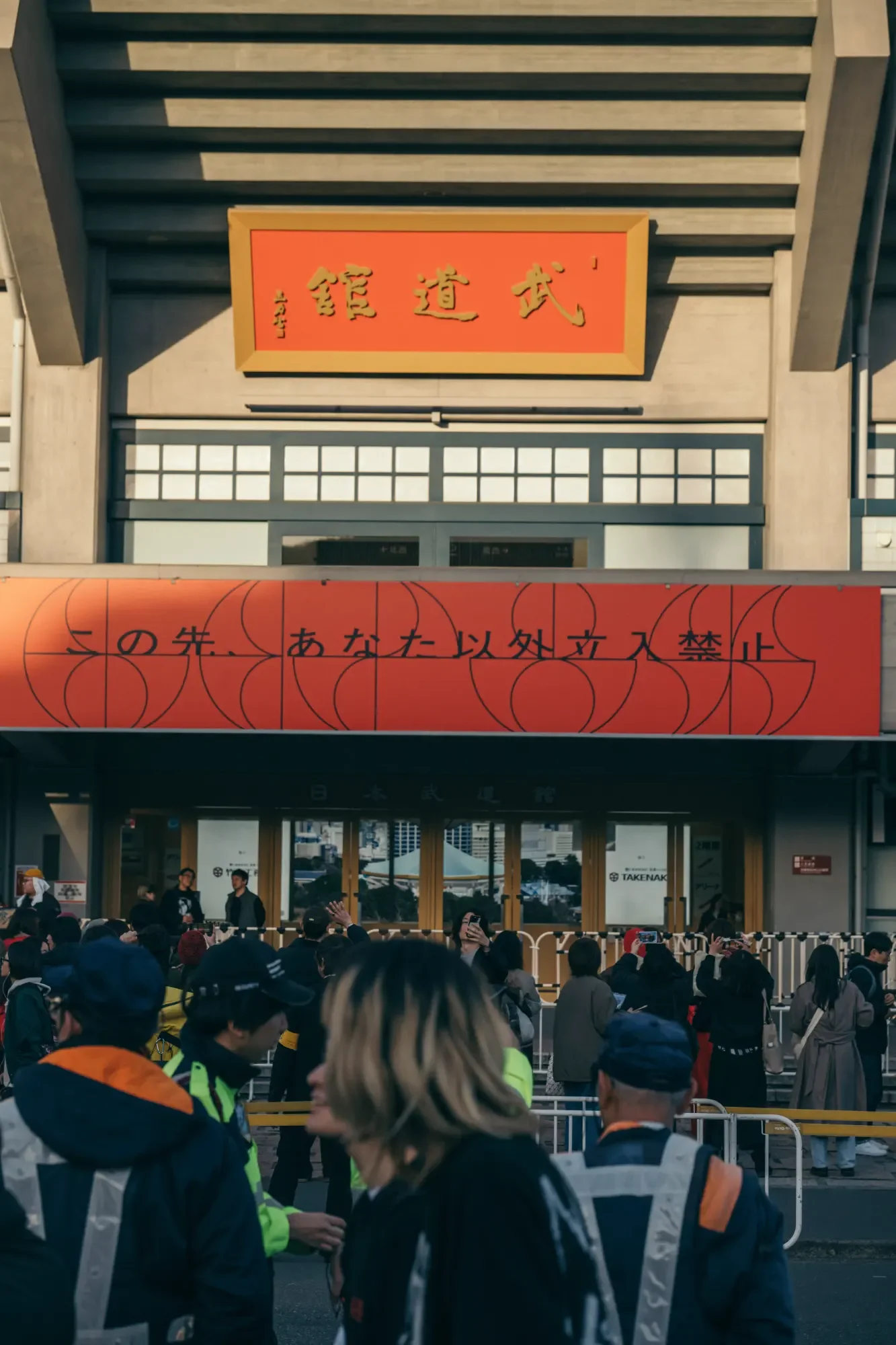
Roman: For the Budokan show, you placed a sign at the entrance that read: “No entry beyond this point for anyone but you.” What was the intention behind that?
Mahito: It sounds obvious, but even when 8,000 people show up, every single person’s journey to get there is different. You have the person who put on their favorite red shoes and spent the whole day getting into the headspace at a cafe; then you have the person who couldn't finish their work and arrived dragging the weight of their daily life behind them. Everyone’s "Document" is unique. It’s not about good or bad. It’s just that no two people are the same. Some are mourning a loss; others aren't feeling well and can’t quite find the rhythm.
I imagined that sign as a kind of "zen riddle." I wanted people to shed all the data and labels clinging to their names, to align their physical bodies with their consciousness before stepping inside. In there, there are no "VIPS," no social hierarchies. No "inner circles," no titles like "CEO." Just 8,000 people, each standing alone. I wanted those titles to evaporate the moment they passed through that curtain. I don't know if a sign alone can actually make that happen, but that was the goal.
It’s like bowing when you pass through a torii gate at a shrine. I’ve always thought that isn't really for the gods. It’s a way of shifting gears within yourself so you can face what’s ahead. I don’t need anyone bowing to GEZAN, obviously (laughs). It’s about straightening your own posture as you enter. Honestly, where the sign said "anyone but you," I almost wanted to write each person’s individual name. In modern life, there’s almost no time - even for me - where we can just exist in a pure, blank state, stripped of all the information that sticks to us.
Roman: I know exactly what you mean. It’s like being hit by a muddy torrent of information. It feels harder and harder to keep a grip on who you actually are.
Mahito: Even now, as I’m talking to you, I have my next appointment in the back of my mind, or a motif for a novel I’m writing lingering in a corner. We all exist in multiple dimensions at once. Even when we’re focused on a conversation, everyone is carrying a dozen other things simultaneously. But that time when you can truly be yourself is so precious. How to stay "naked", that’s a constant theme for me. I want to be that way when I’m on stage, too.
When you’re locked in, you can reach that state. But when you’re distracted or consumed by some strange, misplaced anger, you lose the ability to choose, your true consciousness can’t pick its own path anymore. I’m fascinated by how we can release the baggage we’ve involuntarily shouldered, both in myself and in others.
Roman: Watching you at the Budokan, I felt, for the first time in a while, that it was okay to just be. I felt accepted exactly as I was in that moment.
Mahito: We definitely spend too much of our lives as "someone other than ourselves." I mean, if you had your animal instincts turned up to 100 on a packed morning train, you’d lose your mind. Sometimes you have to turn into a blank vessel just to survive the commute, even if you’re using music to shut the world out. You do what you have to do to get by. But if you don’t carve out time where you refuse to let go of yourself, you really do just become a "number."
People talk about AI taking our jobs, but I think humans were already thinking like AI long before it arrived. That’s why it was born in the first place. It didn't just appear as some menacing threat. Humans have this endpoint called "death" that no AI can ever reach, no matter how much it learns. And that endpoint includes pain. It includes the confusion of making mistakes and the presence of "inconvenient" flaws. I feel like holding onto those things, the messiness, will be our Omamori, our lucky charm, to keep us from getting lost in the world to come. Not letting go of the confusion. To me, that’s what sustains our humanity.
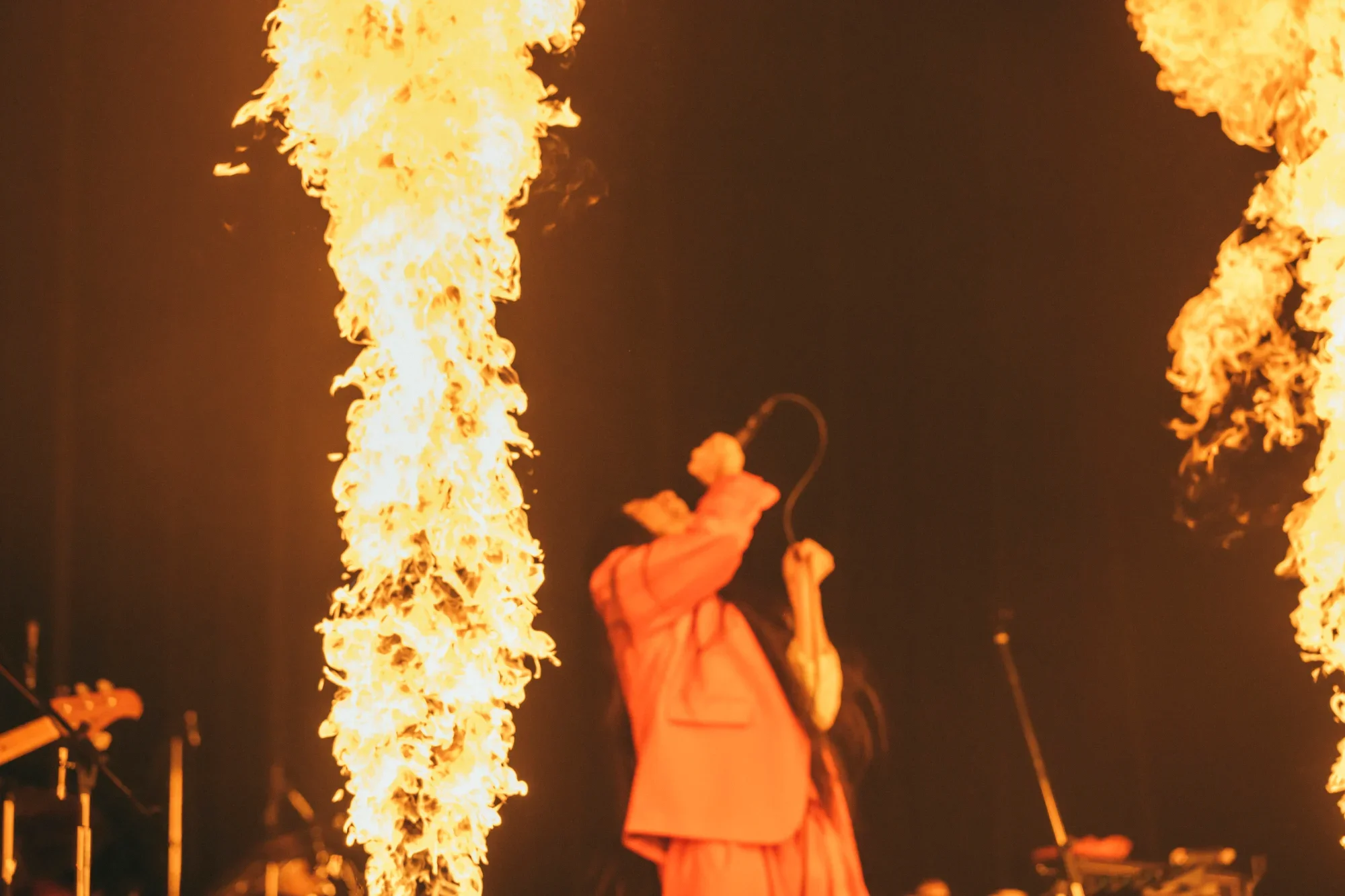
GEZAN at Budokan│© Taro Mizutani
Am I Crazy, or is the World Crazy?
Roman: I remember being so confused in my teens. I grew up thinking I was "normal," but as I met more people and was exposed to more information, I was constantly told, "this is just how society is." I felt this massive disconnect between my reality and theirs.
Mahito: You know those lines in movies, “Am I crazy, or is the world crazy?” My take is that we’re both crazy (laughs). There were times I thought it was everyone else and not me, but there are plenty of moments where I realize I’m clearly out of my mind, too.
When I went to India, the traffic was pure chaos. There are lanes, but no one uses them; no signals, cars constantly cutting each other off, and cows just wandering through it all. Yet, somehow, it flows without accidents. I think animals, and that includes us, have an innate ability to find order within chaos. Like a school of fish swimming in a massive cloud without ever bumping into each other. We should have the instinct to sense danger or naturally turn away from something "off" in the atmosphere. Humans aren't physically powerful, so we evolved to be perceptive.
But now, you look at social media and it’s just non-stop fighting at breakneck speed. You open an app and you’re immediately hit by a collision. Some of that friction is necessary, of course, especially for rebel music to have a voice. But I feel like we’re losing our tolerance for "human complexity." We've forgotten how to just coexist naturally in all our messiness.
I think the internet has robbed us of that. In a video game, you can say "I’ll kill you" and there’s always a reset button. But in the physical world, if you get hit, it hurts. If someone dies, they don’t come back. There was a time when words and pain were aligned, but now speed is prioritized over meaning. They’ve split apart. We’ve reached a point where if we don't agree with someone's thinking, we can't even stand to be in the same space as them. We jump straight to conflict. And that's not just a Japan thing, it's everywhere.
Roman: Everything moves so fast that there’s no time to step back. Just existing feels like a non-stop barrage of images. You can't look inward because your insides are constantly being scrambled.
Mahito: Anime caught onto that early, didn't it? Like Satoshi Kon’s Perfect Blue or AKIRA. They took pieces of Tokyo’s reality and made them three-dimensional. That kind of confusion is easy to miss because it’s formless, but it permeates our consciousness like a virus. But look, there’s no point in only talking about the darkness. I make music because I want to talk about hope.
Using Music to Resurrect the Primal Energy for Living
Roman: Is there a difference between the Mahito we see in daily life and the Mahito we see on stage?
Mahito:It feels like they aren't really related. There’s no "on" or "off" switch, no front or back. When I play solo, I sing slowly, but there are commonalities, of course. Even my hair carries history, not as a "concept," but simply because it’s growing; it’s a physical trace of time.
In Shin-Ichi Fukuoka’s Dynamic Equilibrium, he explains that after a certain period, almost no information remains in the body, the matter itself is replaced. People might get criticized for something they posted on social media ten years ago, but strictly speaking, not a single physical atom of that person remains. Only memory creates the connection, even though the entire "vessel" has been swapped out. It might be an exaggeration to say you don't need to reflect on the past, but it shows how much we are in flux. There is no fixed point. We just place a bookmark in the flow, look at a cross-section of that moment, and record it like a snapshot. We decide, “Right now, I’ll call this feeling 'hope' or 'freedom'.” Lately, I’ve come to realize that these moments are actually scattered points with very little connecting them.
So when people talk about the Budokan show and say, "It was great," it almost feels like they're talking about someone else. I’m grateful, of course, but it’s like an author who has published three books. The author is the same, but the stories are independent. The "me" talking to you now and the "me" at the Budokan aren't multiple personalities, we are just parallel stories. We can acknowledge each other, but we aren't standing shoulder-to-shoulder as one. Being able to skip between chapters like that is the joy of expression; it’s how I manage my own confusion. Otherwise, you’d burn out trying to be just one thing.
Roman: Like the traffic in India, is that also something that forms naturally?
Mahito: Exactly. It’s an innate animal instinct. If it’s raining, an animal just decides, “I’ll walk and get wet,” or “I’ll wait this out.” They choose based on a natural balance between their body and the environment. We have that power, too. We know when to endure and when to act, like deciding to buy a cheap umbrella because you can't risk catching a cold. We should be able to sense these things even without formal rules.
But that instinct has been shaken; it’s broken down somewhere, which is why we see these strange conflicts. Some people are even at war with themselves. I wonder when we lost this. Since we’re still animals, I don’t think it can ever fully vanish.
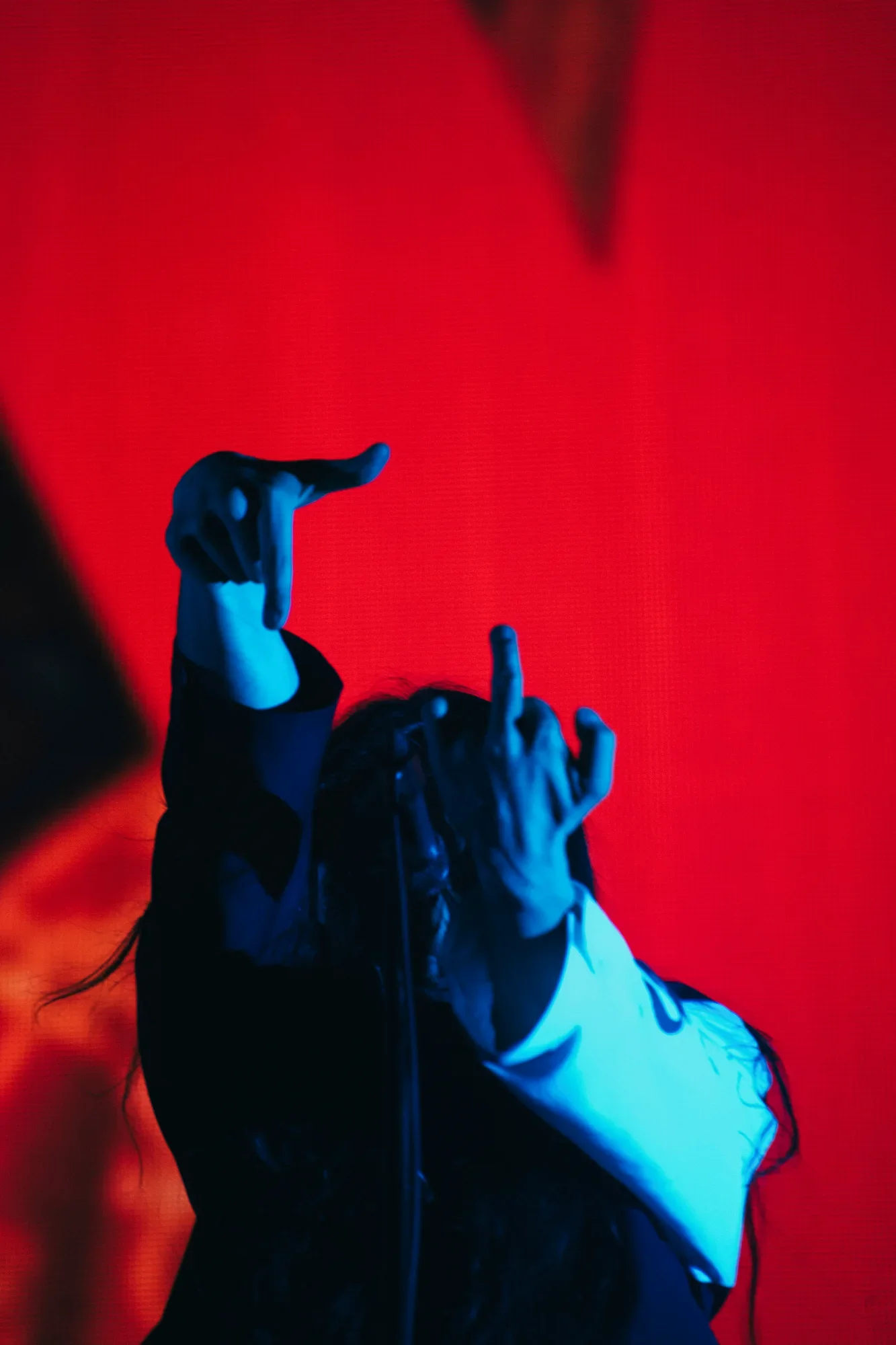
The biggest thing that separates us from AI is the concept of death. The "power" to be afraid of dying is dormant inside us. A "Live" show is named for "living," and what I’m trying to do is drag that dormant energy out from under the filters of society. That sensation is my ultimate goal. And to get there, I think a band, the most "inconvenient" and imperfect medium, is the best tool. It’s not a perfect digital soundscape; it’s physical, it’s flawed, and that’s why it’s the easiest way to reach a fellow animal.
We Don’t Have Time for Something as Pathetic as War
Roman: When you were on stage at the Budokan and said, “We could have stood here together without shooting missiles at each other,” it felt like a truth shared by all 8,000 people in the room. In your eyes, what is it that music is actually capable of?
Mahito: For that Budokan show, people came from all over. Taiwan, China, every corner of Japan. If you look at social media, it looks like everyone is at each other's throats, but when you’re physically standing next to someone and the energy is right, you just coexist naturally. I felt like that message was getting across even without words, but I think I wanted to give that feeling a shape. That’s why I said it during the set.
I don’t believe humans are stupid. We survived because we had the capacity for fear. We didn't grow up in a world that belonged only to us. Back when we lived in the jungle, there were the terrors of nature and wild beasts. We huddled around fires to stay safe; life was full of "friction" and inconvenience. It wasn't a world of "perfect graphics" in a single, curated color, it was a messy, uncomfortable, high-tension existence.
Look at the dinosaurs: they went extinct because they were too powerful. They were invincible, so they never had to adapt or branch out. When the Ice Age hit, they had no "counter-move," so they were wiped out. But creatures like the cockroach, weak, but constantly evolving and branching off, they survived. It’s like Bruce Lee’s “Be Water.” The species that could change their shape like water, that had the ability to be afraid and to adapt, are the ones that made it.
Humans should be able to sense danger. We should be able to hear the warning that says, “If we go any further, we’ll perish,” and change our course. I have to believe we aren’t stupid. We are standing on the precipice of World War III right now, but I feel like the "information filter" is flipping a switch in our brains, making us feel like we’re powerless to stop it.
That’s why I think people in every role need to speak up. My role is music, I want to agitate the fundamental power that’s dormant inside people. That is the true potential of music. Honestly, who wants to listen to music that has nothing to say? Music is formless; it dissolves into the body. It’s a sensation where courage circulates through your veins and generates heat. That’s what I’m aiming for. How people use that power is up to them. If they want to use it for their own art, great. I don’t care about the details. I just want you to fill yourself with your own blood for once and let that courage circulate. After that? Do whatever you want. It’s your life. My job is just to pull you up to that starting line.
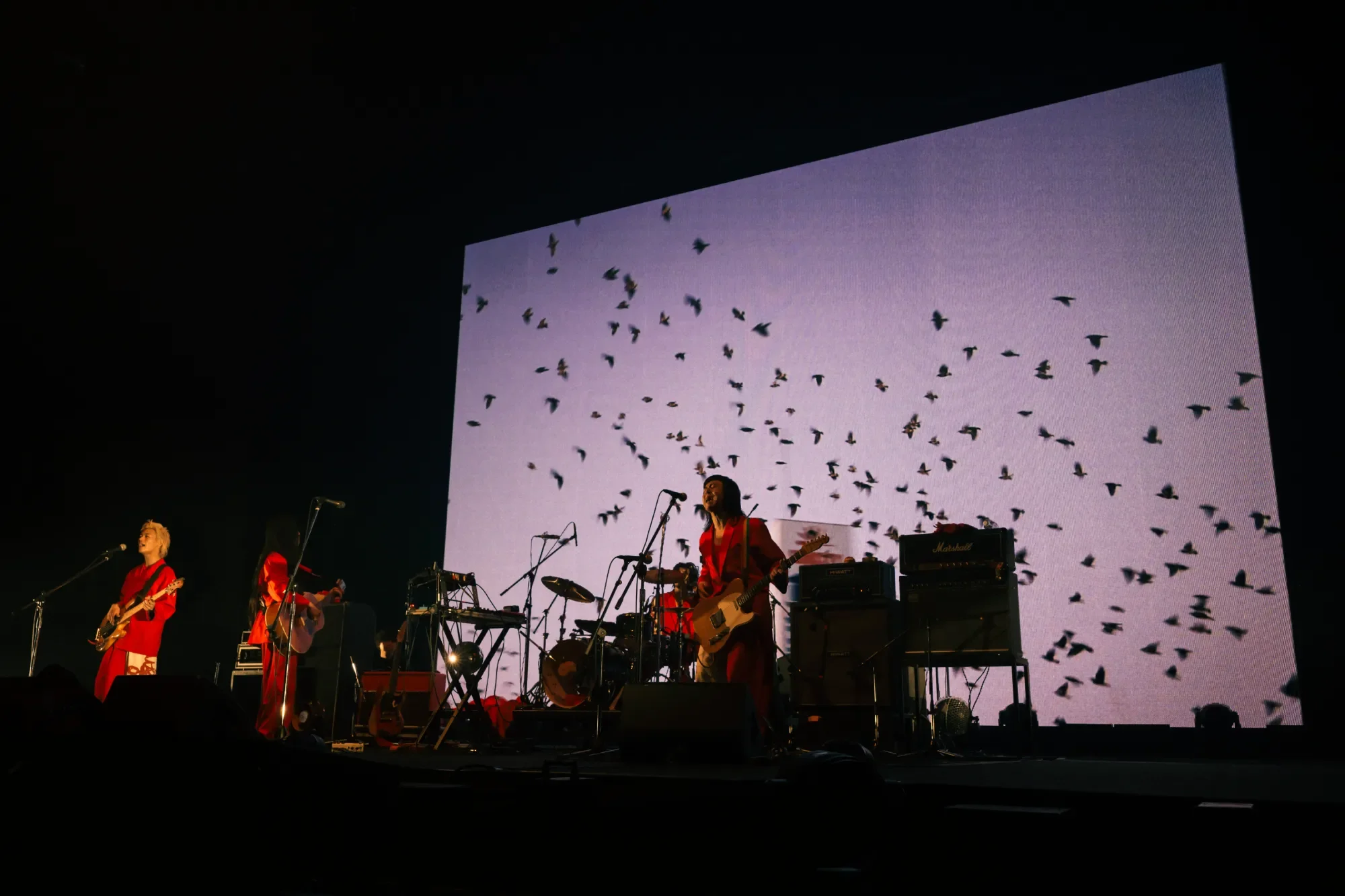
GEZAN at Budokan│© Taro Mizutani
The Power of Music Beyond Language
Roman: As GEZAN prepares for this international chapter, I’m curious about your creative process. Do the words you want to convey come first, and then you find the sound to fit? Or is it the melody and the feeling first, with the words following later?
Mahito: Definitely the latter. I’ve never had a song start with the words. It begins with an image or a mood. At first, it’s just non-verbal mumbling. A sort of "nonsense" singing. Once the melody starts to feel right, much later, I’ll find the words to fit the space.
Words act as a "direction," don’t they? The moment you attach them, the meaning solidifies, and the entrance to the song feels narrower. I don't want to mess with that order. Otherwise, music starts to feel like a "tool," and when that happens, its original power is cut in half. It might look the same from the outside, but the energy is different.
When people use music as a tool, it lacks "range." I don't mean "you have to play from the heart" or anything cliché like that. I mean that, ideally, a single hit of a snare drum should hold a world of tension. It should naturally reflect that person's life, their freedom, their philosophy. That one kick drum is the latest entry in their personal history. It’s impossible for it to be unrelated. But when you treat music as a tool, the sounds just feel "pasted on." The data is the same, but the soul isn't.
The things people truly cherish always leave a mark. It’s a kind of spirituality, something in the space remembers it. I don’t know if everyone hears it "correctly," but they feel it being drawn out of them. There’s so much music out there that sounds "cool" but makes you feel absolutely nothing. Our music might pass people by like that too, sometimes. But when our wavelengths sync up with someone, something opens up and a chain reaction begins. That’s the element I want to protect.
Roman: There’s a moment in your shows where the atmosphere feels like it’s starting to "boil." As an audience member, I’ve always felt that sensation is particularly intense with GEZAN.
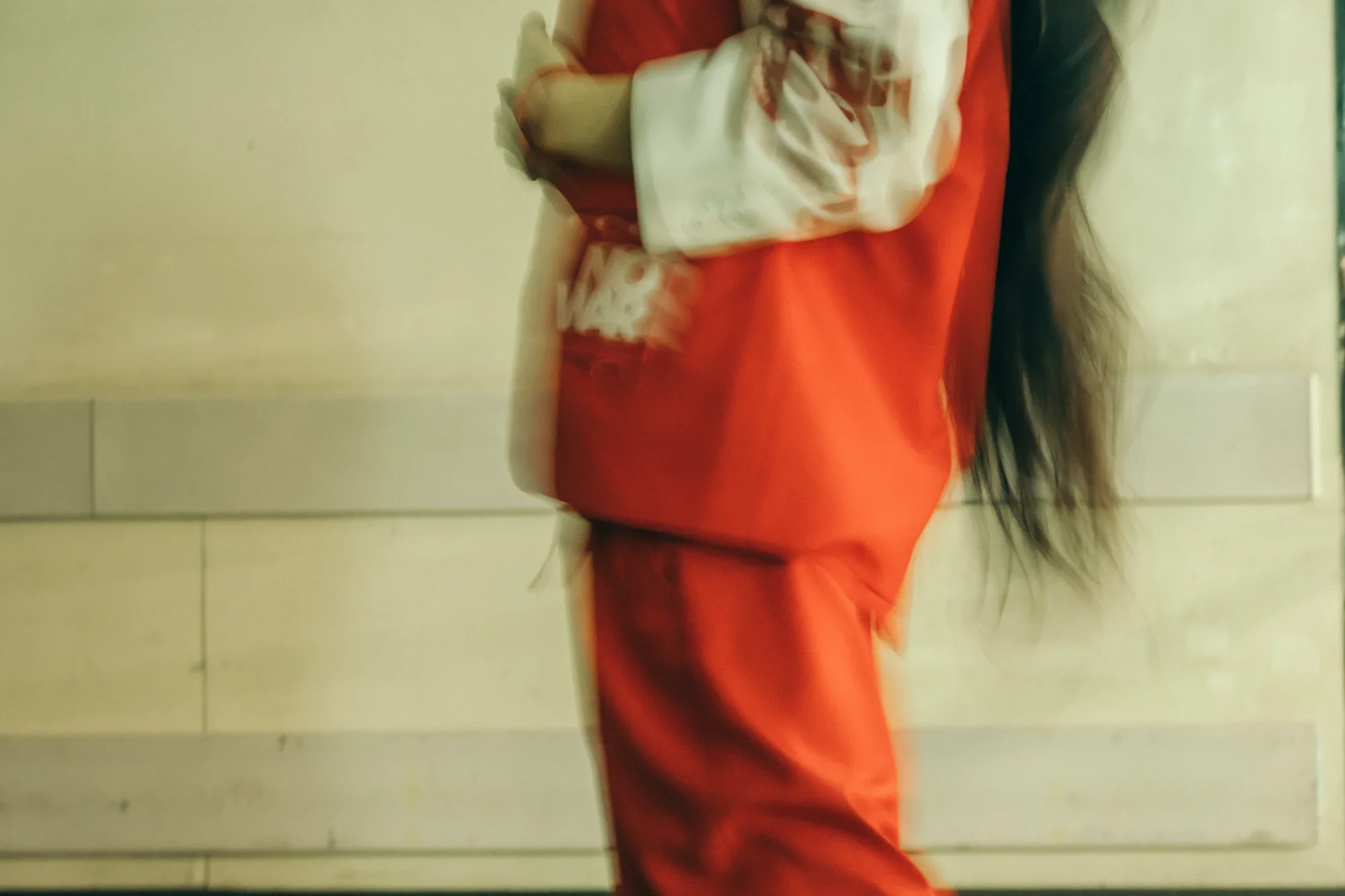
Mahito: What’s interesting is that when we play overseas in Japanese, the lyrics aren't "reaching" the audience in a literal sense. But I once realized that if I treated them as just a string of words, the music would abandon me. I understood then that it doesn't matter if the meaning is "heard" or not, it’s about the performance being my own personal "prayer." I have to sing as if it's reaching them 120%, regardless of the language barrier.
In Japan, we have the saying, "The customer is God." People usually use it to mean "be polite to customers," but the original meaning is actually "perform your work with the same intensity as if you were working for a God." You do the work seriously for its own sake, regardless of who is watching. I don’t follow a specific religion, but when you go overseas, that focus becomes even sharper. It’s not about "communicating" anymore; it’s about testing a power that exists beyond language.
Roman: So even if you keep using Japanese, it won't be about just "conveying meaning."
Mahito: I wonder. Words originally started as a resonance. Kotodama (the spirit of language). There’s a theory that the "Ki" in Kimochi (feeling/spirit) and the "Ki" for "Tree" were originally the same sound. If I can purely face the music as resonance, I think we can reach that same level of connection. If the feeling is right, the music will carry it. It's an experiment I'm interested in. But even so, I think I’ll always find my way back to words.

The Future - Melting into Nostalgia
Maimai (GEZAN team member): People who saw the Budokan show keep telling us how 'incredible' it was with so much passion. But when you’re part of the team, you’re so close to it all that you start to lose track of what 'incredible' actually means, you know? (laughs) Why do you think that is?
Mahito: I think empathy happens when things are on the same level, the audience recognizes an image of freedom or hope that they hadn't been able to put into words yet. It’s a moment of alignment. People talk about the songs I wrote as if they were their own personal stories, and that’s a beautiful thing. It’s like an "Eureka" moment; you’re finally noticing something that was already there in your own internal archive. What I put out in a song is just a tiny fraction of the whole; behind it, there’s a massive swell like the sea. People whose "circuits" match mine are the ones who catch that energy. All great artists are like that.
People look at Yayoi Kusama and think she’s just painting dots, but behind those dots is a vast, overwhelming vision that everyone unconsciously senses. Taro Okamoto is the same. People have seen his work a thousand times, but you’re glimpsing a concentrated mass of the energy he lived through in a single instant. People want that energy; that’s why they buy his books, they’re trying to hold onto a piece of it. Art is just the visual data of a massive energy that exists on the "other side."
Expression that has no ideology, nothing behind it, just a polished surface, is like a disposable pocket tissue. It might be convenient for the moment or go viral for a second, but I’d tell anyone to stop doing that because it’s utterly meaningless. To be honest, even I don’t fully understand why GEZAN’s music triggers that kind of deep empathy in people.
Roman: Lastly, what kind of "scenery" do you hope to see as you head overseas?
Mahito: More of the same, really. I’d love to look out and think, "Oh, so everyone here already knows." I don't expect the years of trust we've built in Japan to translate instantly overseas, but it’s about how much I can confront them as an animal, on an equal plane.
There’s a specific kind of experience where you skip the usual introductions and, even though it’s a new place with new people, it feels nostalgic. I want to find that. I’ve played all over, and I believe there’s a kind of synesthesia we share, even with a word like "war," there is a common sensation we all recognize.
It’s that feeling where the micro and the macro, your individuality and the vastness of the world, expand and contract at the same time. You go somewhere completely alien and face your own loneliness, while simultaneously connecting to something enormous. I want to flicker between those two states at high speed. Not just blending in, but remaining a "foreign object", maintaining that sense of friction without dressing it up, while simultaneously melting into the space with a sense of nostalgia.
That’s the image I have in my head.
Over the course of roughly 11,000 words, I have attempted to document this conversation with Mahito. We spoke of the "scents" etched into the different lands of Japan; of creating a sanctuary to strip away the digital noise that clings to us in this relentless information society. We spoke of a crazy world and our own madness, of finding a sense of belonging by discovering order within confusion and facing the discomfort of being a "foreign object." We spoke of using music to exhume our primal human power and reaching for the world that exists beyond literal meaning.
I have deliberately avoided providing a neat conclusion or summary for this interview. My goal was to deliver a dispatch from the current location of the "kinetic body" that is GEZAN, keeping it as raw and alive as possible. Everything they do is part of a process; it is a movement that continues to unfold. In that flow, some things will inevitably vanish. By the time this article is published, the band may have already evolved into something new.
That is why I leave their future in your hands. Watch them with your own eyes, listen with your own ears, and use your own body to stomp the floor of a venue. I hope you step out from behind these words and go feel the reality for yourself.
Trending articles

Inside the culture and friendship behind Matthew Ballard’s HIGH RECEIPTS.