
Let’s All Love Lain - SEVESKIG Enters The Wired
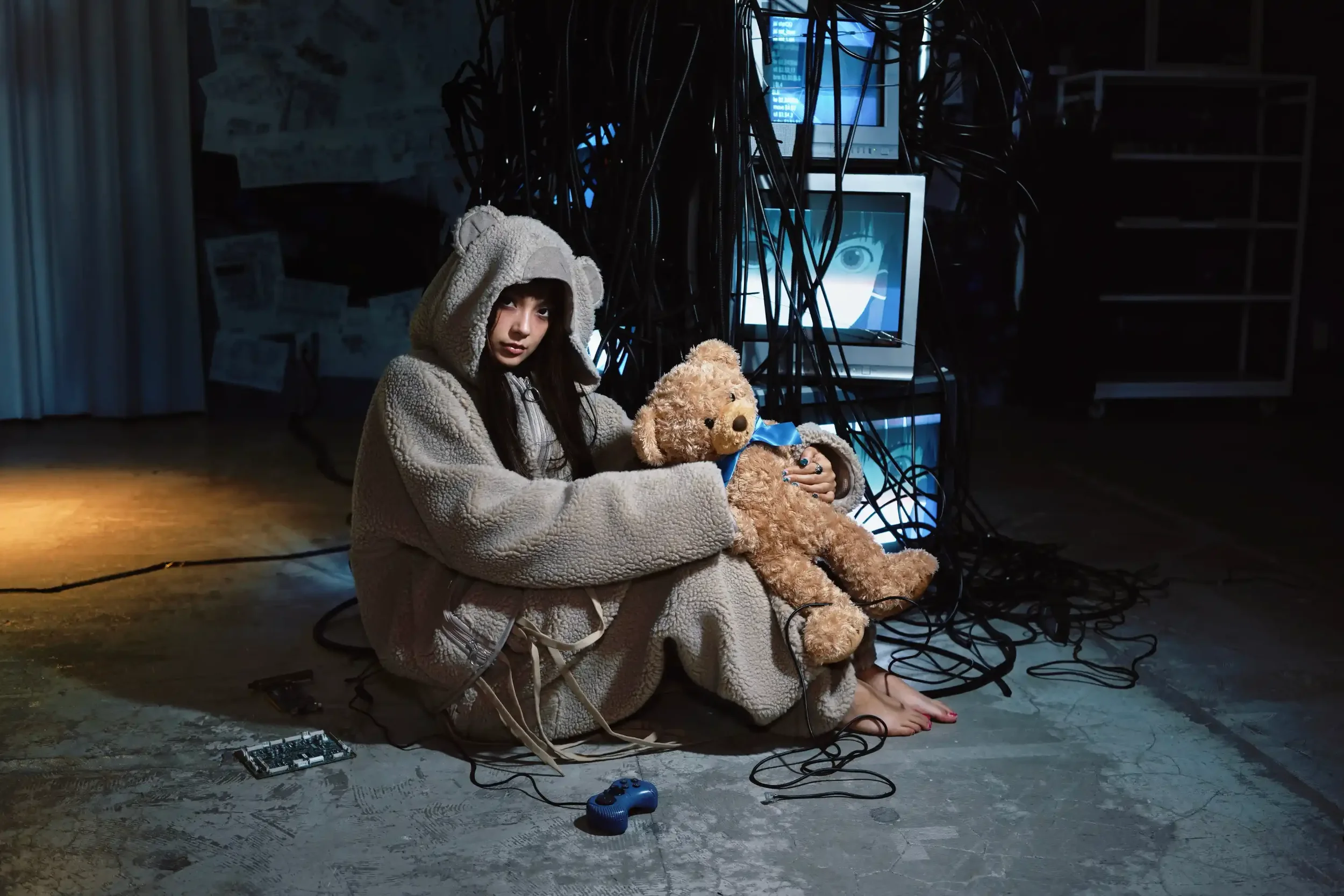
Photo by Alice Sul | Serial Experiments Lain © NBCUniversal Entertainment Japan LLC
Our beloved Lain was created years before her time. First airing in ’98, as the internet was taking its first steps toward an ever-connected world, the series imagined a reality in which the boundary between the physical and digital could become so unstable that the distinction itself would begin to disappear.
Lain finds herself existing in the vagueness, in different forms, connected to a network that seems to know more about her than she knows about herself.
She is so much more than an icon of cyberculture. She represents the disassociation that comes with existing simultaneously in the physical world and somewhere else, the feeling of watching yourself from outside yourself.
We wondered how much of this premise Tokyo fashion brand SEVESKIG had in mind when approaching their new collection in collaboration with Serial Experiments Lain.
Rather than approaching Lain simply as a visual archive to be transferred onto clothing, SEVESKIG focused on one of the work’s fundamental ideas of connection. People connecting to people. Reality connecting to the Wired.
A vision that extended beyond the clothes themselves at the “Let’s all love lain” pop-up at Laforet Harajuku. The venue was constructed as a space where reality seemed to gradually become invaded by the Wired, with CRT screens repeatedly transmitting images and Lain’s voice across the space.
We sat down with SEVESKIG designer Takanori Nagano to talk about Lain’s continuing relevance, the fear and possibility of connection, and translating one of anime’s most intangible worlds into something that can actually be worn.
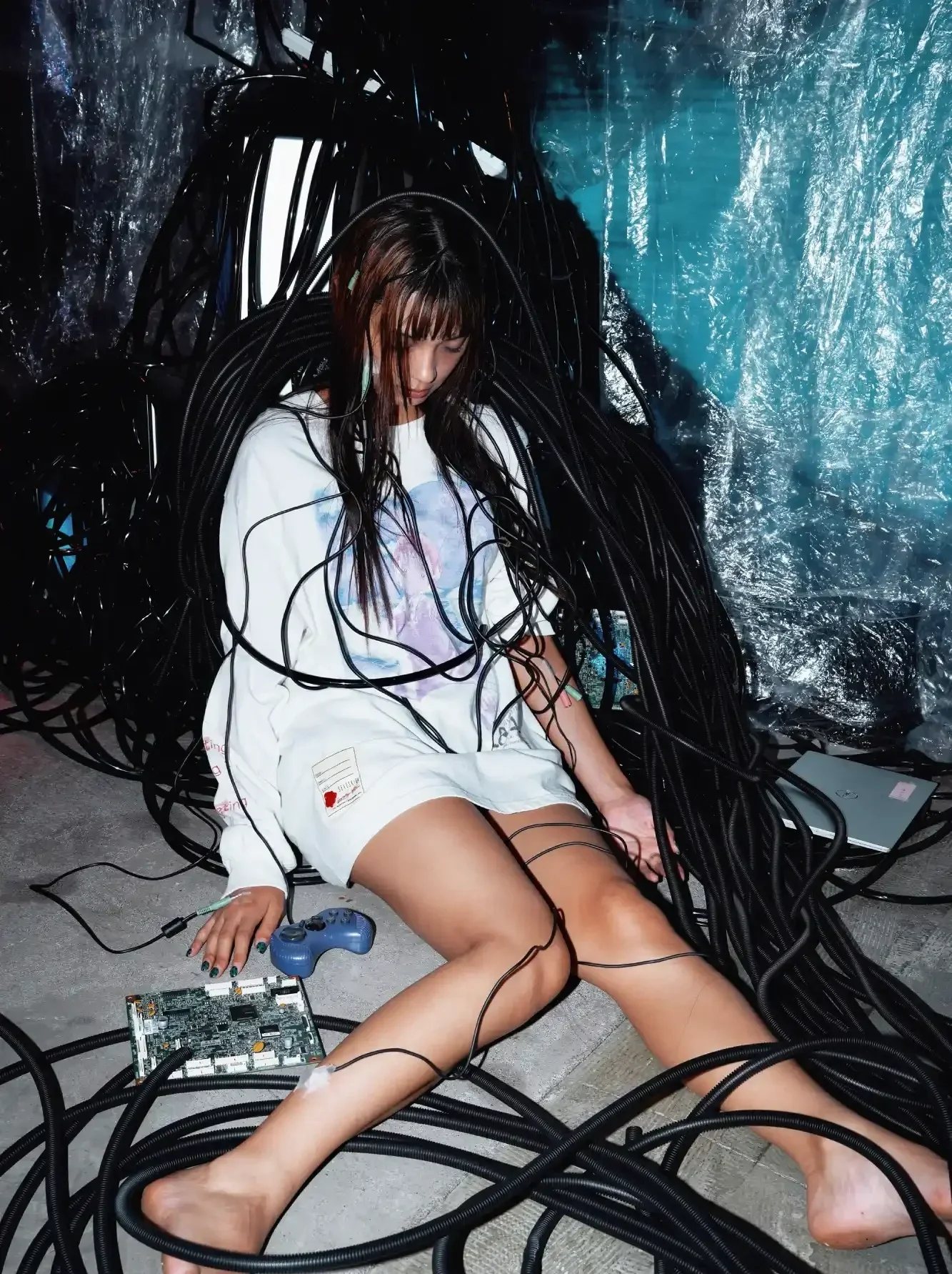
Photo by Alice Sul | Serial Experiments Lain © NBCUniversal Entertainment Japan LLC
Why did you choose Serial Experiments Lain for the collaboration with SEVESKIG?
For AW2026–27, our theme was “≠ (Not Equal),” through which we considered how to protect the “individual’s existence” in a world where things are becoming increasingly ambiguous.
Lain, who continues to question her own existence while wavering between reality and the Wired, felt to me like a character who embodies this theme, which is why we decided to collaborate with Serial Experiments Lain.
The ideas and themes explored in Serial Experiments Lain seem increasingly applicable to today’s world. Do you feel that the themes of Lain are reflected in the way you approach your own work and creativity?
I think they are reflected quite strongly.
The way Lain depicts the boundary between reality and the internet, and the feeling of one’s very existence being shaken by information, has become even more tangible now that social media and AI have become commonplace.
In my own work as well, rather than aligning myself with a single set of values or a single “right answer,” I often turn the contradictions and ambiguities that exist between them into clothing. So I still strongly identify with the ideas explored in Lain.
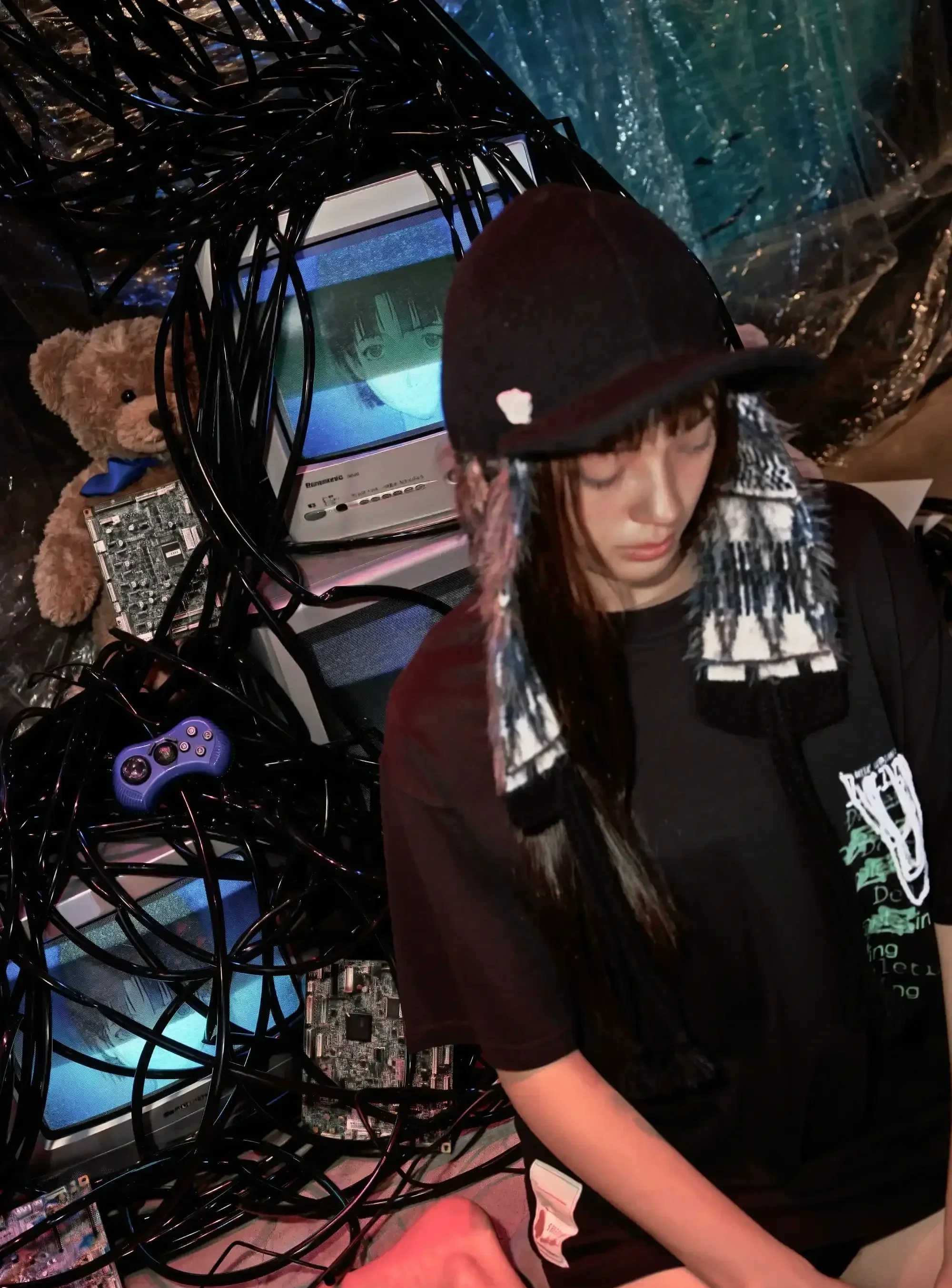
Photo by Alice Sul | Serial Experiments Lain © NBCUniversal Entertainment Japan LLC
How did you approach and develop this collaboration from a conceptual perspective? What was the initial starting point for creating this LAIN collection?
I began designing by focusing on the idea of “connection” depicted in Lain.
People with people, reality with the Wired, as well as information and memories. As all these different things become connected, existence itself begins to change.
I developed the collection while thinking about how I could translate that feeling into the structure and details of the clothing.
What aspect of the character Lain, or of the work itself, do you personally identify with most strongly? Not as a designer, but as a person living in Japan today.
Through social media, there is a great joy in being able to connect with people I would never have had the chance to meet before. At the same time, there is also something frightening about becoming dependent on being connected.
The idea of “the joy of connecting, and the fear of becoming dependent on it” is something I strongly identify with as a person living in this era.
What do you think Lain can express specifically through fashion that animation cannot?
Animation is something through which we look at the world of Lain, whereas I think fashion allows us to become part of that world by wearing it.
One example is the technique we used of connecting various expressions of Lain and important scenes from the story with a single strand of lily yarn.
Rather than simply turning the visual elements of Lain into clothing, I wanted to transform the work’s central theme of “connection” itself into something that could actually be worn.
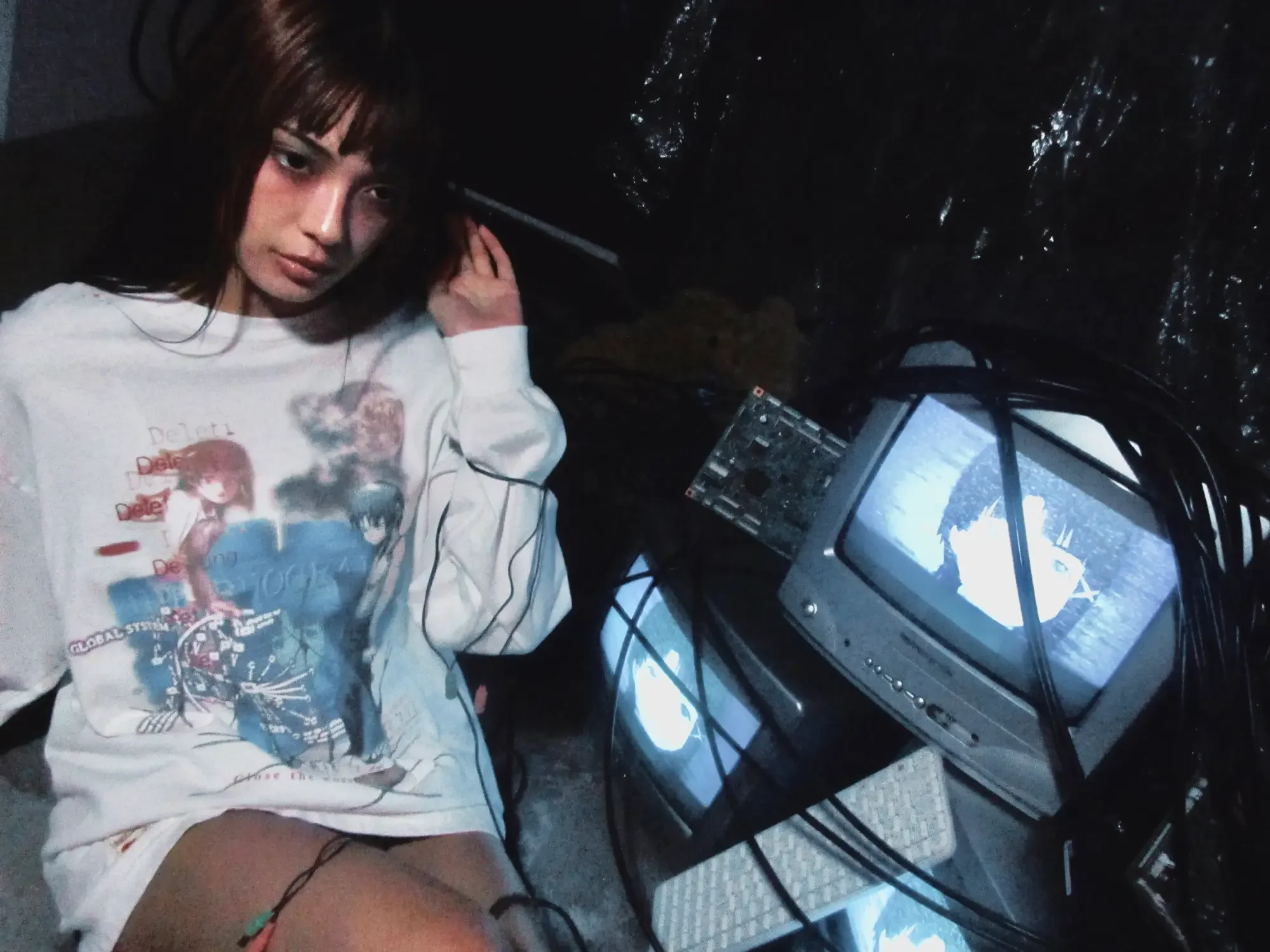
Photo by Alice Sul | Serial Experiments Lain © NBCUniversal Entertainment Japan LLC
For the pop-up, what kind of world or message did you want to express through the space that could not be fully conveyed through the clothes themselves?
Using the entire venue, we created a world in which reality gradually becomes invaded by the Wired.
Also, in order to leave the event’s theme, “Let’s all love lain,” in the memories of visitors, we repeatedly displayed images and words across multiple CRT televisions, incorporating an effect that would feel as though these messages were being imprinted subconsciously, almost like subliminal messaging.
Rather than simply looking at the clothes, we wanted to create a space where visitors would begin connecting to the world of Lain from the moment they entered the venue.
Lain is often discussed as a work about the internet, but I feel that its distinctive atmosphere also comes from highly material things. What objects or textures from the physical world became particularly important references for this collection?
Of course, these became very important elements.
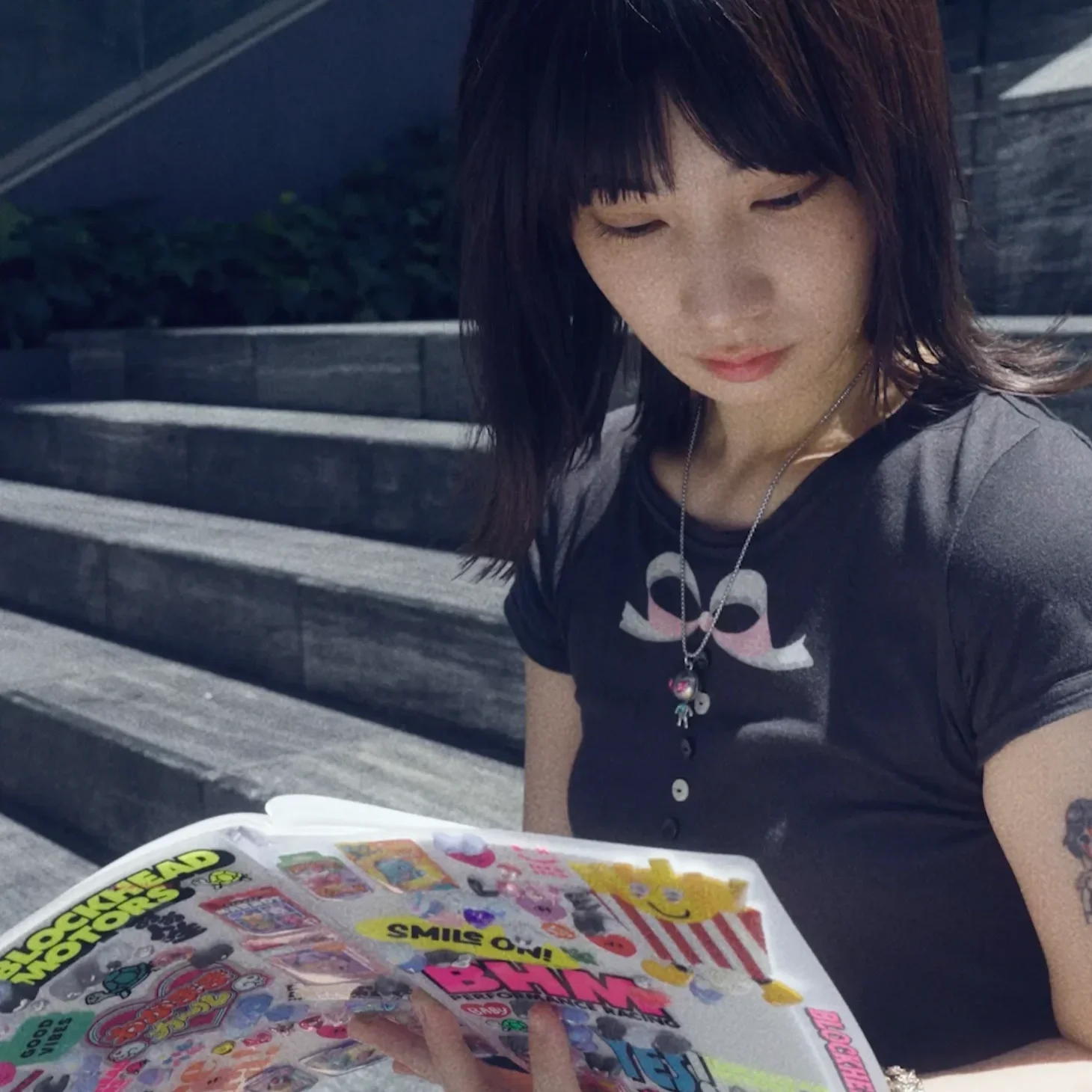
For example, Lain’s pajamas are represented using a retro wool-blend pile fabric, with thick lily yarn made to resemble electrical wires running across them. This expresses Lain’s appearance surrounded by electrical wires.
We also depicted Lain being connected by electrical wires and cables across the chest of the T-shirt.
In this collection, it was very important to take the physical elements that symbolize Lain, such as electrical wires and cables, and translate them directly into materials and details within the clothing.
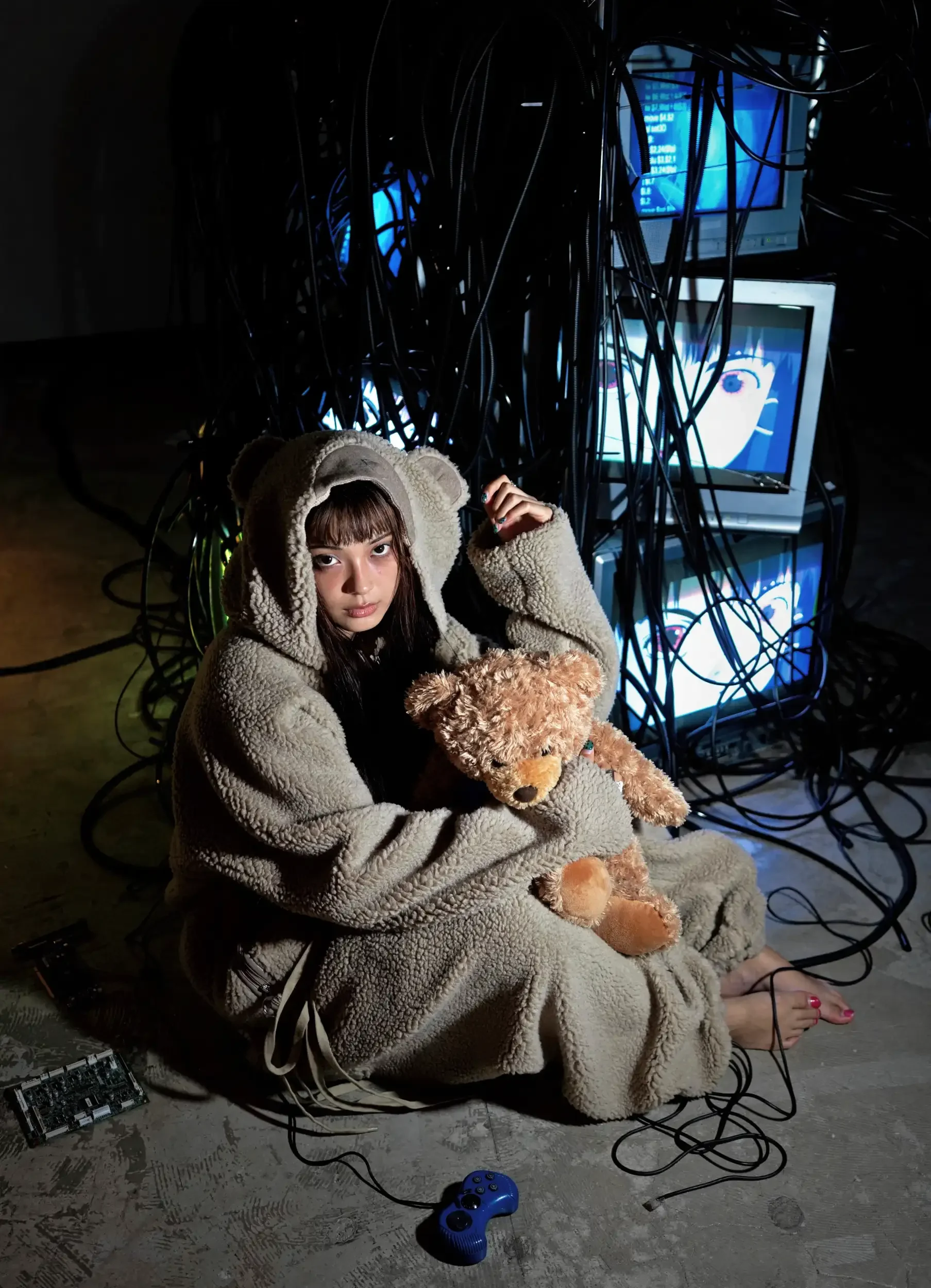
Photo by Alice Sul | Serial Experiments Lain © NBCUniversal Entertainment Japan LLC
Nearly three decades later, the technology surrounding Lain has changed beyond recognition. The Wired is no longer something we consciously connect to. We carry it in our pockets, sleep beside it, wake up to it, it finds its way into our unconsciousness, our daily rhythm, following us everywhere.
Lain was never about technology, but about what happens to us when connection and existence become inseparable. Our collective dependency on social media has made connection frictionless, while producing forms of isolation many have never experienced before.
AI added another layer to the question. Introducing systems capable of responding to us and participating in the creation of things we once considered uniquely human. With every day that passes, Lain’s uncertainty begins to resemble something closer to our current day reality.
SEVESKIG’s interpretation brings that idea back into the physical world.
SEVESKIG turned wires into yarn, images into garments. Screens become part of the space. Entering the pop-up meant stepping into the logic of Lain before even encountering the collection.
For a moment we could enter Lain’s world, and thanks to SEVESKIG, we can carry a small part of LAIN into our own world.
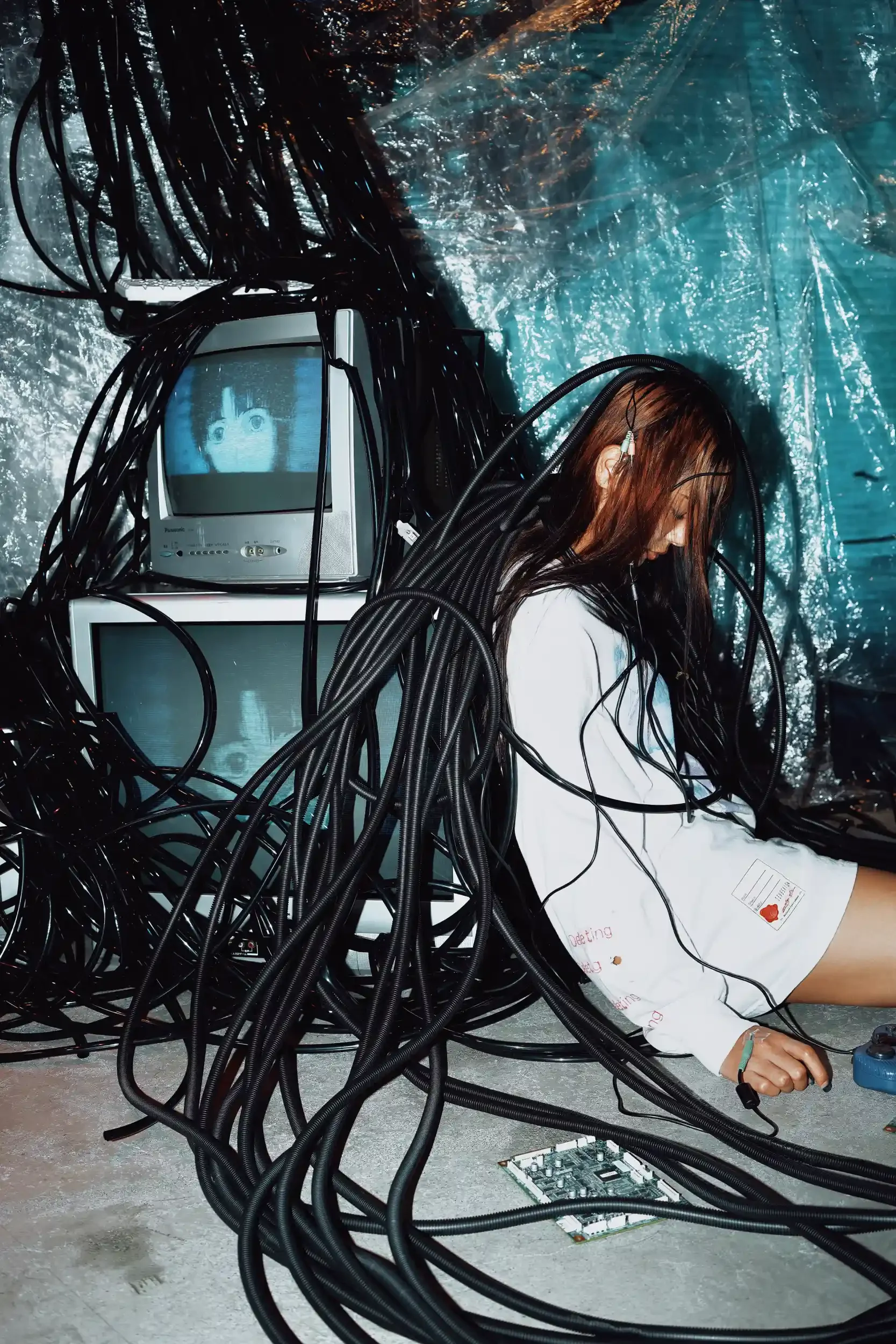
Photo by Alice Sul | Serial Experiments Lain © NBCUniversal Entertainment Japan LLC
Image credits
- Photography: Alice Sul
- Creative Direction: Gill Princen & Alice Sul
- Production: Roman Shibata
- Make-up: Kanako
- Talent: Rian Yoshino
- Agency: COMMON GROUND 45
Trending articles



SEVESKIG embraces the Wired world of Lain.