
Hatsune Miku Enters the Physical World
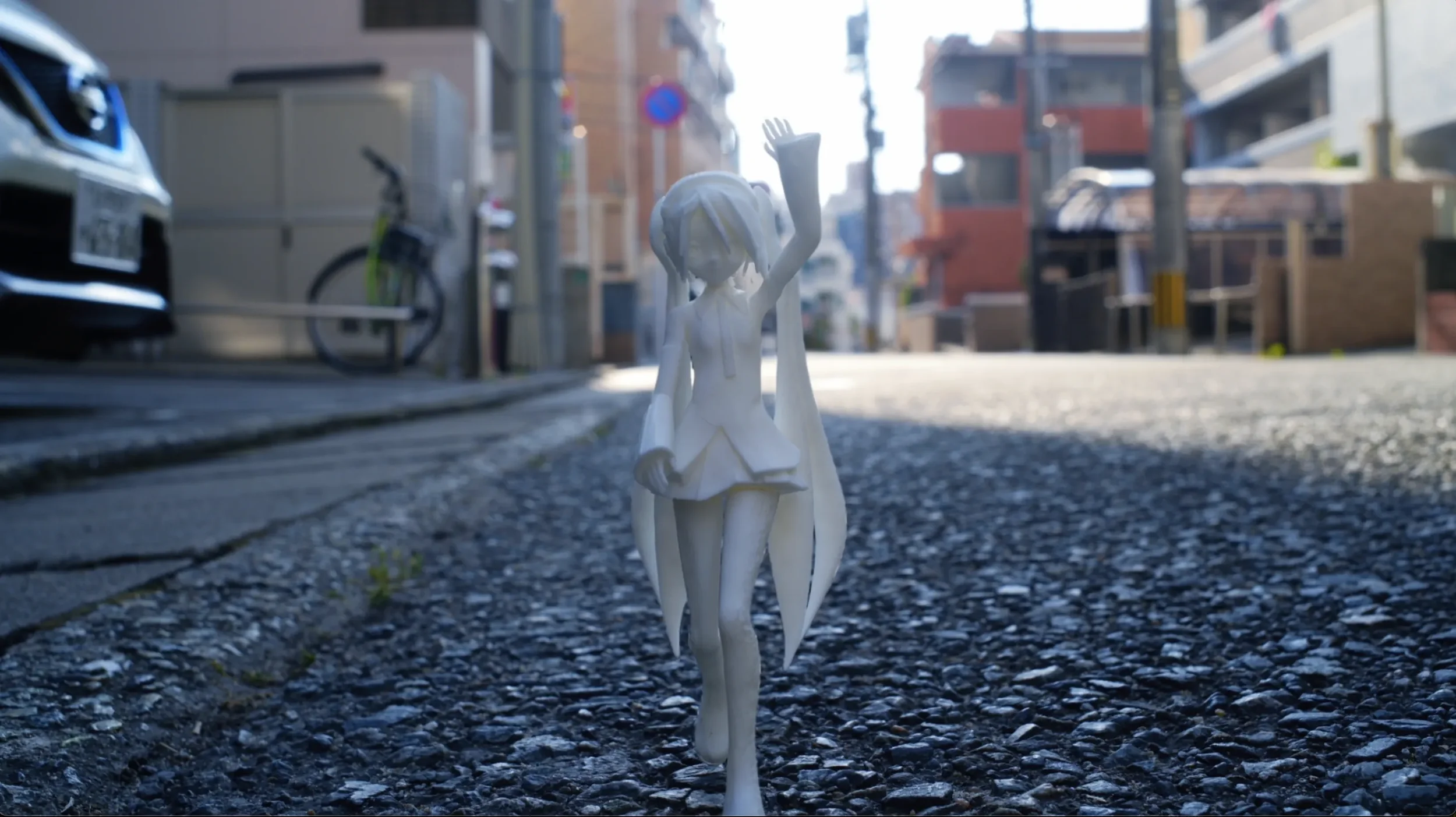
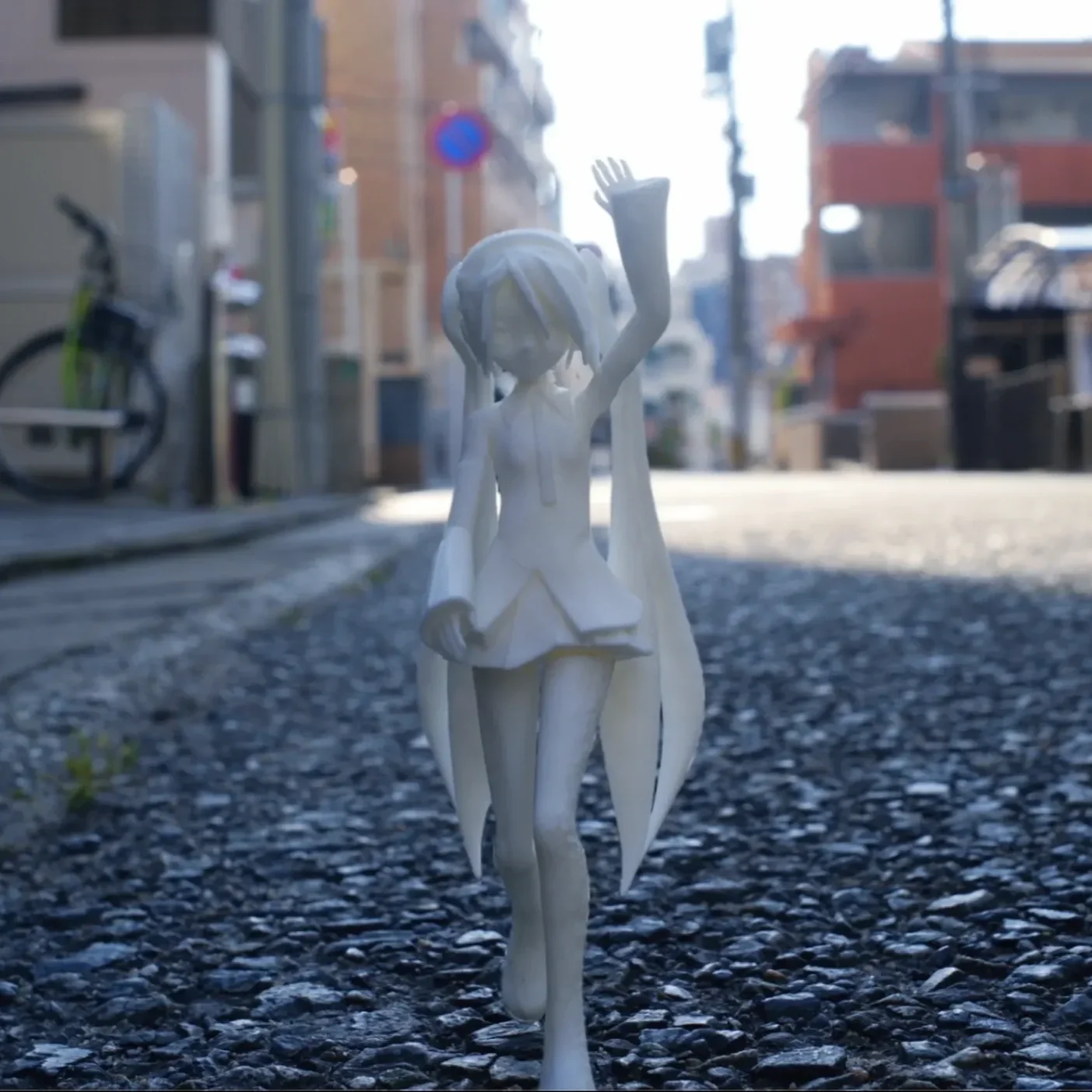
Seeing Hatsune Miku in different shapes and forms isn’t that rare; she is our most beloved virtual artist, after all. Mostly, we see her on screen, as merch, or, at its most extreme, as a live hologram. You can imagine the breath of fresh air when encountering Miku as an all-white, 3D-printed stop-motion figure in Saku’s latest music video, ‘Pure’.
The visual artist behind the meticulously mapped-out concept is 24-year-old Fukuoka-based filmmaker, animator, and director Sakimura Sorao.
After becoming unable to attend school during his second year of high school, Sorao began teaching himself animation. At 17, he created the short animation ‘The Sound of Cicadas, Touch the Wind’.
Today, he directs and produces music videos, advertisements, short films, and other works, with the aim of connecting different forms of visual expression, animation, live action, 3DCG, and others, through a single creative axis, sometimes putting them through a kind of “mixer” and bringing them together into something that feels slightly strange, but ultimately good.
Having worked on an array of music videos with Saku, Sorao was hesitant to take on the visual direction for this new single. We asked what convinced him, and how a tiny team made this intense production happen.
How did the idea of creating a stop-motion MV using a 3D-printed Hatsune Miku come about?
I’ve worked on more than four projects with Saku so far. We’ve created audiovisual sets and music videos together, and when Saku released an album last year, the idea of making a music video for the album’s main track ‘Pure’ naturally came up.
However, at first I wasn’t particularly enthusiastic about it. I was concerned that if I kept creating visuals for Saku’s music, I might end up defining how her songs are perceived in a single direction. I also felt that perhaps someone with a sensibility very different from mine should be the one to create the visuals. On top of that, I was worried about things becoming repetitive.
So we put the music video on hold until I could feel confident about two things: that I could surpass what we had done before, and that I could convince myself that what I created would be more appropriate for this particular song than if someone else had made the music video.
I think I listened to the song continuously for about a month. Then, one day, a vision suddenly came to me: “a completely white Hatsune Miku speeding through the city.”
At that moment, I felt that this could work. It would be incredibly difficult to realize, but I felt that if we could actually pull it off, we would create something that was absolutely right for the song. It wasn’t something I had constructed logically. It was more like grasping an intuition that emerged after listening to the song over and over again. The next day, I told Saku that I would make the music video.
After that, I had to figure out how to realize this vision. We considered several approaches: shooting the stop-motion directly in the city; filming the backgrounds with a 360-degree camera and shooting the stop-motion in a studio before compositing the two; and creating everything in 3DCG using technologies such as Gaussian splatting.
I interpreted the song as being about the act of creation. It felt like a story about giving form and a name to something vague that may or may not even exist within you. Almost like making a decision that gradually narrows down the infinite possibilities available to you.
Once I saw it that way, I felt that it was essential to have a sphere burst out of a completely white space and come to life, something that actually exists, in a real location, with physical weight, receiving real light. That sense of force that comes from “existing there,” or perhaps what you might call its soul, felt indispensable to expressing the idea.
The traces left by the 3D-printing process, detailed and realistic city streets, and the way Hatsune Miku’s white color changes under real-world light, all of these elements being physically present, exactly as they are, felt like they would become an essential part of what made the video special.
After discussing it with Saku, we decided to take that path, even though it was the most difficult one. The fact that Saku offered to help with the filming also gave me the push I needed.
There’s an interesting story concerning Miku’s movements. For the parts where Miku sings, Saku served as the motion actor.
Because I see this song as being about creation, and because through our collaborations I had come to feel Miku’s role as a kind of yorishiro, a vessel or medium through which the artist expresses what they want to say, I was unsure about how to approach the singing movements. Eventually, I thought, “There’s no choice but to have Saku sing it,” and asked him to do it.
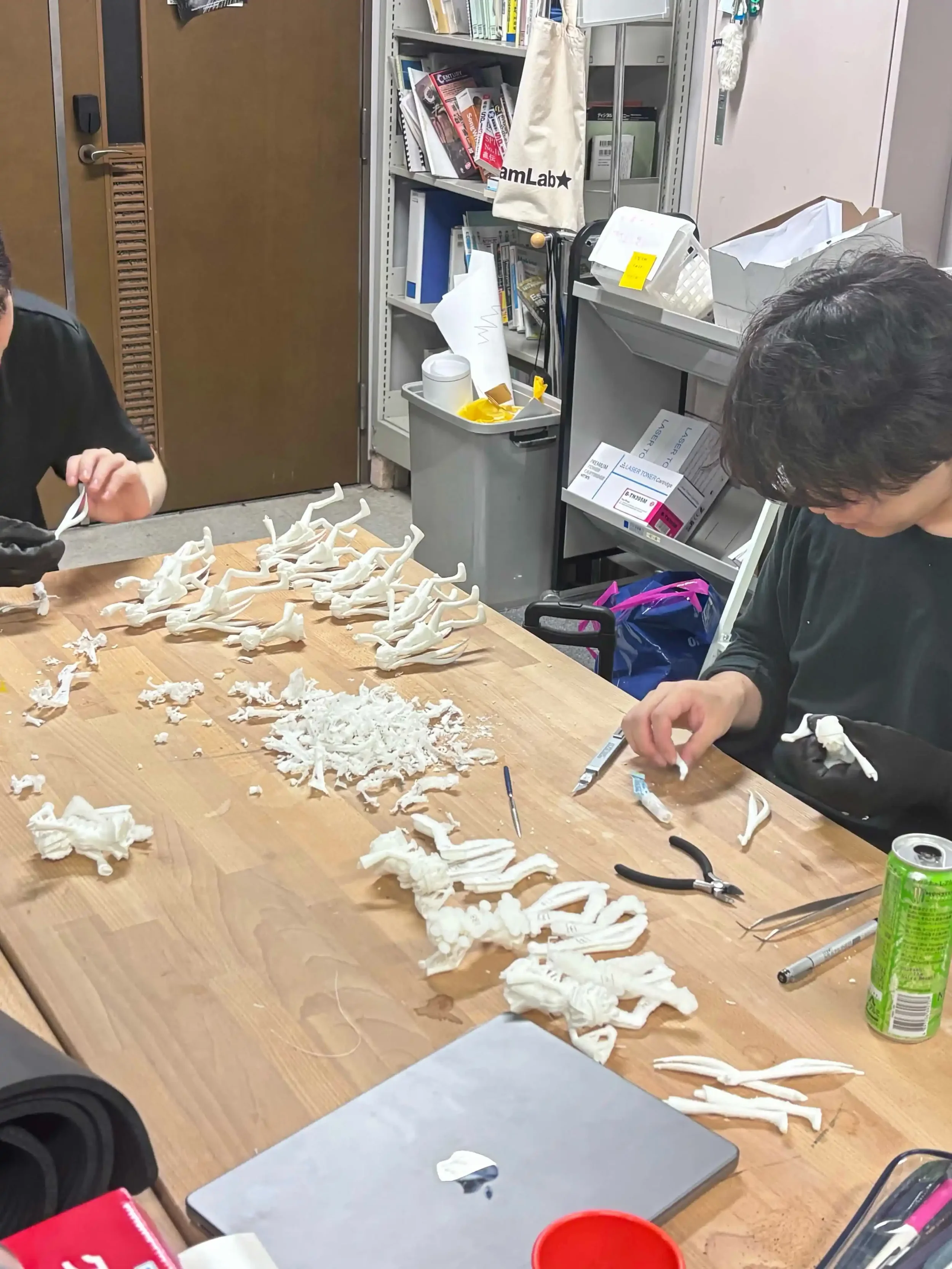
The production process looks almost like a Hatsune Miku factory. What was the most challenging part of creating so many 3D-printed figures and bringing them to life?
The filming, without a doubt.
For this work, we took the 3D-printed Hatsune Miku figures out into real locations and photographed them. We would take one photograph, move the figure one meter forward, replace it with another figure, and take another photograph. We repeated this over and over again.
We first filmed the prototype in winter. From there, the main shooting period lasted about three months, and in the end we took 4,352 photographs.
Originally, we had planned to finish filming by early summer, but it just never seemed to end, and before we knew it, we were in the middle of summer. Japanese summers can become unbearably hot, so there were times when we filmed under the blazing sun and I nearly suffered heatstroke. That was the biggest crisis.
After that, we started avoiding the heat by stopping daytime shoots and switching to early mornings, evenings, and nights. During the most demanding period, we spent two weeks getting up at 5:30 in the morning and not returning home until 11 at night.
Of course, creating Hatsune Miku’s movements in Blender, designing such a large number of figures so that they could physically function, 3D-printing and assembling them, and compositing everything were all extremely demanding tasks. But shooting in an actual city presented a completely different kind of difficulty. The weather, the light, and the flow of people don’t move according to our schedule.
At the same time, that was also the reason I chose this method. You get to encounter landscapes that are beyond what you imagined.
For example, at sunrise, we watched the morning sun gradually illuminate the city and Miku while we were shooting on a bridge. On the other hand, footage shot inside a cluttered room ended up having a really interesting atmosphere.
In a way, I think this is a music video that is ultimately supported by the presence and physicality of reality.
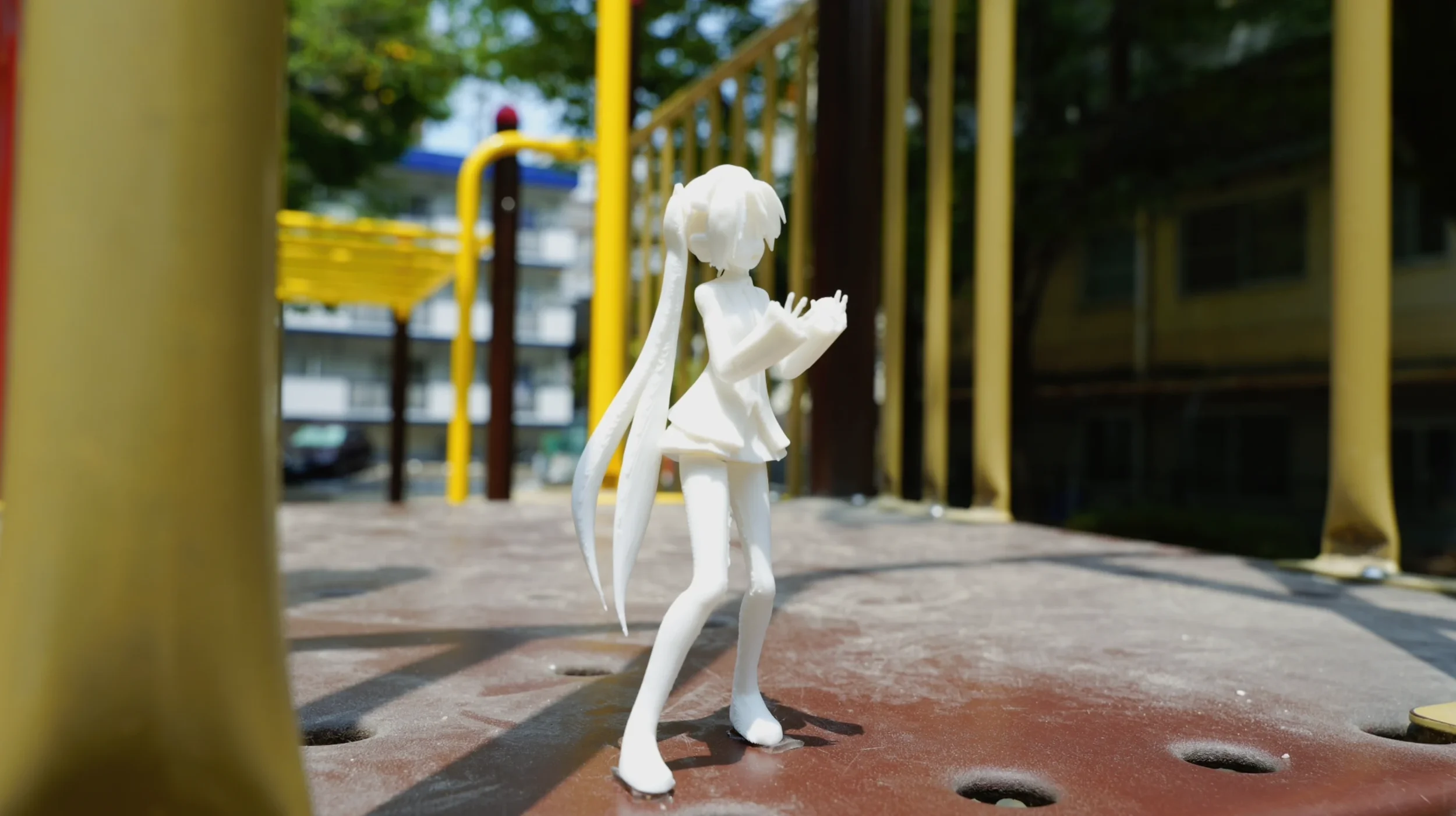
Do you know approximately how many Hatsune Miku figures you ended up printing?
In the end, we 3D-printed Hatsune Miku in 332 different poses.
We didn’t print each figure as one complete piece. Instead, we divided each figure into multiple parts, such as the hair and body, and printed them separately. Counting the individual parts, there are 1,027 pieces in total.
We assembled each one individually and photographed them, resulting in a total of 4,352 photographs.
Trending articles


Inside the culture and friendship behind Matthew Ballard’s HIGH RECEIPTS.